Overview of Tic Disorder Autonomic Response
Tic disorder is a neurodevelopmental condition characterized by recurrent, sudden, rapid, and relatively stereotyped motor movements or vocalizations that are difficult to control voluntarily over time. The tic disorder autonomic response is described as the pattern of autonomic nervous system activity and physiological arousal that may accompany changes in tic intensity, premonitory urges, emotional tension, fatigue, and stress. Tic disorders can involve motor tics, vocal tics, or both, and Tourette syndrome is considered to be a representative tic disorder involving multiple motor tics and at least one vocal tic during the course of illness.
Modern medicine explains tic disorders as neurodevelopmental disturbances associated with altered regulation of the basal ganglia, striatum, cortico-striato-thalamo-cortical circuits, dopamine signaling, sensory processing, and motor-control networks. In Korean medicine, the condition is understood as a functional regulatory disturbance that may involve liver wind, phlegm accumulation, qi stagnation, qi and blood deficiency, or yin deficiency.
These perspectives use different explanatory systems and should not be interpreted as direct biological translations of one another. However, both examine relationships among movement, stress, emotional state, physiological regulation, sleep, fatigue, and recovery. The tic disorder autonomic response is therefore relevant to understanding why tic expression may fluctuate according to the individual’s internal state and environmental circumstances.
Korean Medicine Neuropsychiatry investigates neurological symptoms together with emotional regulation, autonomic nervous system activity, stress responses, and Korean medicine pattern differentiation. The Korean Society of Oriental Neuropsychiatry studies and integrates these subjects as an active academic body in the field of Korean Medicine Neuropsychiatry.
Clinical Features of Tic Disorders
Motor Tics, Vocal Tics, and Premonitory Urges
Motor tics are described as brief movements that may involve blinking, facial movements, head turning, neck movement, shoulder movement, or more complex sequences involving several muscle groups. Vocal tics may include throat clearing, sniffing, coughing-like sounds, brief vocalizations, or more complex utterances. The form and frequency of these symptoms can change considerably over time.
Many older children, adolescents, and adults describe a premonitory urge before a tic. This sensation may be experienced as pressure, tension, itching, discomfort, or an internal feeling that temporarily improves after the tic occurs. The urge–tic–relief sequence is associated with sensory processing and motor regulation. Changes in the tic disorder autonomic response may occur at the same time, particularly when emotional tension or anticipation is elevated.
Tourette syndrome is associated with alterations in neural systems that regulate movement selection, inhibition, sensory processing, and behavior. It is a neurodevelopmental condition rather than a personality issue or intentional behavioral pattern. The ability to suppress a tic temporarily does not mean that the symptom is equivalent to ordinary voluntary movement.
Behavioral Patterns and Functional Impairment
Tic symptoms commonly wax and wane. Their frequency can change across hours, days, weeks, and longer periods. Stress, excitement, inadequate sleep, fatigue, sustained concentration, and changing social circumstances may influence symptom expression, although responses vary among individuals.
Mild tics may produce little functional impairment, whereas frequent or forceful tics can interfere with concentration, communication, reading, writing, work, school activities, sleep, or social interaction. Repetitive movements may occasionally produce physical discomfort or muscular pain.
The tic disorder autonomic response may be particularly noticeable during situations involving anticipation, performance pressure, emotional excitement, conflict, or attempts at sustained tic suppression. Autonomic activation is understood as one modifying factor rather than the sole mechanism responsible for the disorder.
Etiology and Neurobiological Mechanisms
Basal Ganglia Circuits and the Striatum
Tic disorders are understood as multifactorial neurodevelopmental conditions in which genetic susceptibility interacts with brain development, neural circuit regulation, and environmental influences. Contemporary neuroscience places particular emphasis on the basal ganglia and the striatum.
The striatum receives extensive information from cortical regions and participates in the selection, initiation, and inhibition of motor and behavioral programs. It forms part of interconnected cortico-striato-thalamo-cortical circuits involved in movement, habit formation, attention, cognition, reward processing, and behavioral regulation.
Tics are associated with altered regulation within these circuits. Insufficient inhibition or atypical selection of motor patterns may permit brief movements or vocal behaviors to emerge. Motor cortical regions, supplementary motor areas, thalamic pathways, sensory networks, and prefrontal systems also contribute to the broader circuit-level process.
Dopamine and Neurotransmitter Regulation
Dopamine is an important neurotransmitter in the neurobiology of tic disorders because it regulates signaling within the striatum and other basal ganglia structures. Altered dopaminergic transmission, receptor sensitivity, or dopamine regulation may influence motor gating and behavioral selection.
Other neurotransmitter systems, including gamma-aminobutyric acid, glutamate, serotonin, norepinephrine, and histamine-related pathways, may also participate in network regulation. Tic disorders are therefore not considered to be the result of a simple excess or deficiency of one neurotransmitter.
The tic disorder autonomic response may interact with these motor networks when stress-related arousal changes attention, sensory awareness, muscle readiness, and behavioral control. From a Korean medicine perspective, the same clinical presentation may simultaneously be examined through patterns such as liver wind and qi stagnation.
Tic Disorder Autonomic Response and Physiological Changes
Sympathetic and Parasympathetic Regulation
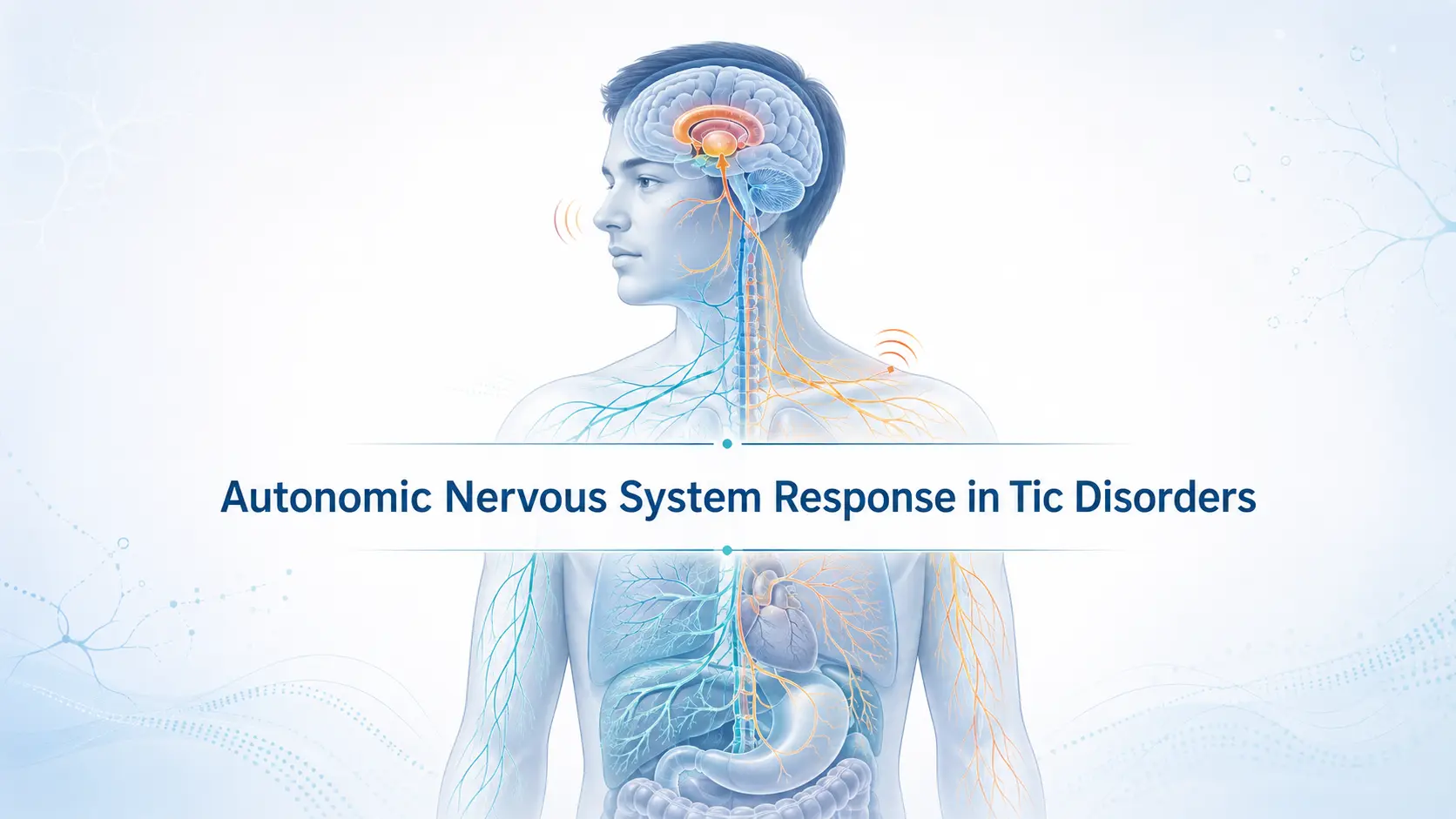
The autonomic nervous system regulates involuntary physiological processes through interacting sympathetic and parasympathetic pathways. The sympathetic system supports physiological mobilization during stress or challenge, whereas parasympathetic pathways contribute to cardiovascular regulation, digestion, restoration, and recovery.
The tic disorder autonomic response is associated with dynamic regulation between these systems. During heightened arousal, sympathetic activity may increase heart rate, respiratory rate, sweating, muscular tension, and vigilance. Parasympathetic mechanisms subsequently contribute to recovery and restoration toward baseline physiological activity.
Autonomic responses and tics may influence one another indirectly through attention, anticipation, stress, emotional state, and premonitory sensations. The relationship is understood as context dependent rather than as a simple sequence in which autonomic activation automatically produces a tic.
Stress Hormones and the HPA Axis
Stress activates not only autonomic pathways but also the hypothalamic-pituitary-adrenal axis. The HPA axis regulates endocrine responses that include cortisol secretion. Acute cortisol responses support adaptation to physiological and psychological demands, while prolonged stress may influence sleep, attention, emotional regulation, immune signaling, and general physiological arousal.
In people with tic disorders, stress-system activation may interact with neural circuits involved in motor control and behavioral inhibition. The tic disorder autonomic response may therefore become more noticeable during periods of increased emotional or physiological load.
Stress, Environment, and Symptom Fluctuation
Environmental factors can modify tic severity without necessarily constituting the primary cause of a tic disorder. Sleep deprivation, fatigue, emotional stress, overstimulation, major changes in routine, prolonged concentration, and social pressure may influence symptom frequency and intensity.
Supportive and predictable environments may reduce unnecessary stress associated with attempts to suppress or conceal tics. Suppression can require sustained cognitive effort and may increase awareness of premonitory urges or internal discomfort.
The tic disorder autonomic response is considered to be one factor explaining why stress-sensitive changes can occur. Sympathetic arousal, increased attention, sensory processing, and motor preparation may change simultaneously during challenging situations.
For this reason, the tic disorder autonomic response is most appropriately interpreted within a broader neurodevelopmental model that includes brain circuitry, stress physiology, sleep, environmental context, and individual symptom patterns.
Korean Medicine Pathophysiology
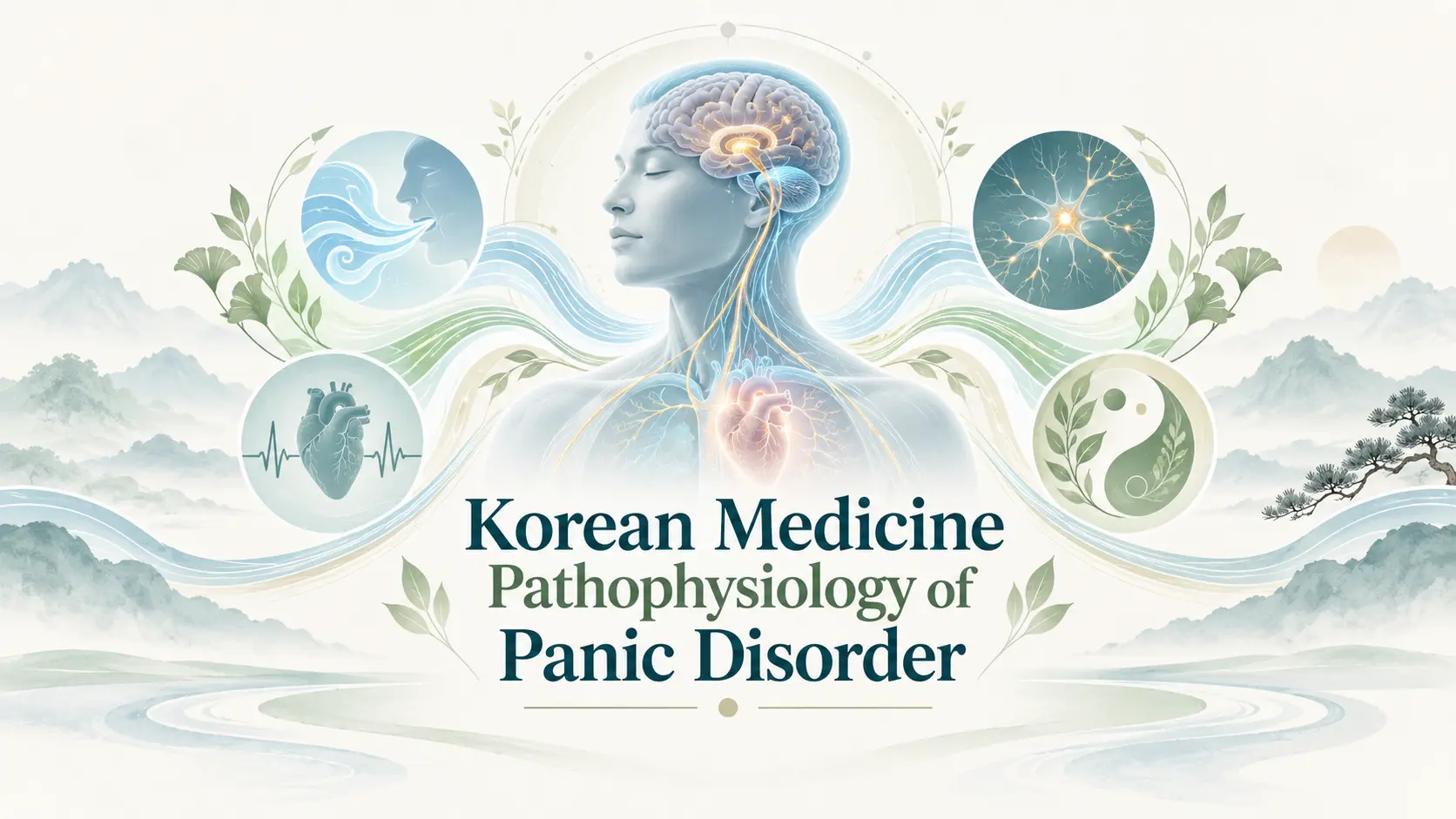
Korean medicine uses pattern differentiation to organize relationships among motor symptoms, emotional state, fatigue, sleep, digestive function, constitutional characteristics, and systemic regulation. These patterns constitute a functional explanatory system and are not direct anatomical equivalents of neurological structures or neurotransmitters.
Liver Wind and Motor Instability
Liver wind is a Korean medicine concept used to describe clinical patterns characterized by sudden, unstable, repetitive, or involuntary movement. In tic disorders, recurrent blinking, facial movement, head movement, shoulder movement, or other abrupt motor phenomena may be interpreted through this framework.
Contemporary neuroscience associates these movement phenomena with basal ganglia circuits, the striatum, dopamine regulation, and motor-control networks. Korean medicine describes the observable instability through liver wind. These frameworks address overlapping clinical manifestations while remaining conceptually distinct.
Qi Stagnation and Tic Disorder Autonomic Response
Qi stagnation is understood as impaired functional movement or regulation that may become prominent during emotional constraint, frustration, or chronic stress. It may be associated with tension, variable somatic discomfort, mood changes, and symptoms that fluctuate according to psychological circumstances.
This concept has relevance to the tic disorder autonomic response because emotional stress may simultaneously influence autonomic tone and tic expression. Sympathetic activation provides a neurophysiological explanation for stress-related bodily mobilization, while qi stagnation represents a Korean medicine interpretation of disrupted functional regulation associated with emotional tension.
Phlegm Accumulation
Phlegm accumulation in Korean medicine has a broader meaning than respiratory mucus. It is understood as a pathological pattern in which impaired transformation and circulation may contribute to heaviness, obstruction, cognitive clouding, emotional instability, or digestive symptoms.
Stress and autonomic imbalance can also influence digestive and visceral function through brain–body communication. Although phlegm accumulation cannot be equated biologically with autonomic dysfunction, both frameworks examine relationships among stress, systemic regulation, and neurological symptoms.
Qi and Blood Deficiency
Qi and blood deficiency is associated with functional patterns of fatigue, reduced endurance, poor concentration, inadequate recovery, sleep disturbance, or increased vulnerability to prolonged exertion.
When tics become more noticeable during fatigue or insufficient sleep, deficiency patterns may form part of Korean medicine pattern differentiation. Contemporary neuroscience similarly recognizes that fatigue and sleep disruption may alter attention, executive regulation, emotional control, and motor modulation.
Yin Deficiency and Persistent Arousal
Yin deficiency may be associated with insufficient restorative regulation and relative internal hyperactivity, particularly when sleep disturbance, restlessness, heat sensations, or persistent physiological arousal coexist.
Sleep loss may influence autonomic regulation and reduce behavioral control. Korean medicine may interpret a corresponding presentation through insufficient restorative yin function. This comparison illustrates how Korean medicine and neuroscience may describe different dimensions of impaired recovery without treating the concepts as biologically identical.
Treatment Perspective and Nervous System Regulation
From the perspective of Korean Medicine Neuropsychiatry, treatment is understood as an individualized process involving regulation of neuropsychiatric function, autonomic balance, stress responses, recovery, sleep, and Korean medicine pattern differentiation.
Contemporary clinical management may consider tic severity, functional impairment, developmental context, premonitory urges, associated neurodevelopmental or psychiatric symptoms, and the degree to which the symptoms interfere with daily functioning.
Behavioral approaches may address awareness of premonitory urges and behavioral patterns surrounding tic expression. When clinically appropriate, pharmacological approaches may influence neurotransmitter systems involved in basal ganglia and striatal regulation, particularly dopamine-related pathways.
Nervous system regulation also includes attention to regular sleep, fatigue, daily rhythms, environmental stress, and recovery after sustained physiological arousal. The tic disorder autonomic response may help characterize the circumstances under which tic symptoms intensify or become easier to regulate.
Korean medicine pattern differentiation examines whether liver wind, phlegm accumulation, qi stagnation, qi and blood deficiency, yin deficiency, or combinations of these patterns best describe the individual presentation.
Within this framework, the tic disorder autonomic response can be considered one dimension of broader clinical observation. Changes in heart rate, breathing, muscle tension, sleep, fatigue, digestive function, emotional arousal, premonitory urges, and symptom timing may together provide a more comprehensive picture of nervous system regulation.
Integrated Perspective on Tic Disorder Autonomic Response
Modern neuroscience and Korean medicine describe tic disorders using different conceptual languages. Neuroscience focuses on measurable neural circuits, neurotransmitters, motor inhibition, sensory processing, autonomic activity, and endocrine stress mechanisms. Korean medicine focuses on functional relationships among movement, emotional tension, systemic regulation, constitutional characteristics, sleep, and recovery.
Integration does not require liver wind, qi stagnation, or other Korean medicine concepts to be translated directly into basal ganglia activity, dopamine signaling, cortisol levels, or sympathetic activity. Instead, each framework may describe a different level of the same clinical presentation.
The tic disorder autonomic response may be described physiologically through sympathetic activation, parasympathetic recovery, HPA-axis signaling, attentional regulation, and motor-circuit interactions. Korean medicine may simultaneously assess whether stress sensitivity is associated with qi stagnation, involuntary movement with liver wind, or fatigue and poor recovery with deficiency patterns.
Summary
Tic disorders are neurodevelopmental conditions characterized by recurrent motor and/or vocal tics, with Tourette syndrome representing a major clinical form. Their neurobiology is associated with the basal ganglia, striatum, cortico-striato-thalamo-cortical pathways, sensory-motor networks, and dopamine-dependent regulation of motor and behavioral selection.
The tic disorder autonomic response is described as the interaction between tic-related neural processes and physiological systems responsible for arousal and recovery. Sympathetic activation, parasympathetic regulation, HPA-axis responses, muscle tension, breathing, and cardiovascular activity may change during stress or heightened attention.
Korean medicine understands tic-related manifestations through functional concepts including liver wind, phlegm accumulation, qi stagnation, qi and blood deficiency, and yin deficiency. These patterns provide a separate explanatory framework for relationships among movement, emotional state, fatigue, sleep, stress, and systemic recovery.
Korean Medicine Neuropsychiatry studies neurological symptoms, autonomic regulation, emotional processes, stress responses, and Korean medicine pattern differentiation as an integrated academic field. The Korean Society of Oriental Neuropsychiatry actively investigates and explains relationships between contemporary neuroscience and Korean medicine frameworks, including the tic disorder autonomic response.
Frequently Asked Questions
What is the tic disorder autonomic response?
The tic disorder autonomic response refers to changes in sympathetic and parasympathetic nervous system activity that may occur together with stress, premonitory urges, emotional arousal, fatigue, or changes in tic intensity. It may involve changes in heart rate, breathing, sweating, muscle tension, and physiological recovery.
Does autonomic activation cause tic disorders?
Autonomic activation is not considered to be the sole cause of tic disorders. Tic disorders are neurodevelopmental conditions associated with genetic susceptibility, basal ganglia circuits, the striatum, dopamine regulation, and other neural systems. Autonomic arousal may modify symptom expression in some individuals.
Why can tic symptoms increase during stress?
Stress can influence sympathetic nervous system activity, attention, sensory processing, muscle readiness, and behavioral regulation. These changes may interact with neural circuits involved in tic expression and with the tic disorder autonomic response.
How does Korean medicine explain tic disorders?
Korean medicine may explain tic-related symptoms through functional patterns such as liver wind, qi stagnation, phlegm accumulation, qi and blood deficiency, and yin deficiency. These concepts are used for pattern differentiation and are not direct anatomical equivalents of neurotransmitters or brain structures.
Academic and Educational Resources
- Korean Society of Oriental Neuropsychiatry — academic information related to Korean Medicine Neuropsychiatry.
- National Institute of Neurological Disorders and Stroke: Tourette Syndrome — educational information on Tourette syndrome and neurological mechanisms.
- Centers for Disease Control and Prevention: About Tourette Syndrome — public health information on tic disorders and Tourette syndrome.
- NCBI Bookshelf: Tic Disorders — educational medical information on tic disorders, clinical features, and neurobiology.