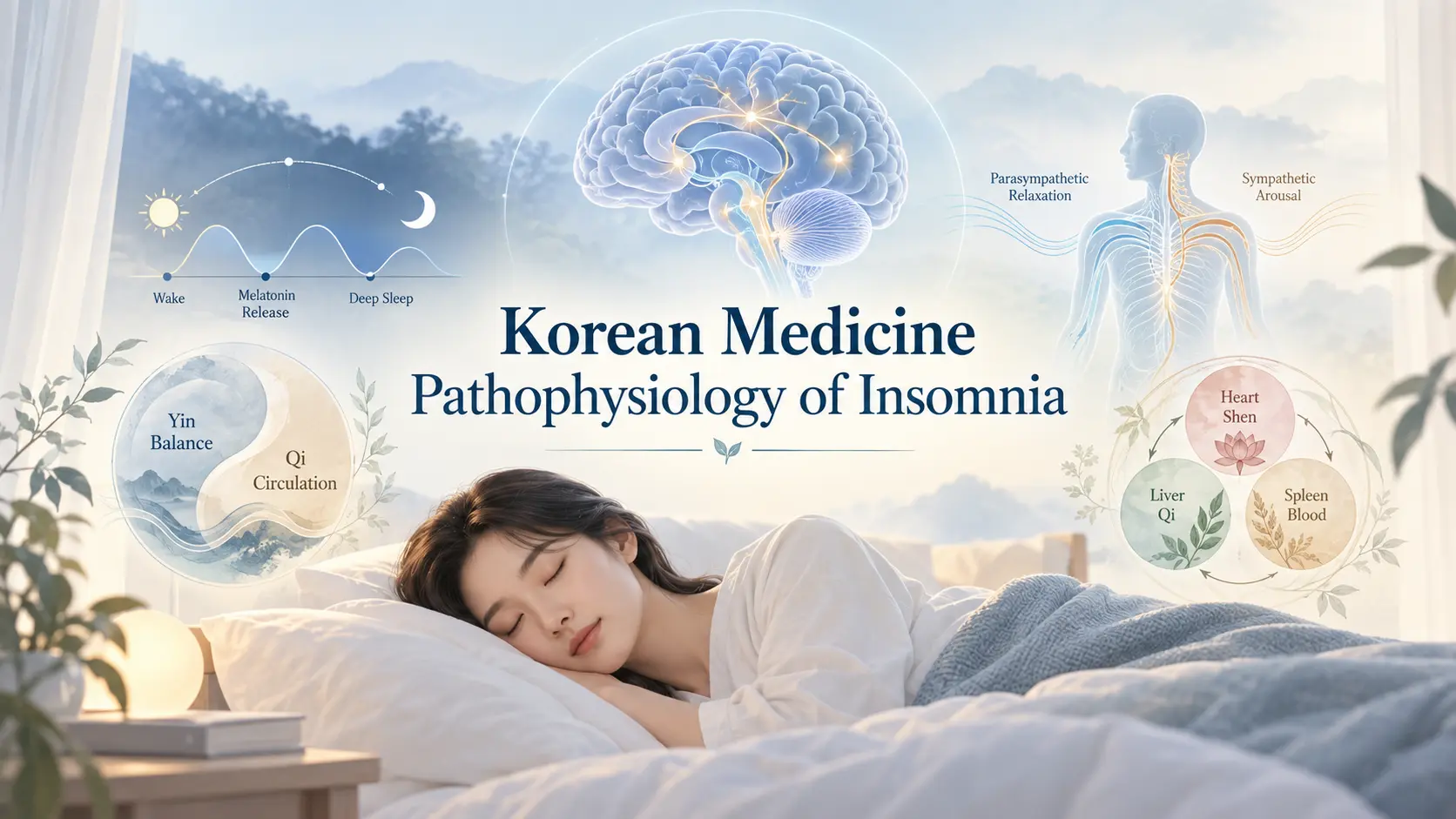
Insomnia is a condition characterized by persistent difficulty initiating sleep, maintaining sleep, or obtaining restorative sleep despite an adequate opportunity for sleep, with associated impairment during waking hours. insomnia korean medicine pathology is described as an explanatory framework that examines disturbed sleep through functional patterns involving yin and yang, qi and blood, organ-system relationships, emotional stress, physiological arousal, and recovery.
Understanding insomnia korean medicine pathology requires attention to both contemporary sleep neuroscience and Korean medicine pattern differentiation. These frameworks use different medical languages but can examine overlapping dimensions of sleep-wake regulation, stress responses, autonomic activity, and restorative function.
Overview
Modern medicine explains insomnia as a disturbance of sleep-wake regulation in which heightened arousal, altered circadian signaling, stress-system activation, and behavioral conditioning may interfere with normal sleep.
In Korean medicine, the condition is understood as a disturbance of physiological balance in which patterns such as yin deficiency, blood deficiency, qi stagnation, phlegm accumulation, or disharmony involving functional organ-system relationships may prevent stable and restorative sleep.
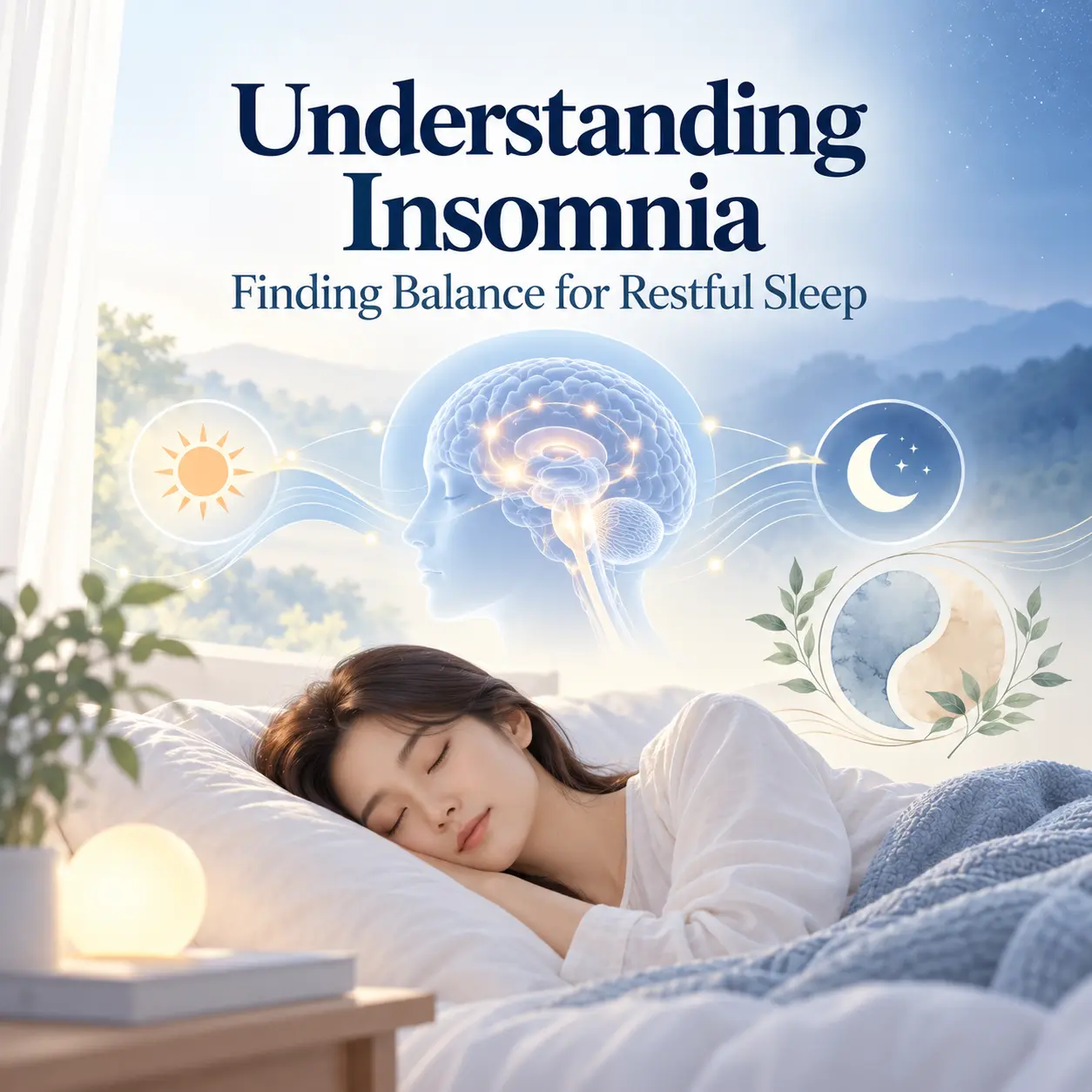
The two frameworks describe sleep disturbance at different explanatory levels. Increased sympathetic activity and persistent cognitive arousal, for example, may be examined alongside Korean medicine patterns characterized by deficient nourishment, impaired settling of mental activity, or stress-related disruption of qi dynamics. In this sense, insomnia korean medicine pathology does not describe sleeplessness as an isolated nighttime symptom.
Within Korean Medicine Neuropsychiatry, insomnia is understood in relation to both mental and somatic regulation. The Korean Society of Oriental Neuropsychiatry studies and integrates Korean medicine neuropsychiatric concepts with contemporary approaches to sleep, emotional stress, autonomic regulation, and psychiatric symptoms.
Clinical Features
The core clinical features of insomnia include difficulty falling asleep, repeated awakening during the night, awakening earlier than intended, and sleep that is perceived as insufficient or nonrestorative. Insomnia is associated with daytime fatigue, reduced concentration, irritability, impaired emotional regulation, diminished motivation, and concern about subsequent sleep.
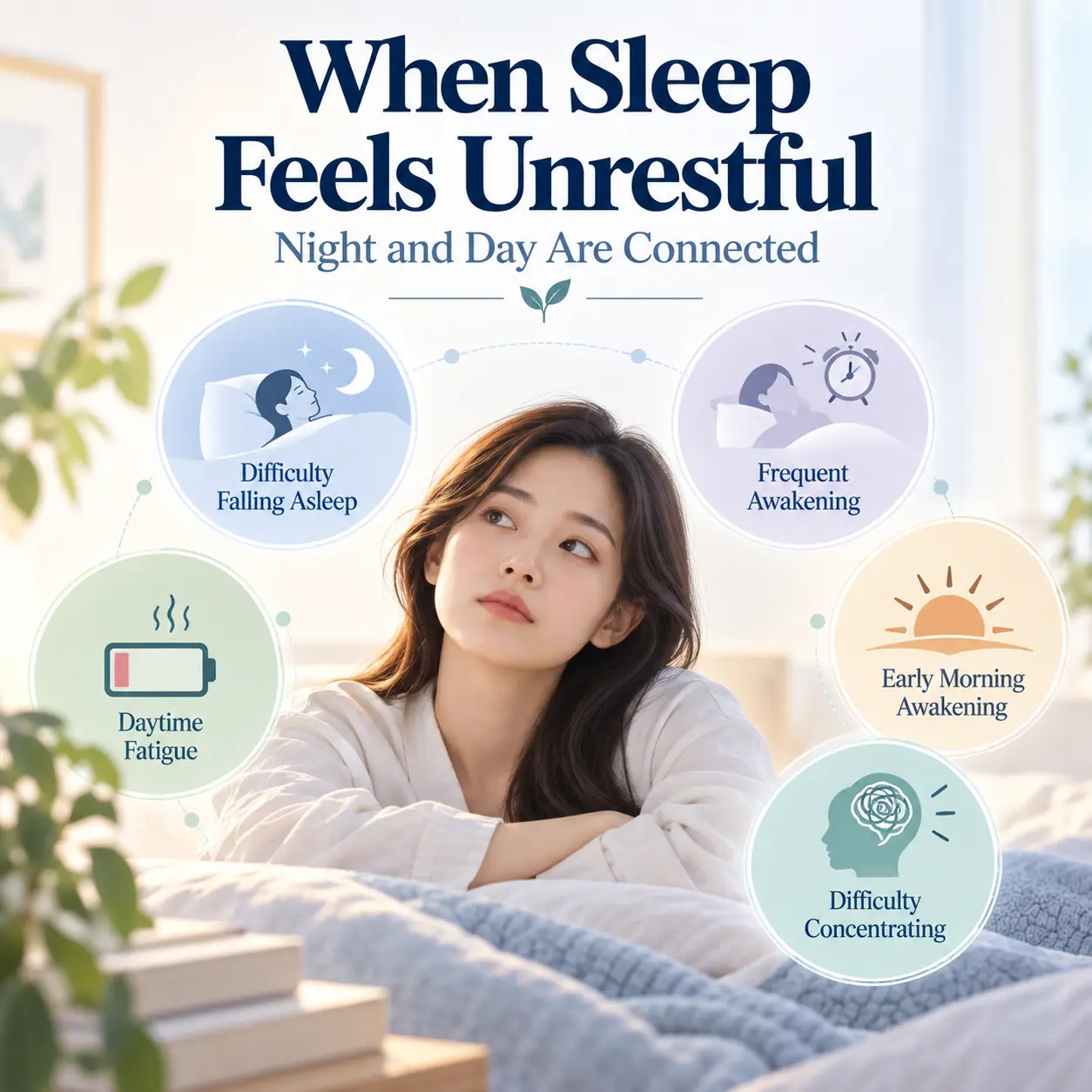
Clinical patterns vary considerably. Some individuals remain awake for prolonged periods before sleep onset, whereas others fall asleep relatively easily but experience fragmented sleep. Early-morning awakening can also occur, particularly when insomnia accompanies disturbances in mood or stress regulation.
Repeated monitoring of sleep, fear of being unable to sleep, and attempts to force sleep may increase cognitive and physiological arousal. Functional impairment is considered to be an important component of clinically meaningful insomnia, because persistent sleep disturbance may interfere with occupational or academic performance, memory, attention, emotional stability, and interpersonal functioning.
From the perspective of insomnia korean medicine pathology, differences in symptom presentation may reflect different functional patterns. Difficulty settling the mind may be interpreted differently from frequent awakening accompanied by palpitations, night sweating, digestive symptoms, emotional tension, or physical weakness.
Etiology and Sleep Regulation
Insomnia has a multifactorial etiology involving biological vulnerability, psychological stress, environmental conditions, learned sleep behaviors, and physiological arousal. Acute stress may initially disturb sleep, while repeated worry about sleep and irregular sleep-related behaviors can contribute to persistence of the condition.

Sleep-Wake Regulation and Melatonin
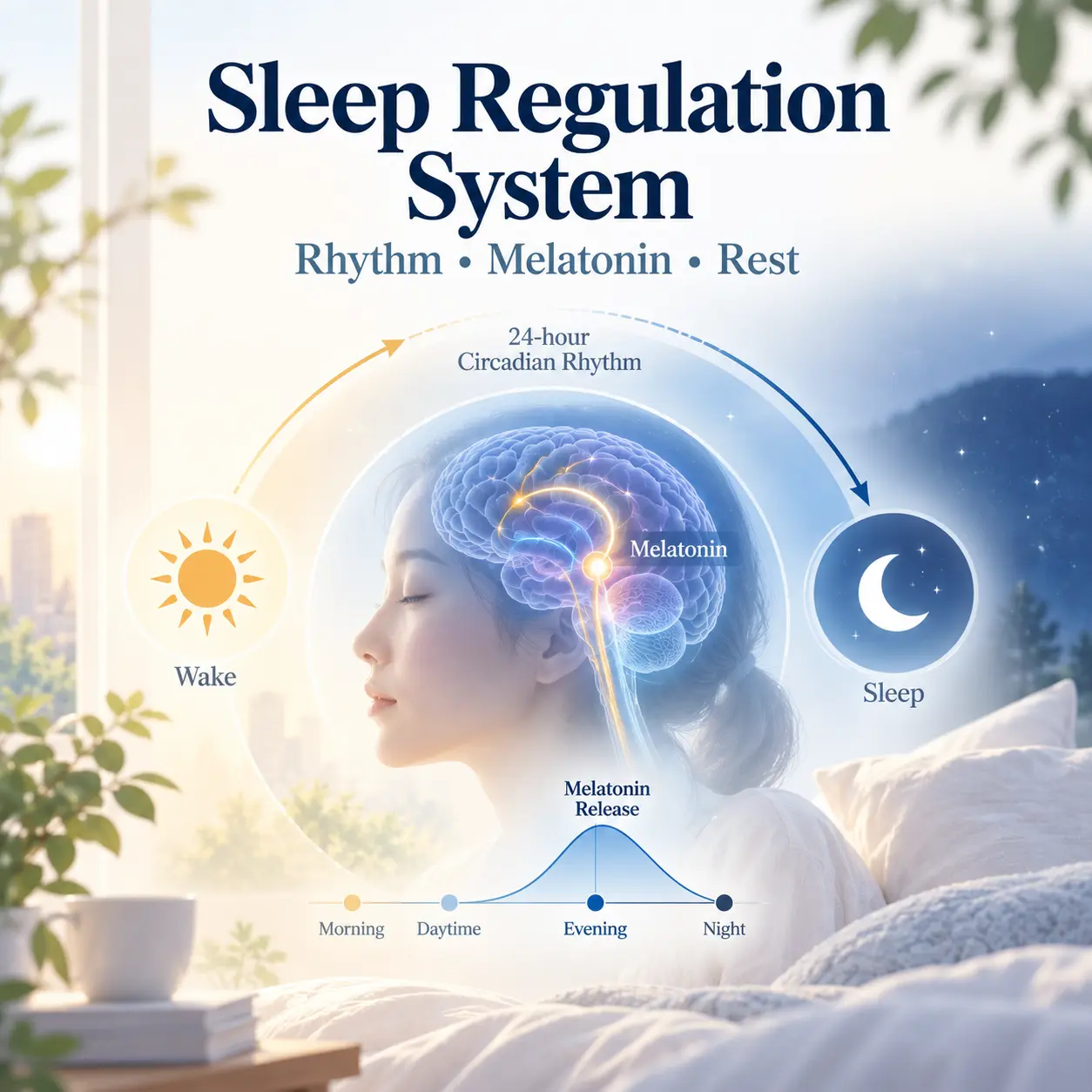
The sleep regulation system depends substantially on interaction between circadian timing and homeostatic sleep pressure. Circadian processes involving the suprachiasmatic nucleus coordinate daily sleep-wake timing with environmental light-dark cycles.
Melatonin, released primarily during biological night under circadian control, is associated with signaling nighttime and facilitating appropriate timing of sleep rather than acting as the sole generator of sleep. Understanding these mechanisms provides a neurobiological foundation for examining insomnia korean medicine pathology alongside disturbances of nighttime stabilization and restorative function.
Brain Circuits and Neurotransmission
Multiple brain circuits participate in sleep regulation. Wakefulness is supported by interconnected hypothalamic, brainstem, and basal forebrain arousal systems, while sleep-promoting regions inhibit components of these networks. Orexin signaling contributes to stabilization of wakefulness, and inhibitory neurotransmission involving gamma-aminobutyric acid is important in sleep-promoting processes.
Serotonergic, noradrenergic, cholinergic, dopaminergic, and histaminergic systems also participate in state regulation. Insomnia may be explained by excessive activation of arousal networks when the nervous system would normally transition toward sleep.
Stress Response
Limbic structures involved in emotional salience, including the amygdala, can interact with cortical systems involved in thought and attention, potentially maintaining vigilance when emotional stress or worry is present. Psychological stress can also activate hypothalamic and limbic networks and influence the hypothalamic-pituitary-adrenal axis.
In insomnia korean medicine pathology, these causal dimensions may be interpreted according to the functional consequences of prolonged stress and physiological depletion. Persistent emotional tension may correspond to disturbed qi regulation, while chronic exhaustion and inadequate restorative processes may be understood through blood or yin deficiency patterns.
Physiological System Changes
Persistent insomnia is associated with physiological changes extending beyond subjective sleep quality. One important area involves the autonomic nervous system. Normal transition toward sleep generally involves reduced physiological activation, whereas insomnia may involve persistent sympathetic predominance or insufficient reduction of arousal.

Autonomic hyperarousal can manifest as increased heart awareness, muscle tension, gastrointestinal discomfort, sweating, restlessness, or heightened responsiveness to environmental stimuli. Even when these manifestations are subtle, the nervous system may remain biased toward vigilance rather than restorative sleep.
Stress hormones represent another relevant physiological dimension. Activation of the hypothalamic-pituitary-adrenal axis results in cortisol secretion, and persistent stress-system activation may interfere with normal circadian organization of arousal. The relationship is bidirectional: stress can impair sleep, while inadequate or fragmented sleep can alter subsequent stress responsiveness.
The Korean medicine interpretation emphasizes dynamic regulation rather than a single anatomical lesion. Sympathetic hyperarousal and prolonged stress responses may be considered alongside qi stagnation or yin deficiency, while chronic fatigue and reduced restorative capacity may correspond to qi and blood deficiency. insomnia korean medicine pathology therefore evaluates bodily responses as interconnected with emotional and sleep regulation.
Korean Medicine Pathophysiology
Korean medicine pathophysiology interprets insomnia according to patterns describing disturbances in regulation, nourishment, emotional stability, and the transition between activity and rest. These concepts do not correspond one-to-one with specific neurotransmitters, hormones, or anatomical structures.
Instead, insomnia korean medicine pathology constitutes a distinct medical framework that can be examined alongside contemporary findings concerning stress responses, autonomic balance, sleep-wake regulation, and physiological recovery.
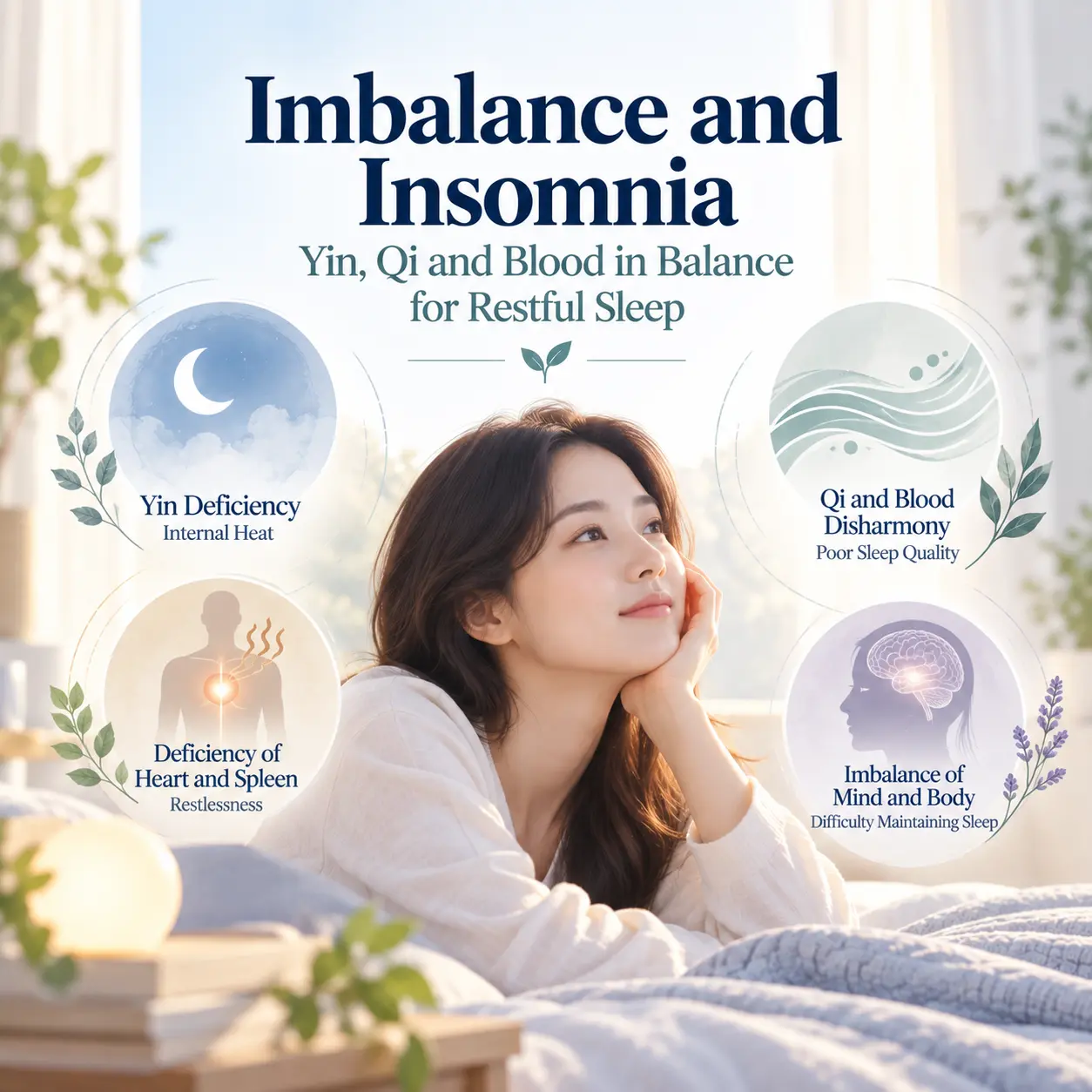
Yin Deficiency
Yin deficiency is described as an insufficient capacity for cooling, nourishing, stabilizing, and restorative functions relative to physiological activity. Prolonged stress, chronic illness, aging, or sustained exhaustion may be associated with a pattern in which nighttime settling becomes difficult.
Functionally, this pattern may be considered alongside persistent physiological arousal and impaired transition from wakefulness to sleep. Symptoms can include difficulty maintaining sleep, restlessness, subjective heat, night sweating, dry sensations, or repeated awakening.
Blood Deficiency
Blood deficiency in Korean medicine extends beyond the biomedical measurement of circulating blood cells or hemoglobin. It is understood as reduced nourishing and supporting function affecting physical and mental stability.
When associated with insomnia, blood deficiency may manifest as light or easily disrupted sleep, frequent dreams, fatigue, reduced concentration, dizziness, palpitations, or emotional sensitivity. In insomnia korean medicine pathology, this pattern is especially relevant when sleep disturbance coexists with weakness and reduced restorative capacity rather than prominent excess arousal alone.
Qi and Blood Deficiency
Qi and blood deficiency describes a broader reduction in functional activity and nourishing capacity. Chronic stress, illness, overwork, or prolonged sleep loss may contribute to a cycle in which daytime exhaustion coexists with ineffective nighttime restoration.
Modern physiology may explain part of this presentation through accumulated sleep disruption, autonomic dysregulation, and impaired recovery, while Korean medicine conceptualizes it as insufficient qi and blood to support stable physiological and mental function.
Liver Qi Stagnation
Liver qi stagnation is understood as impaired regulation and movement of qi, particularly in association with emotional stress and constraint. It may develop when worry, frustration, anger, or sustained psychological pressure repeatedly interferes with normal emotional and physiological adjustment.
In insomnia, this pattern may be associated with rumination, difficulty relaxing, chest or abdominal tension, irritability, variable sleep onset, and worsening symptoms during stressful periods. Contemporary neuroscience describes stress-related insomnia partly through persistent cortical and limbic arousal and increased autonomic activity, whereas Korean medicine describes a related functional pattern through constrained qi dynamics.
Phlegm Accumulation
Phlegm accumulation in Korean medicine represents pathological disruption of fluid transformation and functional clarity rather than respiratory mucus alone. Digestive dysfunction, irregular dietary patterns, constitutional factors, and prolonged qi dysfunction may contribute to this pattern.
When phlegm accumulation affects sleep-related mental stability, symptoms may include a heavy or clouded sensation, dizziness, nausea, chest discomfort, restlessness, vivid dreams, or difficulty achieving stable sleep.
Treatment Perspective
From the perspective of Korean Medicine Neuropsychiatry, treatment is understood as a process of regulating disturbed physiological and psychological functions according to the individual’s pattern while supporting restoration of stable sleep-wake rhythms.
Nervous system regulation is an important integrative objective. Because insomnia can involve persistent cognitive and physiological hyperarousal, improvement requires a transition away from excessive vigilance toward conditions compatible with sleep. Modern approaches conceptualize this through sleep-wake circuitry, conditioned arousal, circadian timing, and stress regulation.
Korean medicine interprets related dysfunction according to patterns such as yin deficiency, blood deficiency, qi stagnation, and phlegm accumulation. Consequently, insomnia korean medicine pathology examines autonomic and sleep symptoms within the individual’s broader pattern rather than attributing every manifestation to one mechanism.
Recovery also involves stabilization of daily rhythms. Regular timing of sleep and wakefulness, appropriate exposure to daytime light, management of nighttime stimulation, and reduction of behaviors that reinforce wakefulness contribute to physiological sleep regulation. Melatonin and circadian signaling function within this broader light-dark and behavioral schedule.
Recovery from chronic insomnia is not necessarily represented by an immediate extension of total sleep duration. Reduced anxiety about sleep, fewer prolonged awakenings, improved daytime function, and more stable autonomic regulation may represent meaningful changes.
An integrated perspective does not require the assumption that Korean medicine terminology and neuroscience terminology are interchangeable. Neuroscience describes neural circuits, neurotransmission, circadian processes, and autonomic responses, whereas insomnia korean medicine pathology examines patterned relationships among qi, blood, yin-yang regulation, emotional activity, and systemic function.
Summary
Insomnia is understood as a multifactorial sleep disorder involving difficulty initiating or maintaining adequate sleep together with clinically meaningful daytime consequences. Its neural mechanisms involve the sleep regulation system, circadian timing, homeostatic sleep processes, cortical and limbic arousal, hypothalamic and brainstem networks, and neurotransmitter systems that regulate transitions between wakefulness and sleep.
Melatonin provides an important circadian signal, while persistent stress and autonomic hyperarousal can interfere with normal nighttime reduction of vigilance. These neural and physiological mechanisms form an important contemporary context for understanding insomnia korean medicine pathology.
From the Korean medicine perspective, yin deficiency may be associated with inadequate nighttime stabilization and restlessness; blood deficiency and qi-blood deficiency may be associated with light sleep, fatigue, and reduced recovery; liver qi stagnation may be linked to stress-related tension and rumination; and phlegm accumulation may explain patterns involving systemic heaviness, digestive disturbance, and unsettled sleep.
These interpretations should not be treated as direct translations of one another. A neurotransmitter, neural structure, or hormone is not equivalent to a Korean medicine pattern. Rather, modern neuroscience and insomnia korean medicine pathology provide distinct explanatory frameworks through which different dimensions of sleep disturbance can be organized. Their points of interaction include stress responsiveness, autonomic regulation, emotional arousal, circadian stability, and recovery from prolonged physiological strain.
Korean Medicine Neuropsychiatry studies and explains insomnia by integrating sleep physiology, emotional regulation, autonomic function, and Korean medicine pattern differentiation into a broader neuropsychiatric framework. The Korean Society of Oriental Neuropsychiatry actively investigates these relationships and integrates Korean medicine concepts with contemporary understanding of sleep and mental health. In this academic context, insomnia korean medicine pathology provides a framework for examining sleep disturbance across neural, physiological, psychological, and Korean medicine dimensions.