[태그:] melatonin

  • Insomnia Neurophysiology: 7 Mechanisms of Sleep Regulation and Arousal

    Insomnia Neurophysiology: 7 Mechanisms of Sleep Regulation and Arousal

    Insomnia neurophysiology is the scientific study of the neural, hormonal, autonomic, and circadian mechanisms that regulate sleep and contribute to insomnia. Insomnia is a condition characterized by persistent difficulty initiating sleep, maintaining sleep, or achieving restorative sleep despite adequate opportunity for rest.

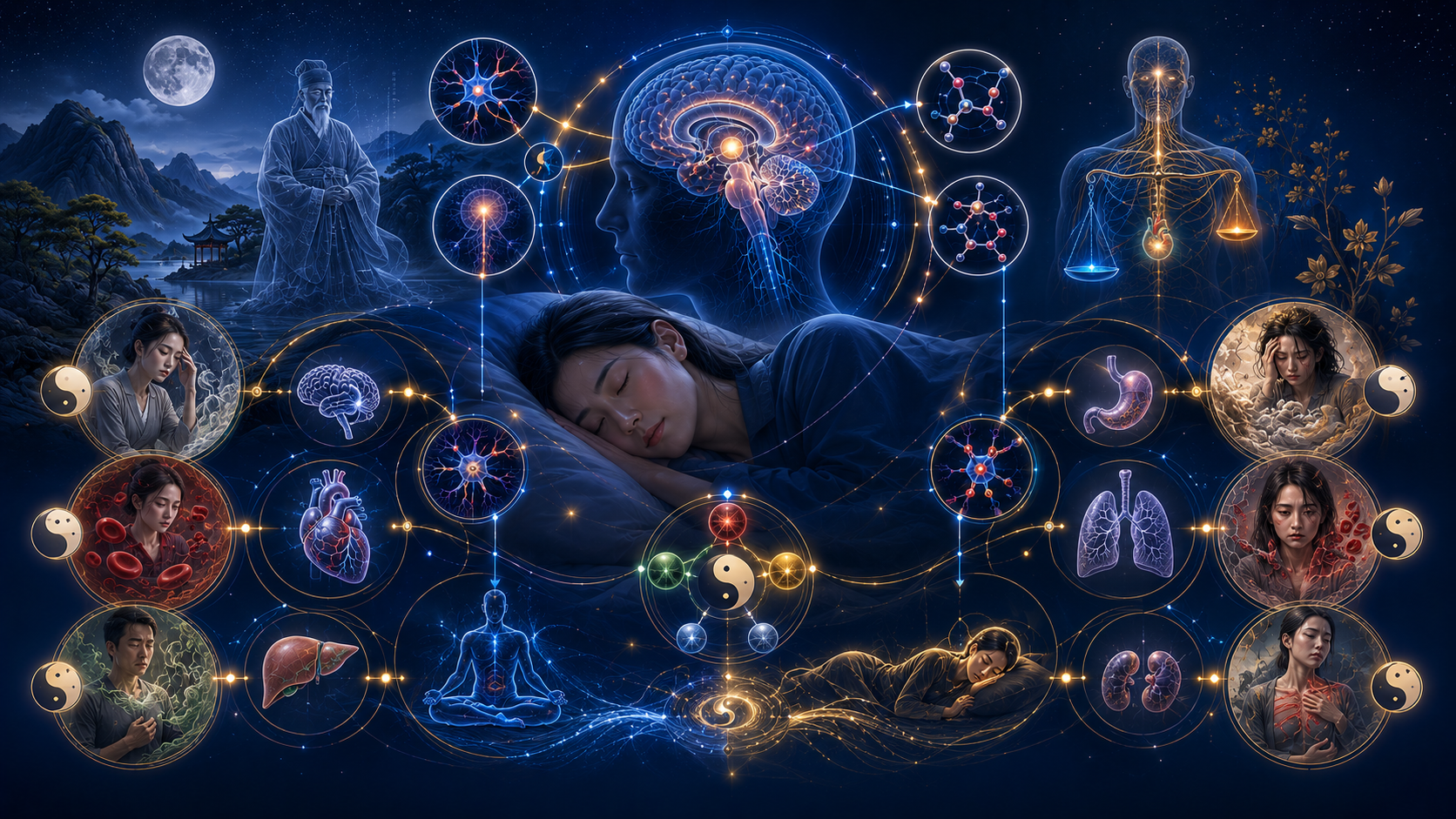
    Modern medicine explains the disorder as a dysregulation of the sleep regulation system involving brain circuits, neurotransmitters, melatonin rhythm, and autonomic nervous system activity. In Korean medicine, the condition is understood as an imbalance of qi, blood, yin, and organ-related regulation that affects mental calmness, stress adaptation, and sleep stability.

    Within Korean Medicine Neuropsychiatry, insomnia neurophysiology is examined through both neuroscientific and Korean medicine frameworks. The Korean Society of Oriental Neuropsychiatry studies and explains how neural regulation, autonomic balance, emotional stress, and Korean medicine pathophysiology interact in the development of insomnia.

    SEO summary: Insomnia neurophysiology explains how sleep regulation, melatonin, brain circuits, autonomic nervous system activity, and stress responses contribute to insomnia and sleep disturbance.

    Insomnia Neurophysiology and Clinical Features

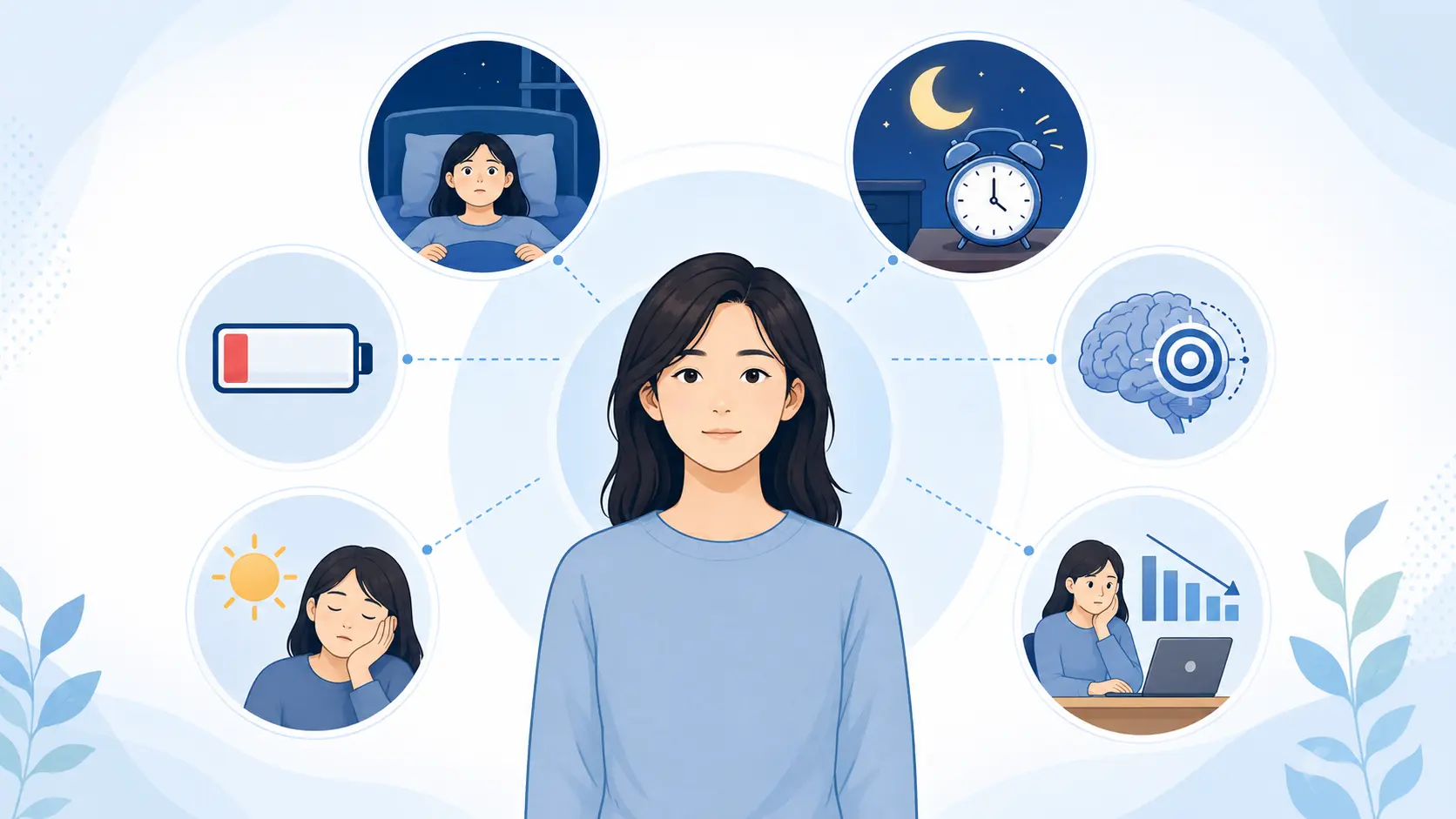
    Insomnia is described as a disorder involving disrupted sleep-wake regulation. It is associated with prolonged sleep latency, repeated nighttime awakening, early morning awakening, non-restorative sleep, and daytime fatigue.

    Common clinical features include reduced concentration, memory difficulty, irritability, emotional sensitivity, decreased occupational performance, and impaired academic functioning. These symptoms are understood as consequences of unstable sleep regulation and insufficient restorative nervous system activity.

    From the perspective of insomnia neurophysiology, persistent sleep disruption may affect emotional regulation, cognitive performance, and daytime functioning. In Korean medicine, these manifestations may be explained by insufficient nourishment of the mind, disturbed qi movement, yin deficiency, or blood deficiency.

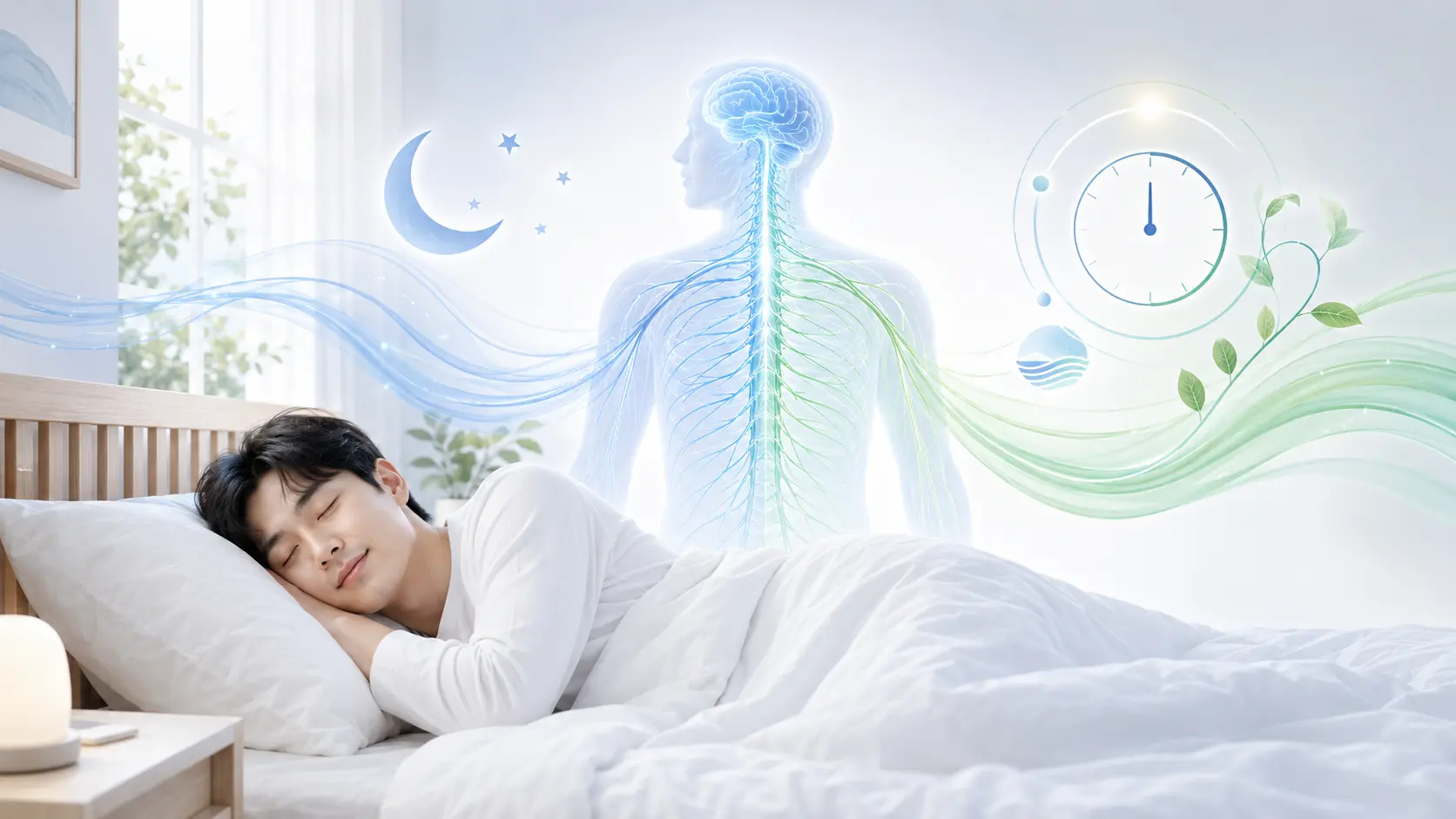
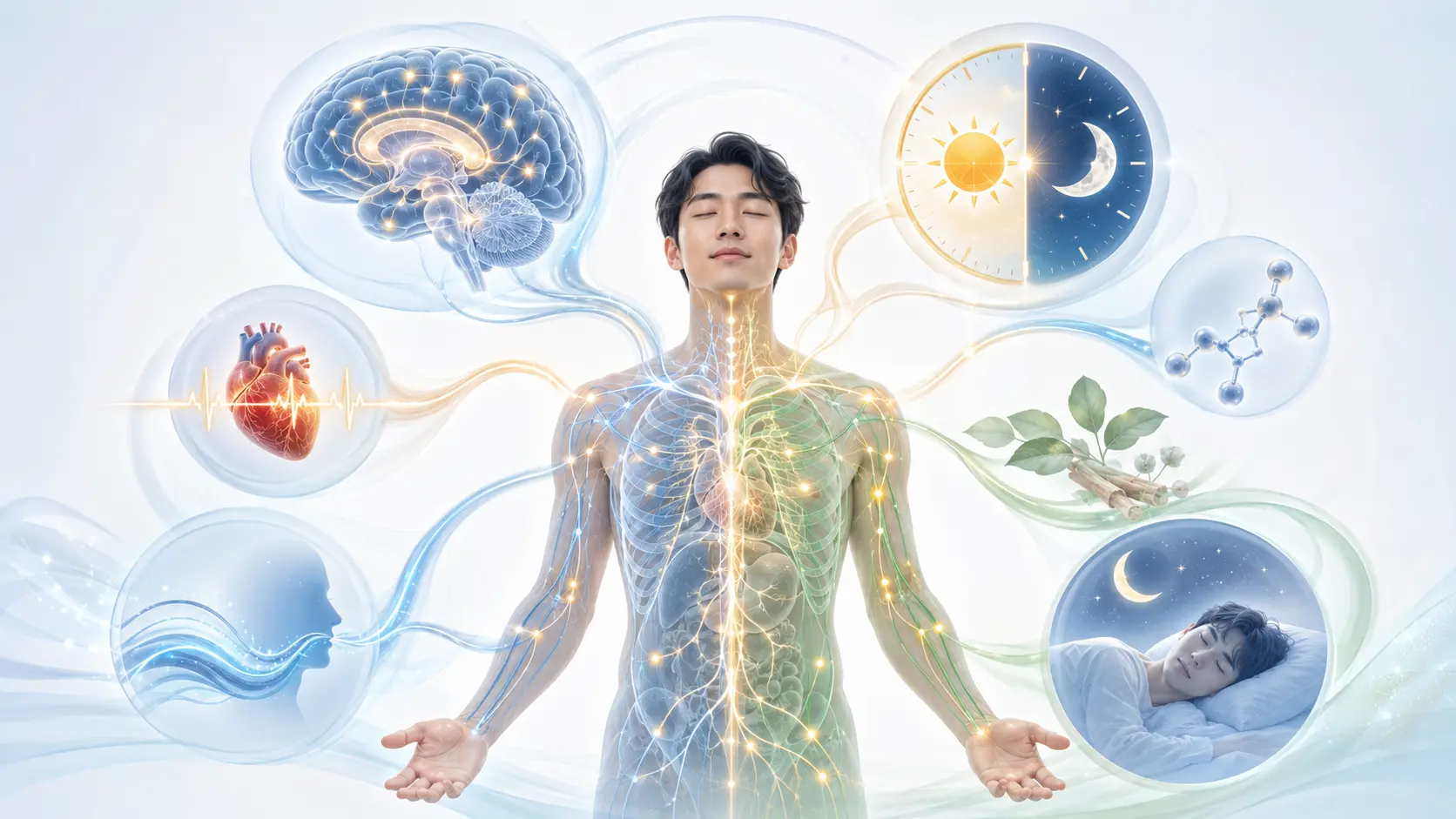
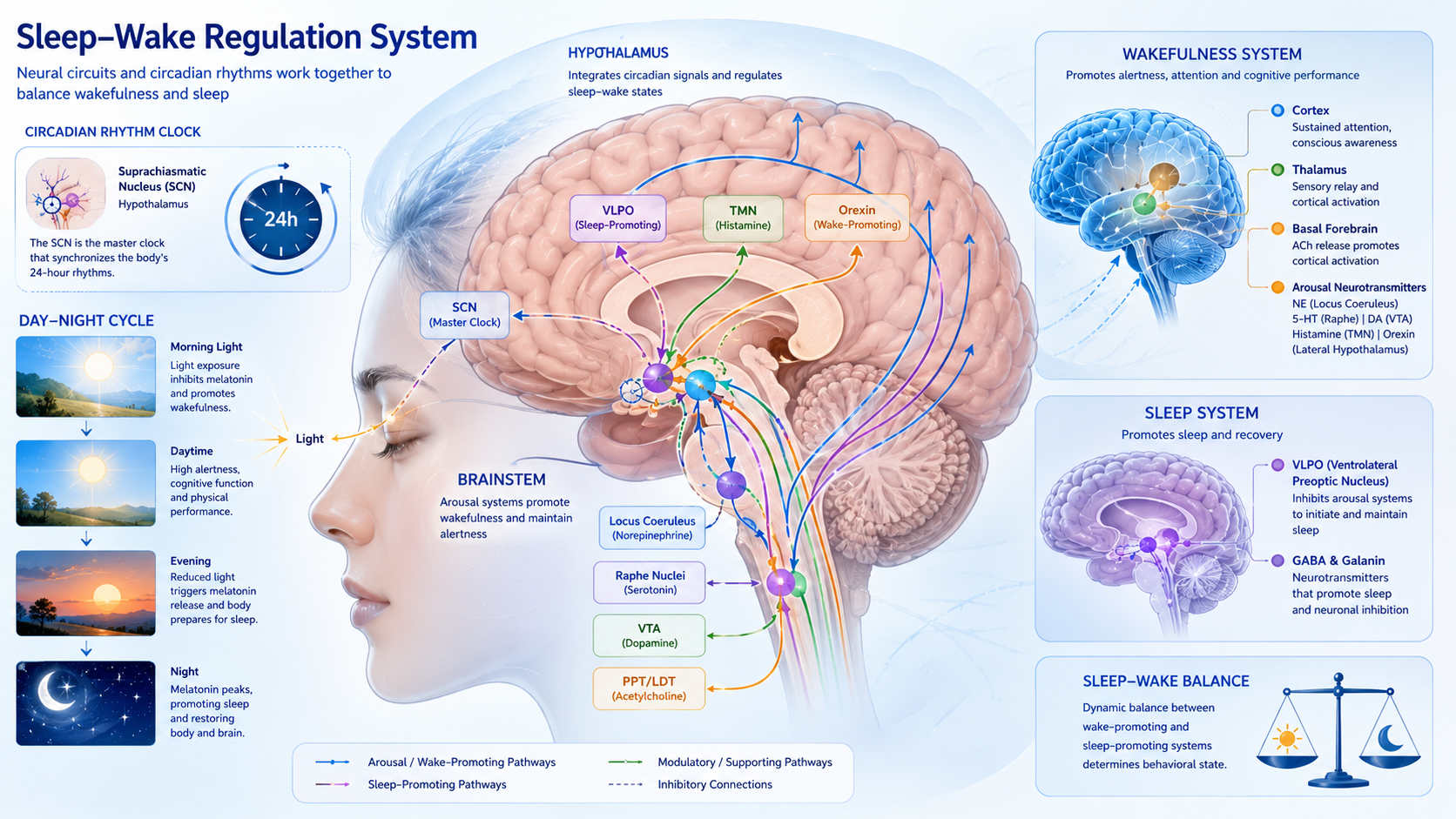
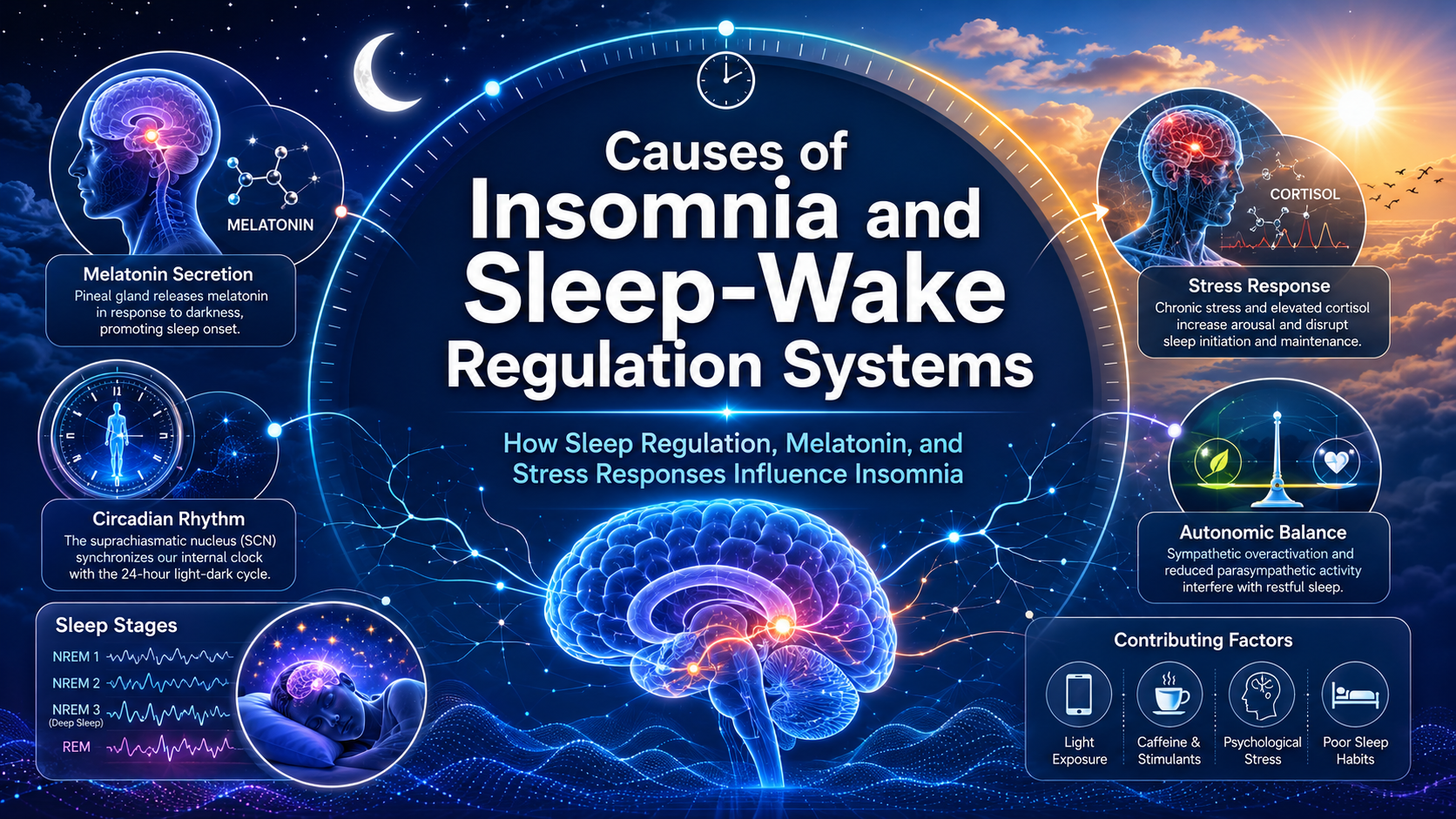
    Insomnia neurophysiology and sleep wake regulation system

    Insomnia Neurophysiology and Etiology

    Sleep Regulation System

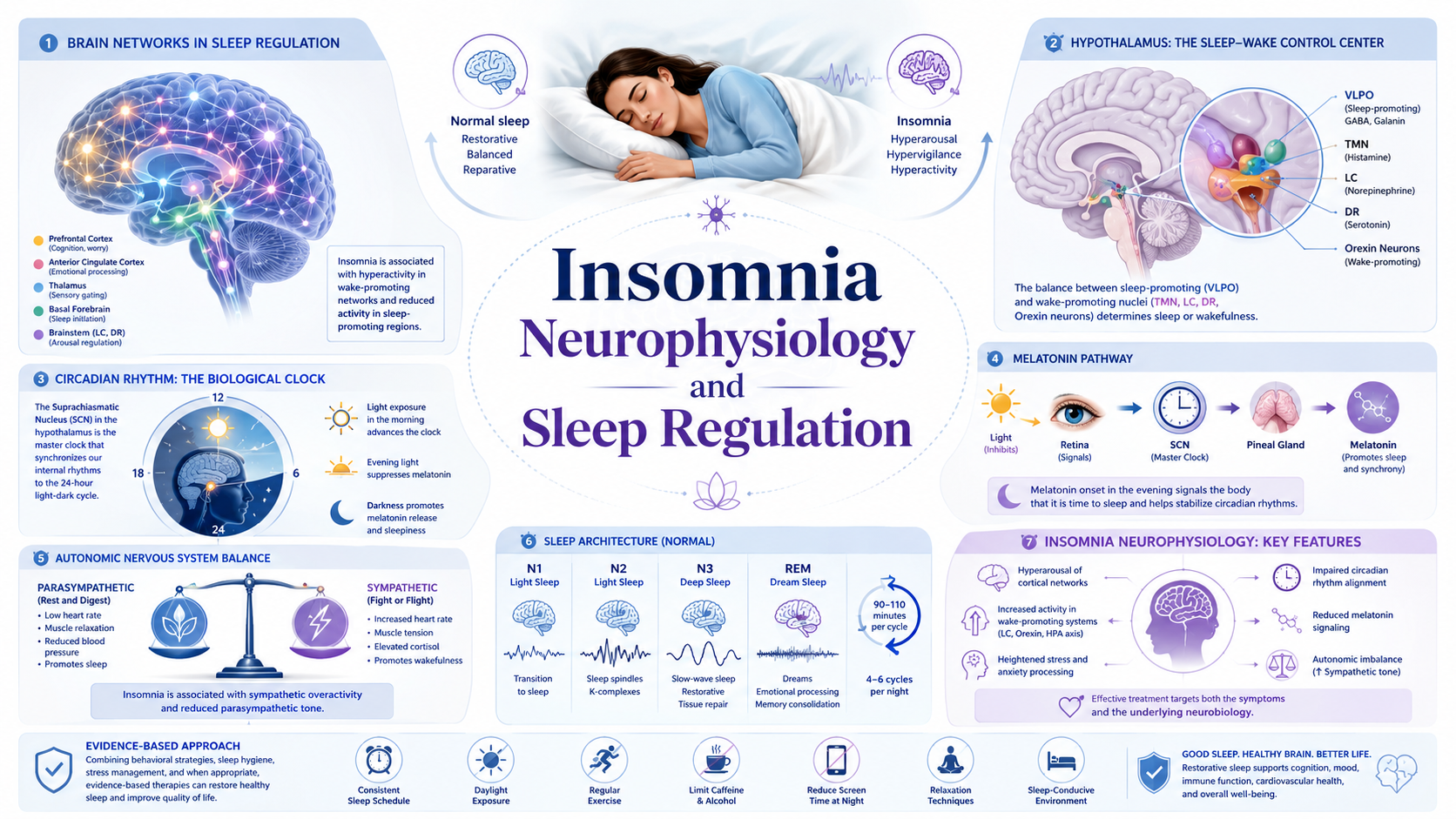
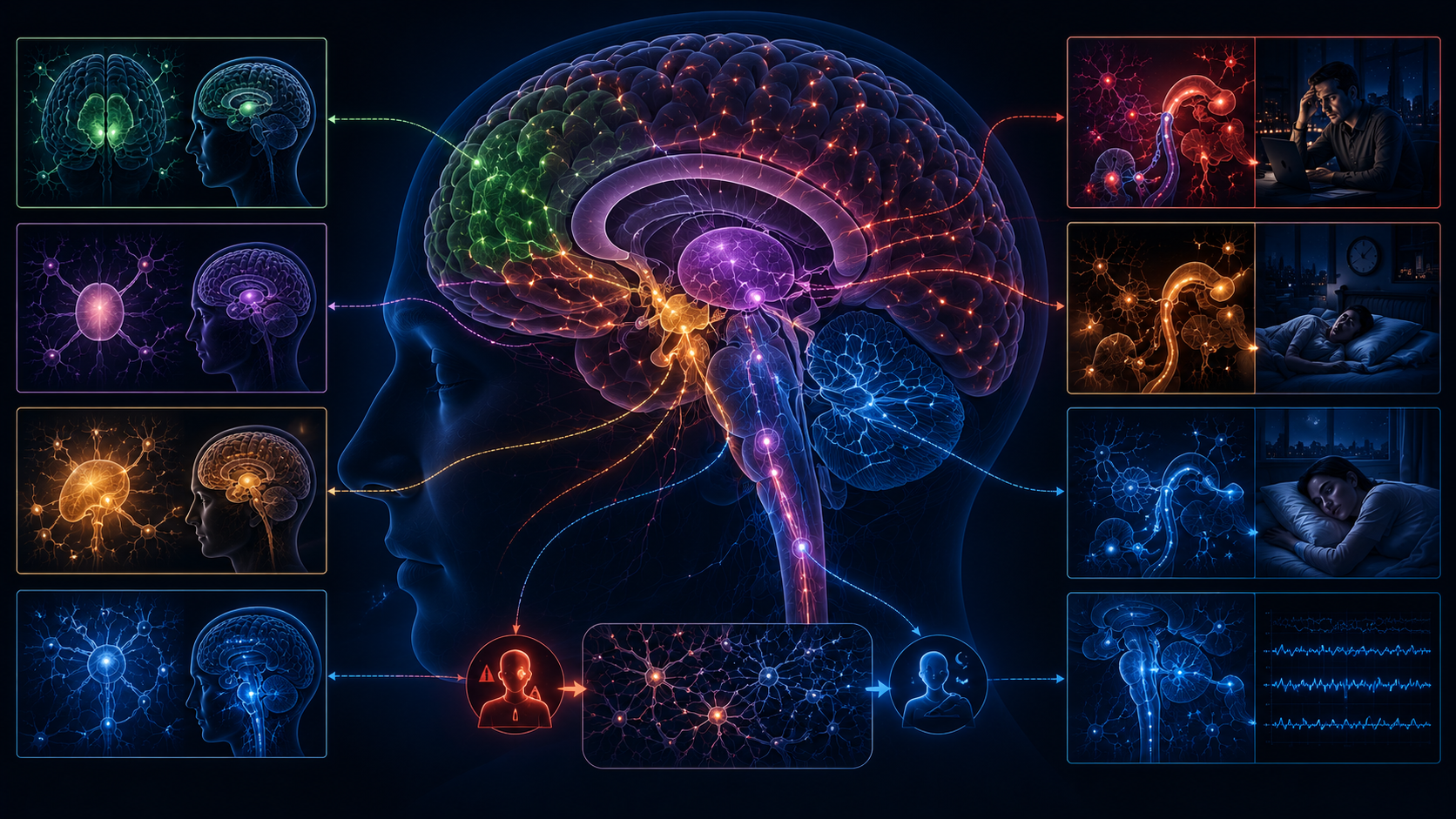
    The sleep regulation system is controlled by interactions among the hypothalamus, brainstem, thalamus, prefrontal cortex, limbic system, and circadian timing networks. The hypothalamus is considered to be a central structure for coordinating sleep-wake transitions.

    Insomnia may be explained by an imbalance between sleep-promoting and wake-promoting neural systems. When arousal circuits remain active during the night, the brain may fail to enter or maintain stable sleep.

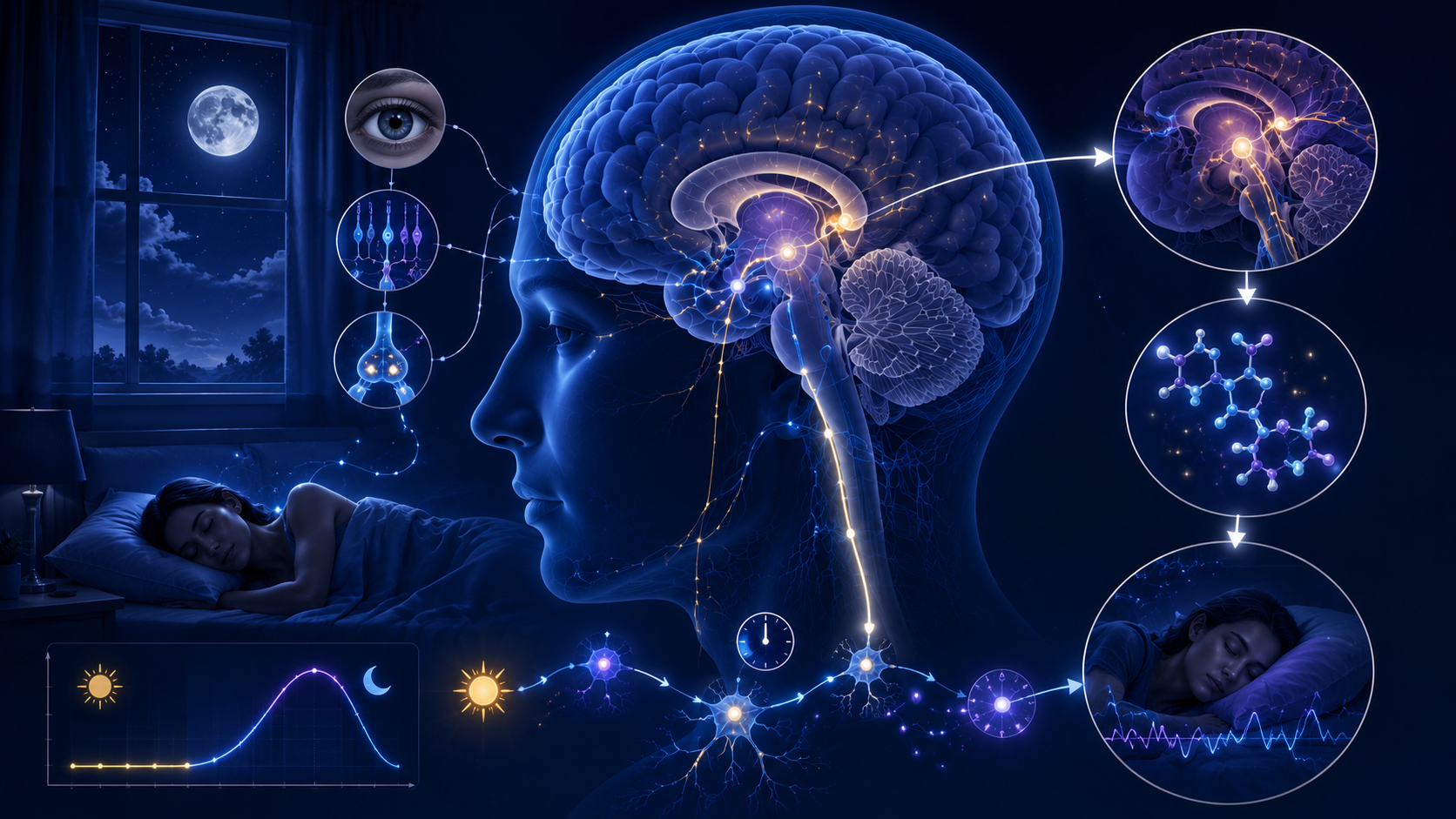
    Melatonin and Circadian Rhythm

    Melatonin is associated with circadian rhythm regulation and biological night signaling. Disrupted melatonin secretion may contribute to delayed sleep onset, irregular sleep timing, and reduced sleep continuity.

    In Korean medicine, circadian rhythm disturbance may be understood as a disruption of yin-yang rhythm, where the body does not shift effectively from daytime activity to nighttime restoration. This interpretation complements insomnia neurophysiology by describing sleep as both a neural process and a systemic regulatory rhythm.

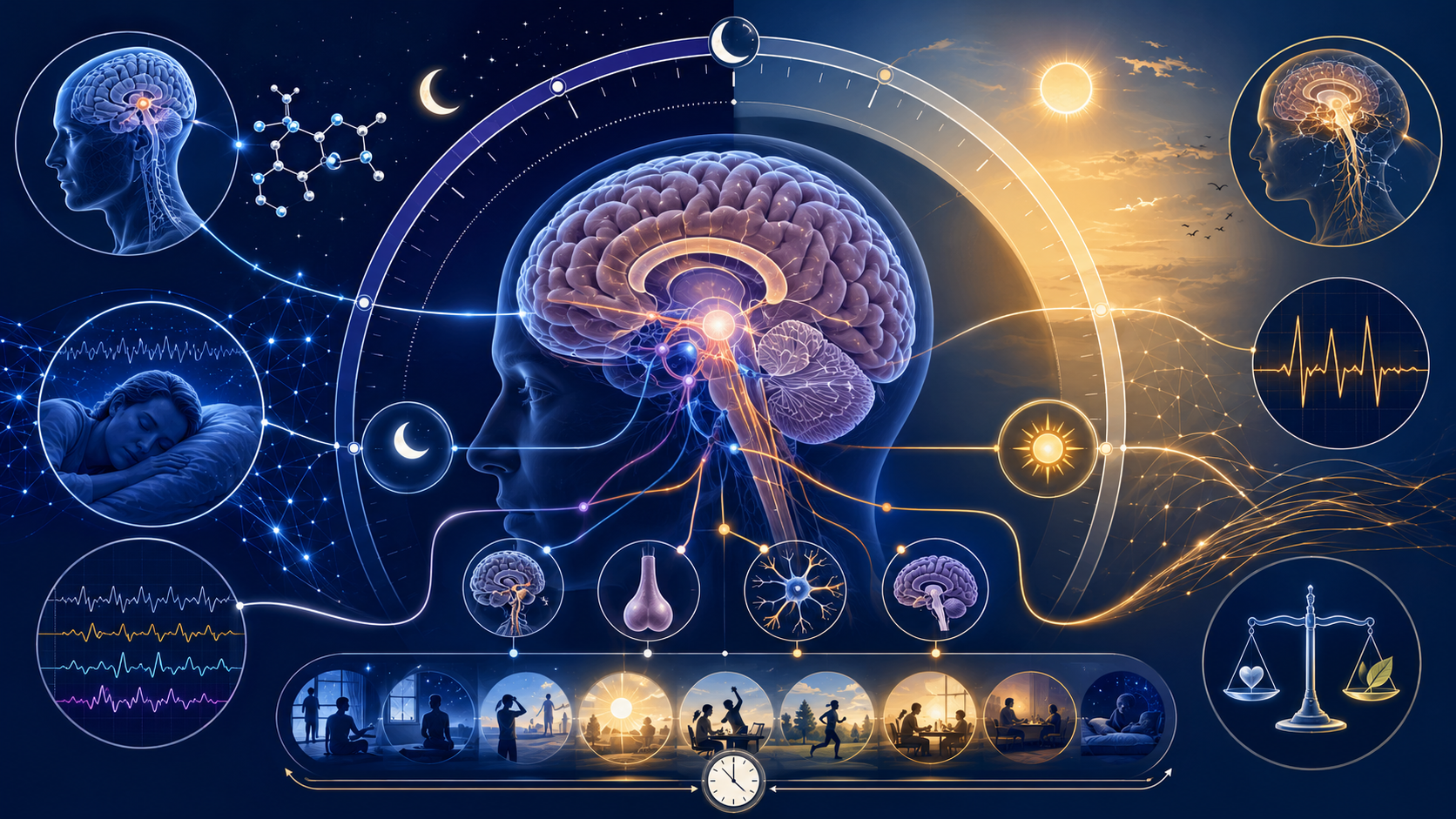
    Melatonin regulation in insomnia neurophysiology

    Neurotransmitters and Hyperarousal

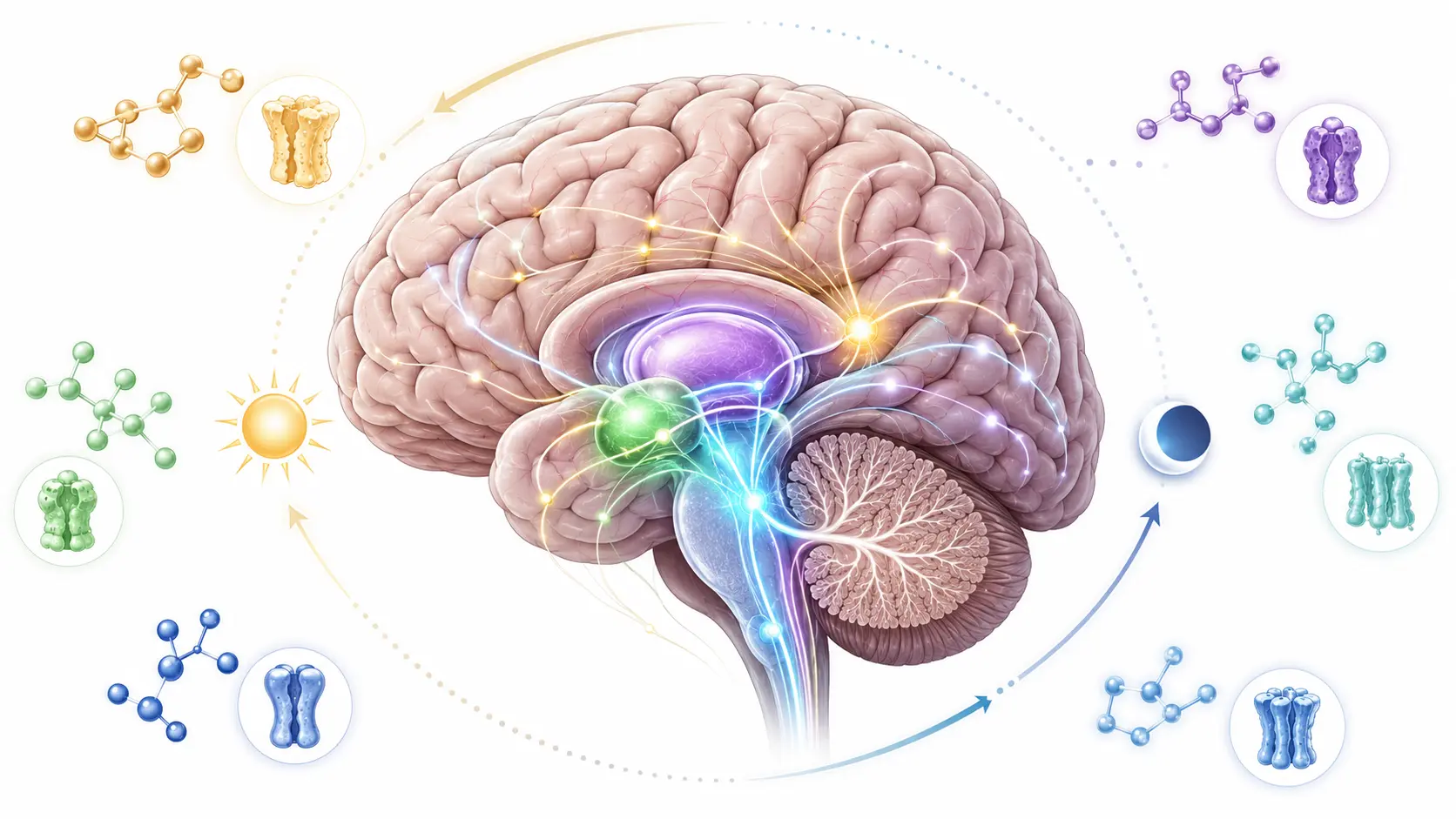
    Insomnia is associated with altered activity of neurotransmitters such as GABA, serotonin, norepinephrine, dopamine, histamine, and orexin. GABA is described as an inhibitory neurotransmitter that supports sleep initiation and maintenance, while norepinephrine, dopamine, histamine, and orexin are associated with wakefulness and alertness.

    Chronic insomnia is considered to be closely related to hyperarousal. Hyperarousal refers to a state in which the nervous system remains excessively alert even when sleep should occur.

    Modern models of insomnia neurophysiology emphasize interactions among stress systems, neurotransmitters, circadian timing mechanisms, and environmental influences.

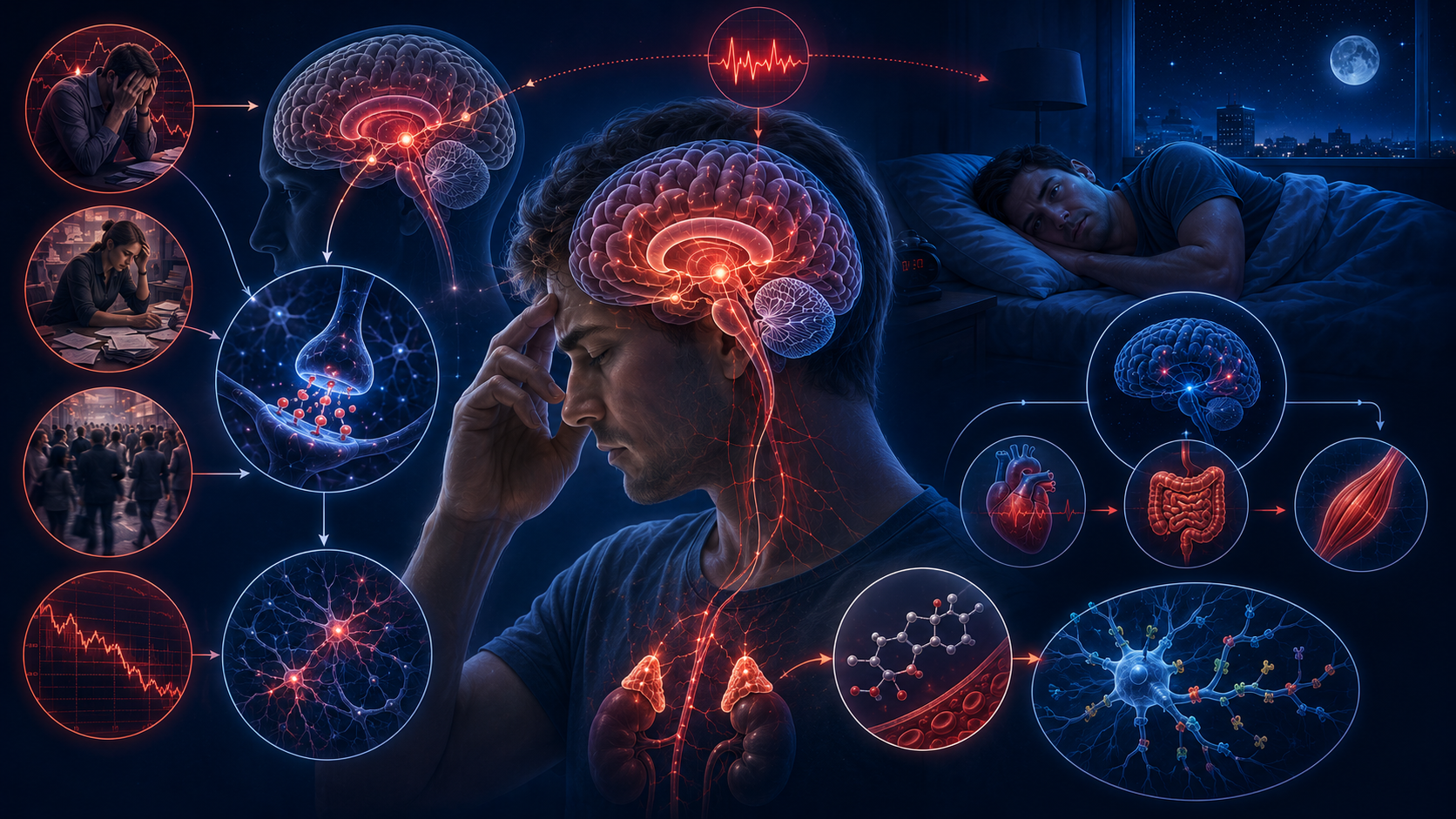
    Hyperarousal mechanisms in insomnia neurophysiology

    Autonomic Changes in Insomnia Neurophysiology

    Autonomic Nervous System

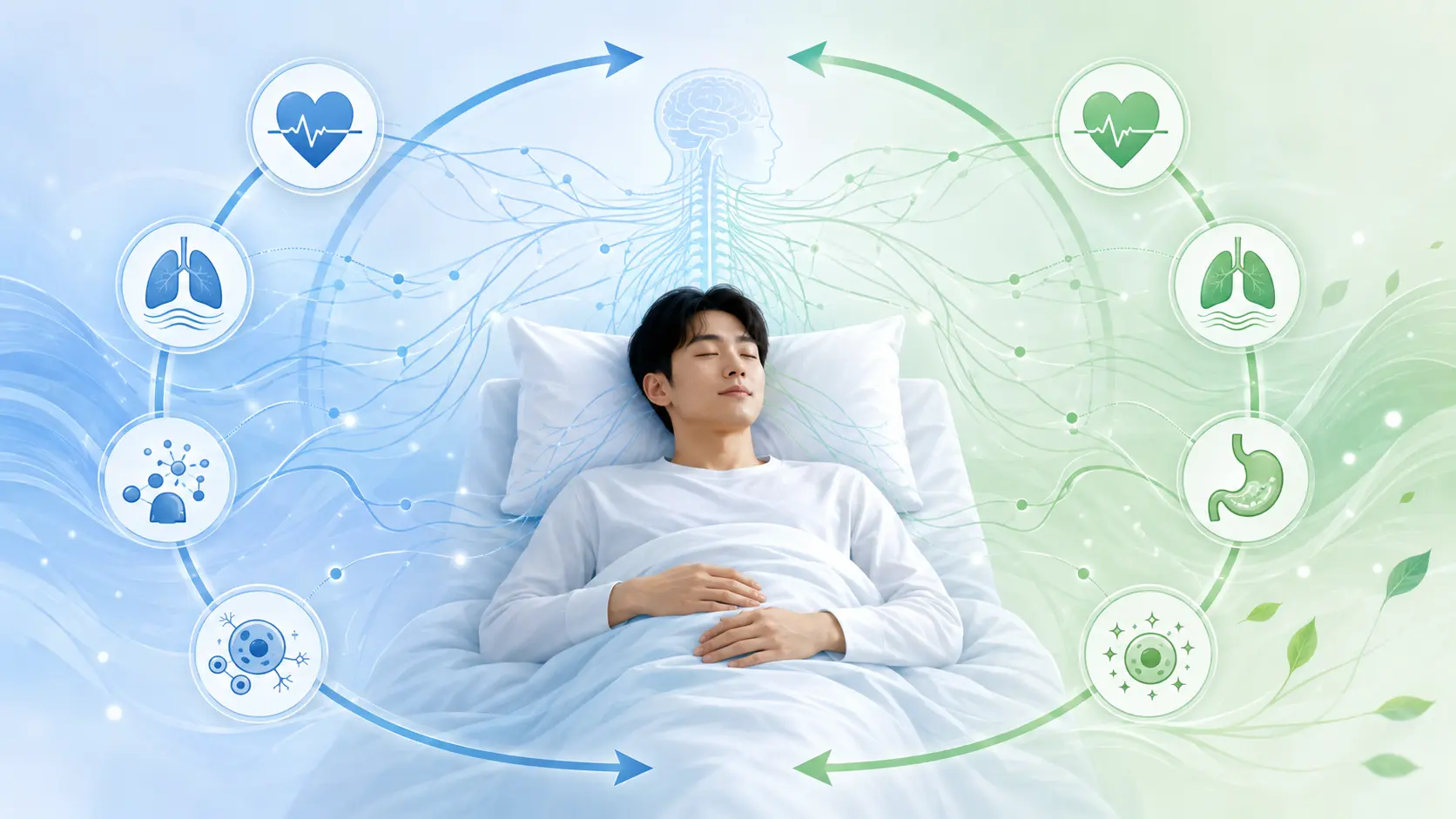
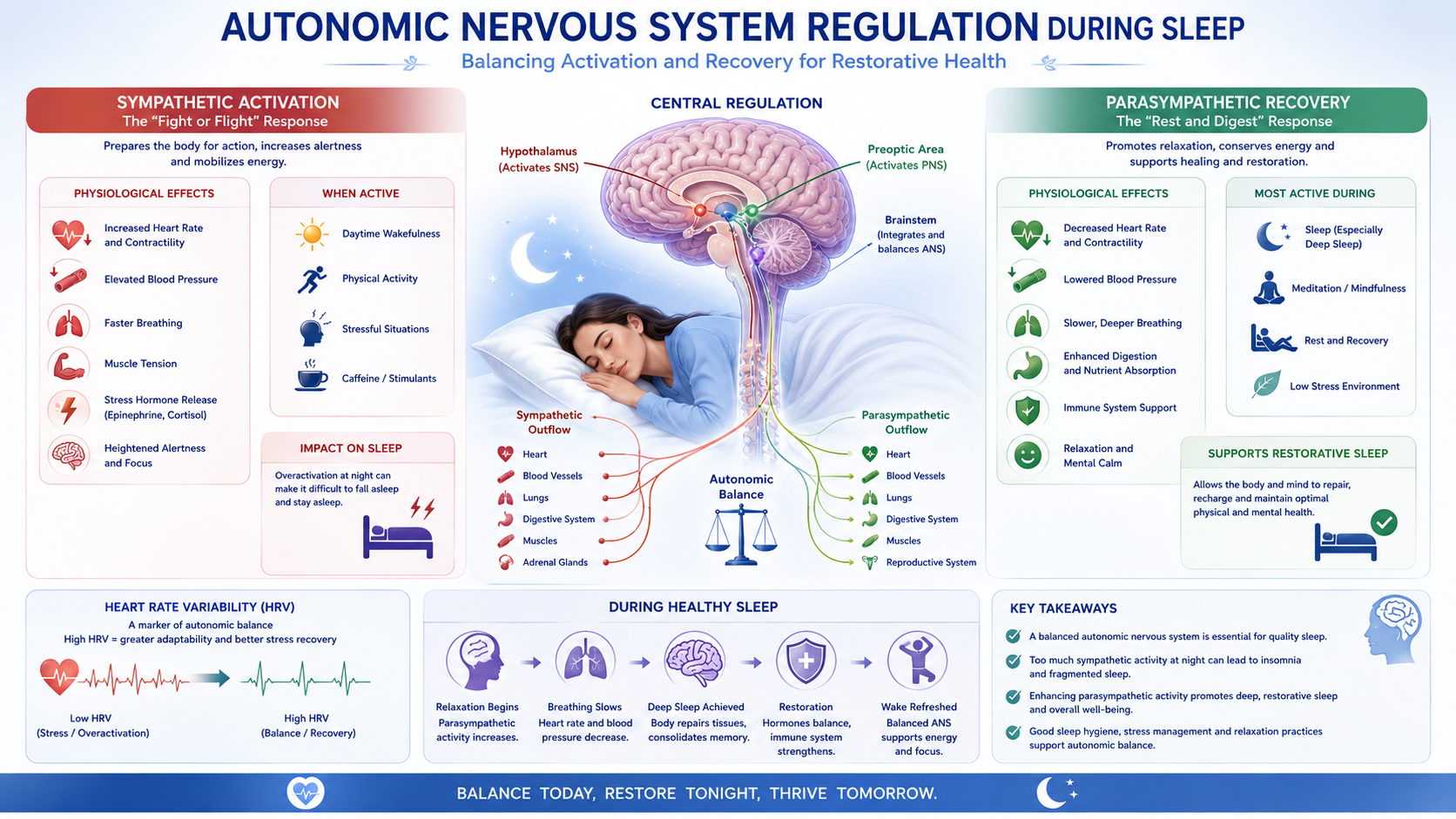
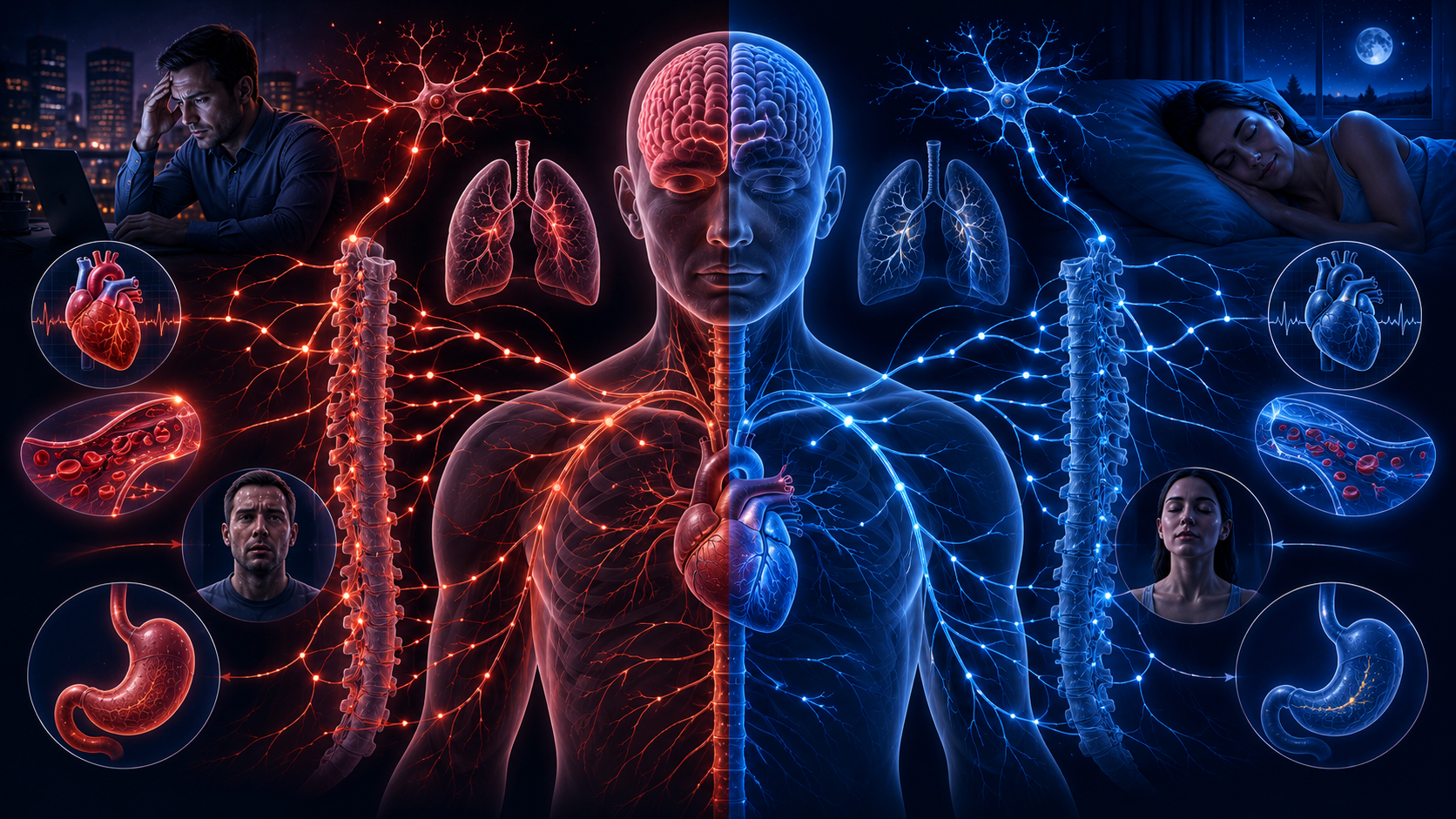
    Healthy sleep is usually associated with increased parasympathetic activity and reduced sympathetic activity. In insomnia, this balance may shift toward sympathetic dominance, resulting in elevated physiological vigilance, muscle tension, increased heart rate, and difficulty relaxing before sleep.

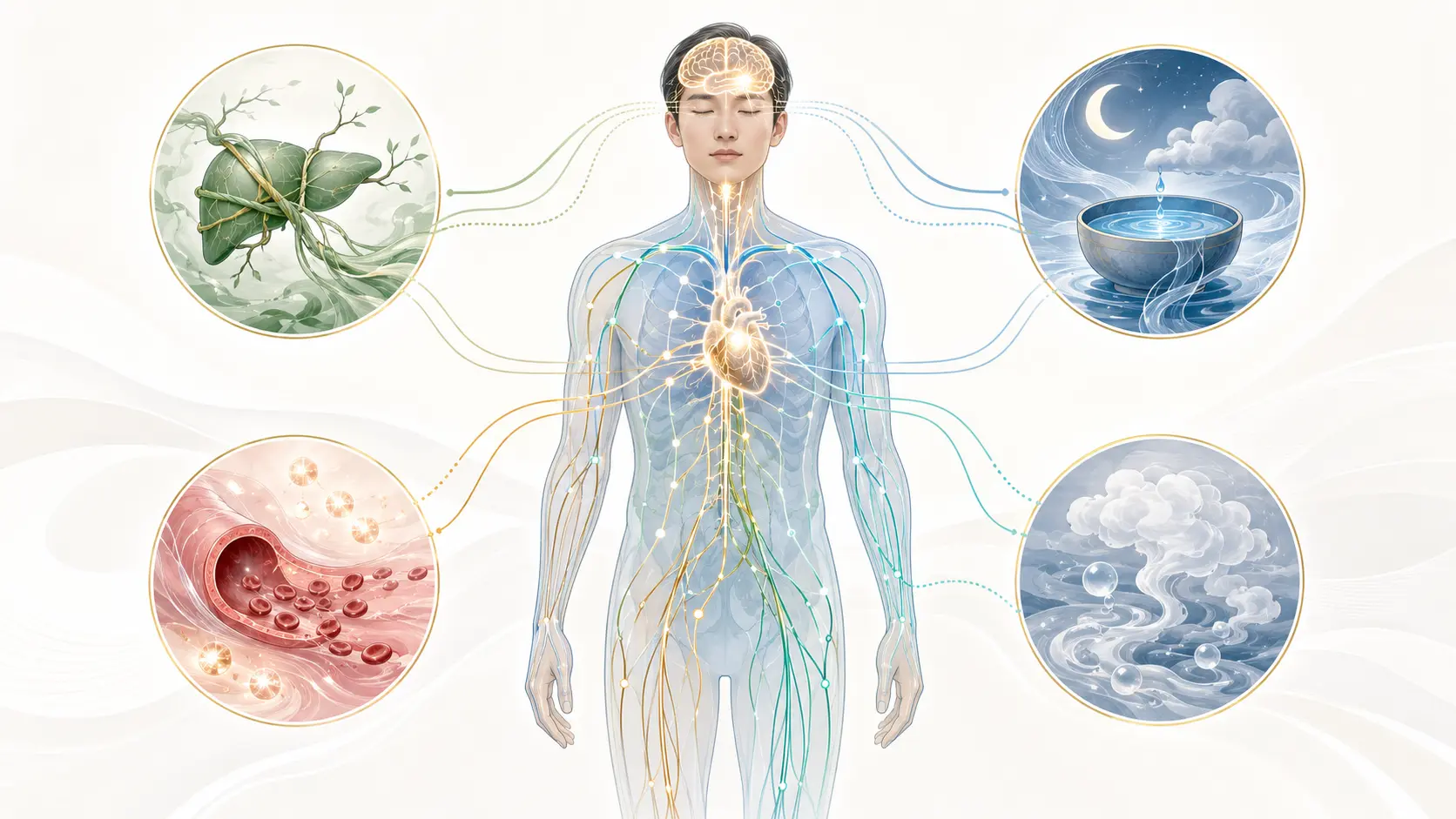
    Autonomic imbalance is one of the most frequently studied components of insomnia neurophysiology. In Korean medicine, this pattern may correspond to liver qi stagnation, yin deficiency, or blood deficiency, each of which is understood as a functional disturbance affecting calmness, restoration, and sleep stability.

    Autonomic nervous system changes in insomnia neurophysiology

    Stress Hormones and the HPA Axis

    The hypothalamic-pituitary-adrenal axis, or HPA axis, is a major stress-response system. When activated, it influences cortisol secretion and prepares the body for alertness. Chronic activation of this system may interfere with sleep onset and sleep maintenance.

    Insomnia is understood as a disorder in which stress hormones, autonomic arousal, emotional processing, and sleep regulation interact. In Korean medicine, this interaction may be explained through liver qi stagnation, phlegm accumulation, yin deficiency, and blood deficiency.

    Stress response and HPA axis activation contributing to insomnia neurophysiology

    Brain Imaging Findings in Insomnia Neurophysiology

    Brain imaging studies of insomnia commonly focus on cortical arousal, limbic system activity, and altered connectivity between emotional and cognitive control regions. The prefrontal cortex is associated with executive regulation, while the limbic system is associated with emotional reactivity and stress processing.

    Insomnia neurophysiology may be explained by excessive activation of brain regions involved in alertness, rumination, and emotional tension. This pattern helps explain why individuals with insomnia may feel physically tired but mentally awake at bedtime.

    In Korean medicine, this state may be interpreted as a failure of internal calming mechanisms. Liver qi stagnation may be linked to emotional tension, while yin deficiency and blood deficiency may be linked to insufficient restoration and unstable sleep.

    Sleep Architecture and Insomnia Neurophysiology

    Sleep architecture refers to the structure of sleep stages, including light sleep, deep sleep, and rapid eye movement sleep. Stable sleep architecture is important for physical restoration, emotional regulation, memory consolidation, and nervous system recovery.

    Insomnia is associated with reduced sleep efficiency, increased wake time after sleep onset, lighter sleep, and subjective non-restorative sleep. These features are considered to be clinical expressions of unstable sleep regulation.

    In Korean medicine, fragmented sleep may be understood as a sign that the mind is not adequately settled and the body is not sufficiently nourished. Blood deficiency may be associated with light sleep and frequent awakening, while yin deficiency may be associated with restlessness and difficulty maintaining sleep.

    Circadian Rhythm Disruption and Insomnia Neurophysiology

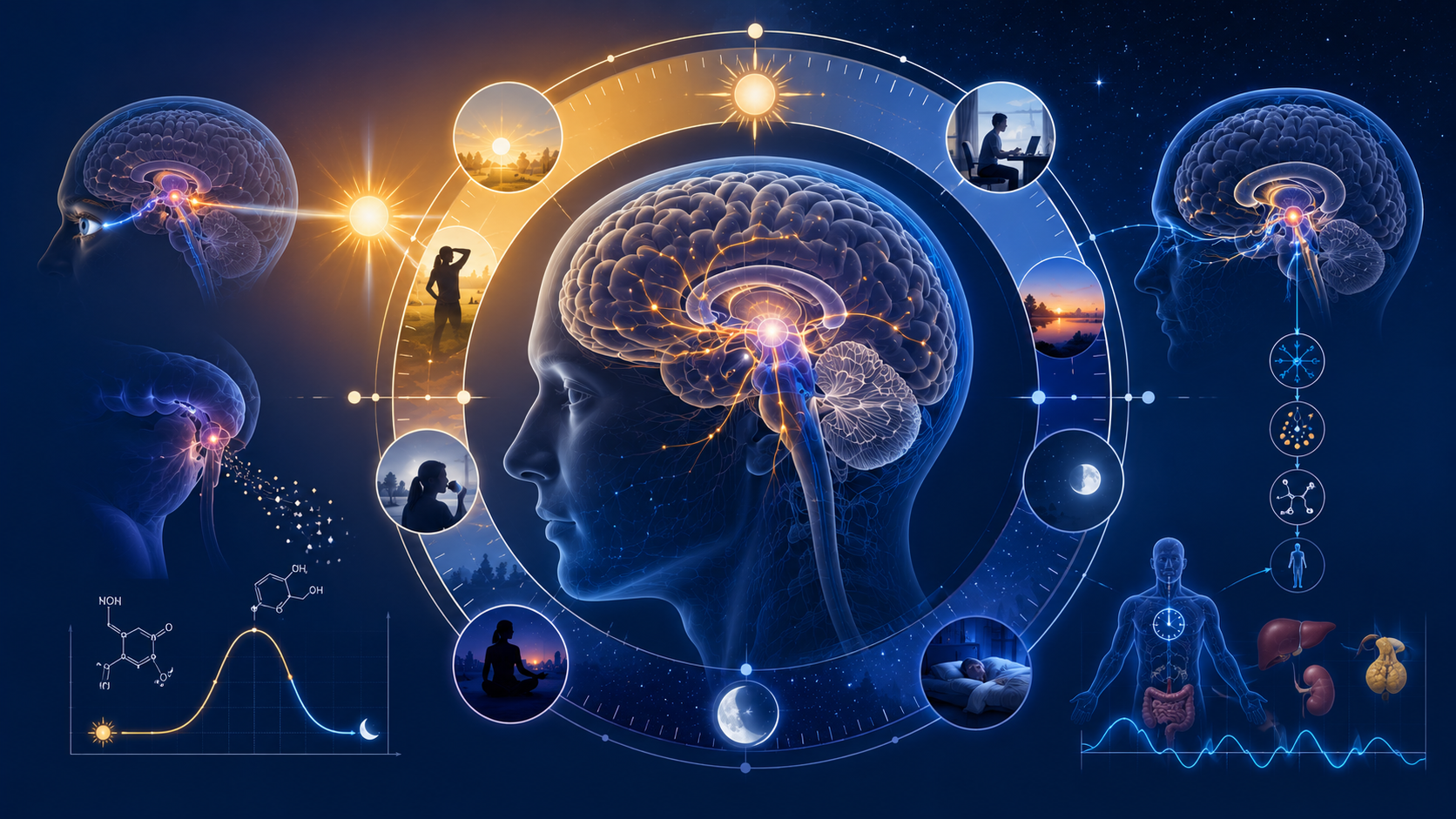
    Circadian rhythm disruption is an important factor in insomnia neurophysiology. Irregular sleep schedules, evening light exposure, shift work, late-night device use, and inconsistent wake times may weaken the alignment between internal biological timing and external day-night cycles.

    When circadian timing becomes unstable, melatonin release, body temperature rhythm, alertness patterns, and sleep pressure may become misaligned. This misalignment may contribute to difficulty falling asleep even when fatigue is present.

    In Korean medicine, this pattern may be understood as a disruption of the natural alternation between activity and restoration. The body remains in an activated state when it should shift toward recovery, and this state may be linked to qi stagnation, yin deficiency, or phlegm-related disturbance.

    Korean Medicine Interpretation of Insomnia Neurophysiology

    Yin Deficiency

    Yin deficiency is understood as a state in which cooling, nourishing, and stabilizing functions are insufficient. It may be associated with restlessness, internal heat sensation, dry mouth, night discomfort, and difficulty calming the mind before sleep.

    From an integrated perspective, yin deficiency may correspond to prolonged nervous system activation and reduced restorative regulation. This connection allows insomnia neurophysiology to be interpreted through both neural hyperarousal and Korean medicine concepts of insufficient internal stabilization.

    Blood Deficiency

    Blood deficiency is associated with insufficient nourishment of the mind and nervous system. It may present with light sleep, frequent awakening, fatigue, poor concentration, and emotional sensitivity.

    In neuroscience terms, these symptoms may involve impaired recovery processes, unstable sleep architecture, and reduced resilience to stress. In Korean medicine, blood deficiency is considered to be a functional pattern that weakens the body’s capacity to maintain stable sleep.

    Liver Qi Stagnation

    Liver qi stagnation is commonly linked to emotional stress, rumination, irritability, and tension. This pattern may be associated with difficulty falling asleep because the mind remains active and the body remains physiologically tense.

    In insomnia neurophysiology, similar symptoms may be explained by persistent activation of stress circuits and autonomic hyperarousal. The two frameworks converge in describing stress-related sleep disturbance as a failure of regulatory transition from activity to rest.

    Phlegm Accumulation

    Phlegm accumulation is understood as a pathological disturbance that interferes with clarity, smooth regulation, and mental calmness. It may be associated with heaviness, mental fog, restless sleep, and repetitive thoughts.

    This pattern may be linked to dysregulated arousal networks and impaired sleep-wake transitions. Korean Medicine Neuropsychiatry uses this interpretation to connect traditional pattern identification with contemporary models of brain and autonomic regulation.

    Korean medicine and insomnia neurophysiology

    Treatment Perspectives for Insomnia Neurophysiology

    From the perspective of Korean Medicine Neuropsychiatry, treatment is understood as restoring balanced regulation of neural activity, autonomic function, emotional processing, and systemic physiological recovery. The goal is not only to induce sleep but also to improve the regulatory conditions that allow natural sleep to occur.

    Insomnia neurophysiology suggests that recovery requires reduction of hyperarousal, stabilization of circadian rhythm, improved parasympathetic activity, and normalization of stress-response patterns. Korean medicine similarly emphasizes restoring balance among yin, blood, qi movement, and internal calmness.

    Understanding insomnia neurophysiology helps explain why long-term recovery requires normalization of both sleep regulation and stress-response systems.

    Useful educational resources on sleep and circadian regulation are available through the National Heart, Lung, and Blood Institute and Sleep Foundation insomnia education. For related reading within this website, see insomnia overview, sleep disorders, and Korean Medicine Neuropsychiatry.
    Summary

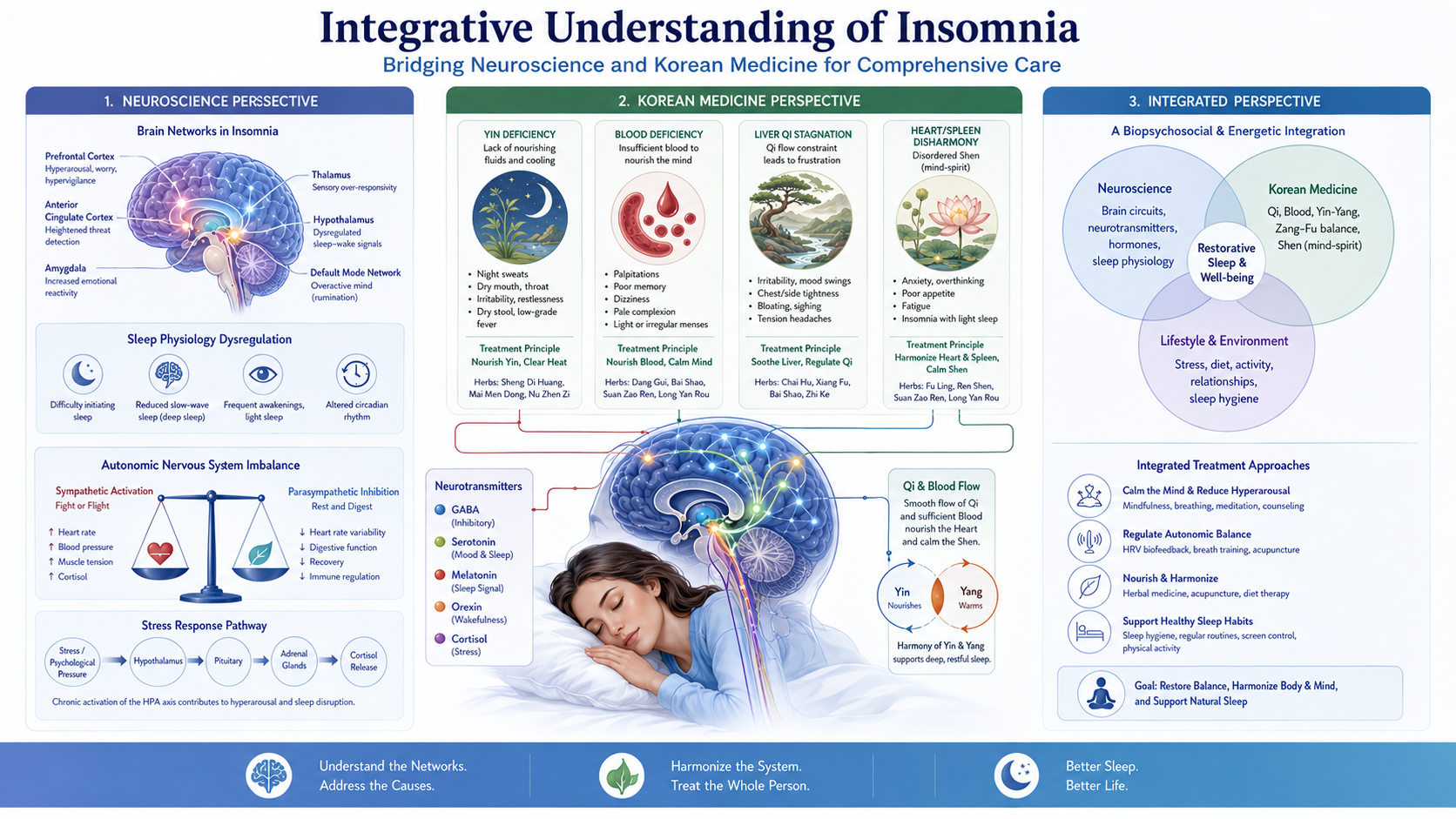
    Insomnia neurophysiology is described as the interaction of sleep regulation systems, circadian rhythm, melatonin signaling, neurotransmitters, autonomic nervous system activity, and stress hormone regulation. The disorder is associated with hyperarousal, disrupted sleep-wake transition, and impaired physiological restoration.

    In Korean medicine, insomnia is understood as a condition involving yin deficiency, blood deficiency, liver qi stagnation, and phlegm accumulation. These concepts may be explained as functional patterns that reflect stress dysregulation, insufficient restoration, emotional tension, and impaired systemic balance.

    Korean Medicine Neuropsychiatry investigates insomnia neurophysiology through an integrated academic model, and the Korean Society of Oriental Neuropsychiatry studies and explains how neuroscience, autonomic balance, emotional regulation, and Korean medicine pathophysiology can be connected in the understanding of insomnia and sleep regulation.

    Recommended SEO title: Insomnia Neurophysiology: Sleep Regulation and Brain Mechanisms

    Recommended slug: insomnia-neurophysiology

    Recommended meta description: Insomnia neurophysiology explains how sleep regulation, melatonin, brain circuits, autonomic nervous system activity, and stress responses contribute to insomnia and sleep disturbances.

    Focus keyword: insomnia neurophysiology

  • Insomnia Sleep Regulation: Causes of Insomnia and Sleep-Wake Regulation Systems

    Insomnia Sleep Regulation: Causes of Insomnia and Sleep-Wake Regulation Systems

    Insomnia Sleep Regulation Overview

    Insomnia sleep regulation refers to the biological systems that control sleep initiation, sleep maintenance, circadian rhythm, and wakefulness. Insomnia is a condition characterized by difficulty initiating sleep, difficulty maintaining sleep, early morning awakening, or non-restorative sleep despite adequate opportunity for rest.

    Modern medicine explains the disorder as a dysregulation of the sleep-wake system involving circadian rhythm disturbance, melatonin signaling, autonomic nervous system activity, stress hormones, and excessive neural arousal. In Korean medicine, the condition is understood as a disturbance of the balance between physiological and psychological regulatory systems, involving yin deficiency, blood deficiency, liver qi stagnation, and phlegm-related dysfunction.

    Within Korean Medicine Neuropsychiatry, insomnia sleep regulation is understood as a dynamic interaction between brain function, emotional regulation, autonomic balance, and systemic physiological activity. The Korean Society of Oriental Neuropsychiatry studies insomnia through both neuroscience and Korean medicine frameworks, investigating how sleep-wake dysregulation may be explained by neural circuit changes and Korean medicine pathophysiological concepts.

    Insomnia sleep regulation overview showing the brain and sleep-wake cycle mechanisms.
    Sleep-wake cycle mechanisms in insomnia

    Insomnia is described as a disorder of sleep continuity and sleep quality rather than simply a reduction in sleep duration. Disruption of sleep-wake regulation is associated with emotional distress, cognitive impairment, daytime fatigue, and physiological stress responses.

    Clinical Features of Insomnia Sleep Regulation Dysfunction

    Core Symptoms in Sleep-Wake Dysfunction

    The clinical presentation of insomnia commonly includes difficulty falling asleep, repeated nighttime awakenings, prolonged wakefulness after sleep onset, and early morning awakening. The disturbance of insomnia sleep regulation is associated with subjective dissatisfaction regarding sleep quality and reduced restorative sleep.

    Many individuals report feeling unrefreshed despite spending adequate time in bed. Sleep efficiency may decrease, sleep latency may become prolonged, and the sleep-wake cycle may become unstable. Insomnia is described as a condition that affects both nighttime sleep and daytime functioning.

    • Fatigue and reduced energy
    • Reduced concentration and memory difficulties
    • Irritability and emotional instability
    • Daytime sleepiness without restorative sleep
    • Reduced work, academic, or social functioning

    Behavioral Patterns and Sleep Regulation

    Individuals with chronic insomnia frequently develop heightened concern regarding sleep. Anticipatory anxiety before bedtime is associated with increased physiological arousal and may further disrupt sleep-wake regulatory function.

    Hypervigilance toward sleep-related sensations is considered to be an important maintaining factor. Many patients report becoming increasingly aware of bodily sensations, environmental stimuli, and thoughts while attempting to sleep. This pattern may be explained by sustained activation of attention networks and stress-response systems.

    Functional Impairment and Sleep Quality

    The consequences of insomnia extend beyond nighttime symptoms. Persistent disruption of insomnia sleep regulation may affect occupational performance, academic functioning, interpersonal relationships, and overall quality of life.

    Insomnia is associated with reduced emotional resilience, impaired decision-making, and increased sensitivity to stress. In Korean medicine, these functional impairments may be interpreted through deficient nourishment of the mind, stagnation of qi, and inadequate restoration of yin and blood during sleep.

    Etiology of Insomnia Sleep Regulation Disorders

    Stress Response and Hyperarousal

    One major explanation for insomnia involves hyperarousal. Insomnia is understood as a condition in which physiological and psychological arousal remain elevated during periods that normally require sleep initiation.

    Stressful life events, occupational demands, interpersonal conflicts, and emotional distress may activate neural stress pathways. The resulting activation of the autonomic nervous system and neuroendocrine systems may interfere with normal insomnia sleep regulation.

    Understanding sleep regulation may help explain why chronic stress contributes to persistent sleep difficulties. Stress may increase sympathetic nervous system activity, increase evening alertness, and delay the transition from wakefulness to sleep.

    Insomnia sleep regulation stress response mechanisms contributing to sleep disruption.
    Stress response mechanisms associated with insomnia

    Melatonin and Sleep-Wake Regulation

    The sleep regulation system is described as a complex network involving the hypothalamus, brainstem, thalamus, prefrontal cortex, and limbic structures. These areas coordinate arousal, sleep initiation, emotional regulation, and circadian timing.

    Melatonin is a hormone involved in circadian regulation and sleep timing. Alterations in melatonin secretion patterns are associated with disturbances in insomnia sleep regulation. Reduced synchronization between internal biological rhythms and environmental light cues may contribute to persistent sleep difficulties.

    The sleep-wake system depends on coordinated activity among circadian rhythms, melatonin secretion, and autonomic nervous system balance. When these systems become unstable, sleep onset may be delayed and sleep continuity may be reduced.

    Insomnia sleep regulation and melatonin secretion involved in sleep initiation.
    Melatonin activity and sleep initiation

    Brain Circuits in Sleep Regulation

    Insomnia may be explained by excessive activation of wake-promoting neural pathways and insufficient activity of sleep-promoting mechanisms. Increased cortical activation during sleep periods is associated with subjective wakefulness and reduced sleep quality.

    The hypothalamus is considered to be central to circadian and homeostatic sleep control. The brainstem supports arousal regulation, while the thalamus and cortex influence sensory processing and conscious awareness during sleep. Limbic structures are associated with emotional arousal that may prevent stable sleep initiation.

    Insomnia sleep regulation brain networks and neural circuits involved in insomnia.
    Brain networks involved in insomnia and sleep regulation

    Environmental Influences on Sleep Regulation

    Environmental factors significantly affect insomnia sleep regulation. Irregular sleep schedules, excessive screen exposure, shift work, caffeine intake, chronic stress, and noisy sleep environments may contribute to persistent sleep disturbance.

    Behavioral conditioning may also contribute to insomnia. Repeated experiences of wakefulness in bed can lead to learned associations between the sleeping environment and arousal rather than relaxation.

    Insomnia sleep regulation circadian rhythm and biological clock mechanisms.
    Circadian rhythm and biological clock regulation

    Physiological Changes in Insomnia Sleep Regulation

    Autonomic Nervous System and Sleep Balance

    Normal sleep involves a shift toward parasympathetic nervous system dominance. In insomnia, autonomic balance is frequently altered. The disruption of the sleep-wake regulatory system is associated with increased sympathetic nervous system activity.

    Elevated sympathetic activation may manifest as increased heart rate, elevated blood pressure, muscle tension, and heightened alertness. This physiological state may prevent the transition into restorative sleep.

    Insomnia sleep regulation autonomic nervous system balance and sympathetic activation.
    Autonomic nervous system balance in sleep regulation

    Stress Hormones and Sleep Disturbance

    The hypothalamic-pituitary-adrenal axis is a major stress response system. Insomnia is associated with alterations in cortisol secretion patterns. Elevated evening cortisol levels may contribute to sustained arousal and delayed sleep onset.

    Persistent activation of stress hormones may reinforce disturbances in insomnia sleep regulation, creating a cycle of sleep disruption and physiological stress. In Korean medicine, this persistent arousal may correspond to patterns such as yin deficiency, liver qi stagnation, and internal heat affecting restfulness.

    Body Responses in Sleep-Wake Dysregulation

    Chronic disturbance of sleep regulation may influence immune function, metabolic regulation, cardiovascular activity, emotional regulation, and cognitive performance. Sleep deprivation may increase inflammatory activity and impair recovery processes throughout the body.

    From an integrated perspective, these physiological changes may be understood as both neural dysregulation and systemic imbalance. Korean medicine explains this state through reduced restoration, impaired qi movement, and insufficient nourishment of mental activity.

    Importance of Sleep-Wake Regulation

    Sleep regulation is associated with the coordination of circadian rhythm, melatonin secretion, neural arousal systems, and autonomic nervous system balance. When this regulatory system becomes disrupted, both sleep quality and daytime functioning may deteriorate.

    Research suggests that sleep-wake function is influenced by stress exposure, emotional processing, environmental cues, and biological timing mechanisms. Chronic impairment of insomnia sleep regulation may contribute to persistent sleep difficulties and reduced psychological well-being.

    Understanding sleep regulation may help explain why sleep disturbances frequently occur alongside anxiety, depression, chronic stress, and autonomic nervous system dysregulation.

    Korean Medicine View of Insomnia Sleep Regulation

    Yin Deficiency and Restorative Function

    In Korean medicine, yin deficiency is understood as a reduction in the body’s restorative and cooling functions. Yin deficiency may be linked to chronic stress, prolonged emotional strain, or excessive physiological activation.

    This imbalance is associated with internal restlessness, difficulty initiating sleep, night awakenings, and sensations of heat. From an integrative perspective, yin deficiency may be explained by persistent autonomic hyperarousal that interferes with normal sleep regulation.

    Blood Deficiency and Sleep Maintenance Problems

    Blood deficiency is described as an insufficiency of nourishment supporting mental and physiological stability. When blood deficiency affects psychological regulation, individuals may experience light sleep, frequent awakening, vivid dreams, and poor sleep quality.

    The relationship between blood deficiency and insomnia may be explained by reduced resilience of stress-regulating mechanisms that support stable sleep-wake transitions. This pattern is associated with unstable insomnia sleep regulation and reduced restorative capacity.

    Liver Qi Stagnation and Emotional Arousal

    Liver qi stagnation is understood as impaired emotional and physiological regulation resulting from stress or unresolved psychological tension. Stress-related emotional activation may disrupt sleep regulation by increasing mental activity and physiological arousal before sleep.

    From a neuroscience perspective, these manifestations are associated with activation of limbic stress networks and autonomic imbalance. From a Korean medicine perspective, liver qi stagnation may contribute to difficulty relaxing, irritability, chest tension, and delayed sleep onset.

    Phlegm Accumulation and Cognitive Hyperactivity

    Phlegm accumulation is considered to be a pathological factor affecting mental clarity and physiological regulation. This pattern may be associated with mental clouding, excessive rumination, emotional instability, and disrupted sleep continuity.

    Phlegm-related dysfunction may be explained by impaired regulation of mental activity, autonomic balance, and sleep-wake transitions. In this framework, insomnia sleep regulation involves not only neural sleep circuits but also systemic patterns that affect mental clarity and emotional stability.

    Insomnia sleep regulation connecting Korean medicine concepts and neuroscience mechanisms.
    Korean medicine and neuroscience perspectives on sleep regulation

    Treatment Perspective for Insomnia Sleep Regulation

    From the perspective of Korean Medicine Neuropsychiatry, treatment is understood as a process of restoring balanced insomnia sleep regulation through regulation of nervous system activity, emotional function, and physiological stability.

    Sleep is considered to be supported by coordinated interactions among neural regulation, autonomic balance, hormonal rhythms, and psychological adaptation. Therefore, treatment approaches focus on reducing excessive arousal while promoting restorative physiological processes.

    Regulation of the autonomic nervous system is associated with improvements in sleep initiation and sleep maintenance. Stabilization of stress responses may contribute to normalization of the sleep-wake cycle.

    Within Korean medicine, recovery is understood as the restoration of yin, blood, qi movement, and mental calmness. In modern neuroscience, recovery may be explained by reduced hyperarousal, improved circadian alignment, more stable melatonin signaling, and improved parasympathetic activity.

    For related neuropsychiatric content, see panic disorder and fear circuit regulation, which explains another condition involving stress-response dysregulation and autonomic activation.

    Additional general health information is available from the World Health Organization.

    FAQ on Insomnia Sleep Regulation

    What is insomnia sleep regulation?

    Insomnia sleep regulation is described as the interaction of sleep-wake timing, circadian rhythm, melatonin activity, autonomic balance, and neural arousal systems that influence sleep initiation and sleep maintenance.

    How does melatonin affect sleep regulation?

    Melatonin is associated with circadian timing and sleep initiation. When melatonin secretion becomes delayed or irregular, sleep regulation may become unstable and sleep onset may be delayed.

    How does stress affect sleep regulation?

    Stress may increase sympathetic nervous system activity and cortisol secretion. This response may be explained by hyperarousal, which interferes with sleep regulation and reduces restorative sleep.

    How does Korean medicine explain insomnia?

    In Korean medicine, insomnia is understood as a disturbance involving yin deficiency, blood deficiency, liver qi stagnation, and phlegm accumulation. These patterns are connected with emotional stress, nervous system imbalance, and impaired sleep-wake function.

    Summary of Insomnia Sleep Regulation

    Insomnia is a disorder characterized by persistent difficulty with sleep initiation, sleep maintenance, or sleep quality. The concept of insomnia sleep regulation refers to the integrated systems responsible for coordinating sleep-wake transitions, circadian rhythms, neural arousal, melatonin secretion, and physiological recovery.

    Modern neuroscience explains insomnia through disturbances in the sleep regulation system, autonomic nervous system activity, HPA axis function, melatonin signaling, and neural arousal mechanisms. In Korean medicine, insomnia is understood as a manifestation of functional imbalances involving yin deficiency, blood deficiency, liver qi stagnation, and phlegm accumulation.

    Korean Medicine Neuropsychiatry integrates neuroscience findings with traditional Korean medicine concepts to explain how disturbances in sleep regulation arise and persist. The Korean Society of Oriental Neuropsychiatry studies, investigates, explains, and integrates both neural mechanisms and Korean medicine pathophysiological models.

  • 7 Common Insomnia Symptoms and Sleep Disturbance Features

    7 Common Insomnia Symptoms and Sleep Disturbance Features

    Overview of Insomnia Symptoms

    Insomnia symptoms are clinical features of insomnia, a condition characterized by persistent difficulty initiating sleep, maintaining sleep, or achieving restorative sleep despite adequate opportunity for rest.

    Insomnia symptoms include nighttime sleep disturbance and daytime impairment such as fatigue, poor concentration, irritability, and reduced emotional stability. Modern medicine explains insomnia as a disorder involving dysregulation of the sleep regulation system, autonomic nervous system imbalance, altered melatonin secretion, and excessive arousal. In Korean medicine, the condition is understood as a disturbance of the balance between qi, blood, yin, and yang, leading to instability of mental and physiological calmness during the sleep-wake cycle.

    Korean Medicine Neuropsychiatry investigates how emotional stress, autonomic imbalance, and neurophysiological dysregulation interact with traditional concepts of mind-body imbalance. The Korean Society of Oriental Neuropsychiatry studies insomnia symptoms through integrated frameworks combining neuroscience, stress physiology, and Korean medicine theory.

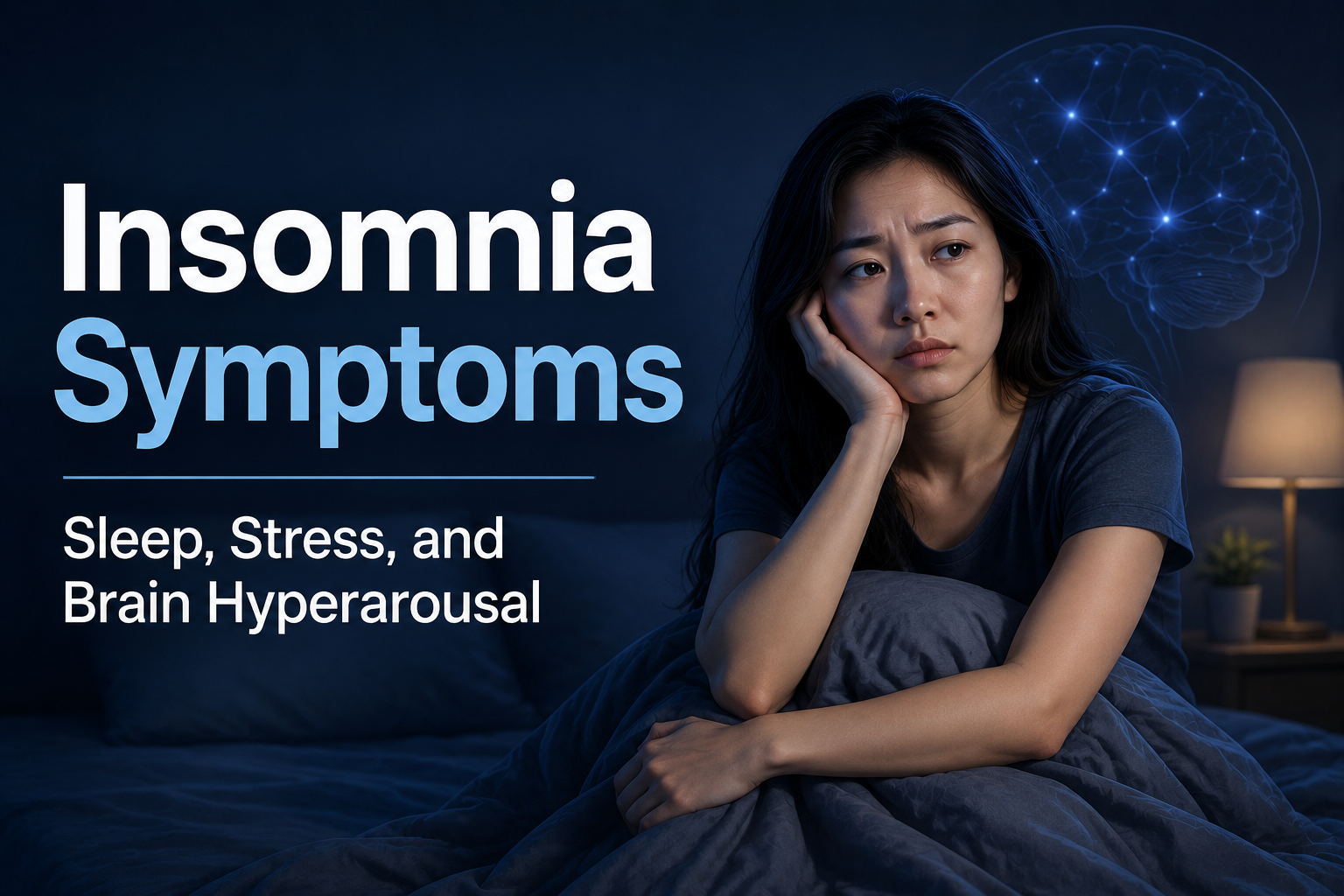
    insomnia symptoms in a young woman having difficulty falling asleep at night

    Clinical Features of Insomnia Symptoms

    Insomnia symptoms are described as disturbances involving sleep onset, sleep maintenance, early morning awakening, or non-restorative sleep. These symptoms are associated with impaired daytime functioning, including fatigue, poor concentration, irritability, reduced motivation, and emotional instability.

    Difficulty falling asleep is one of the most common insomnia symptoms. It may be explained by excessive cognitive activity, stress-related tension, and heightened sympathetic nervous system activation. Individuals may report racing thoughts, sensitivity to sound or light, and anxiety about whether they will be able to sleep.

    Sleep maintenance insomnia is associated with repeated nighttime awakenings and difficulty returning to sleep. Early morning awakening is often linked to mood dysregulation, chronic stress exposure, and disruption of circadian rhythm stability.

    From a Korean medicine perspective, insomnia symptoms are understood as disturbances of shen stability and internal balance. Liver qi stagnation may be associated with emotional tension and difficulty relaxing, while heart blood deficiency and yin deficiency may contribute to light sleep, excessive dreaming, and nighttime restlessness.

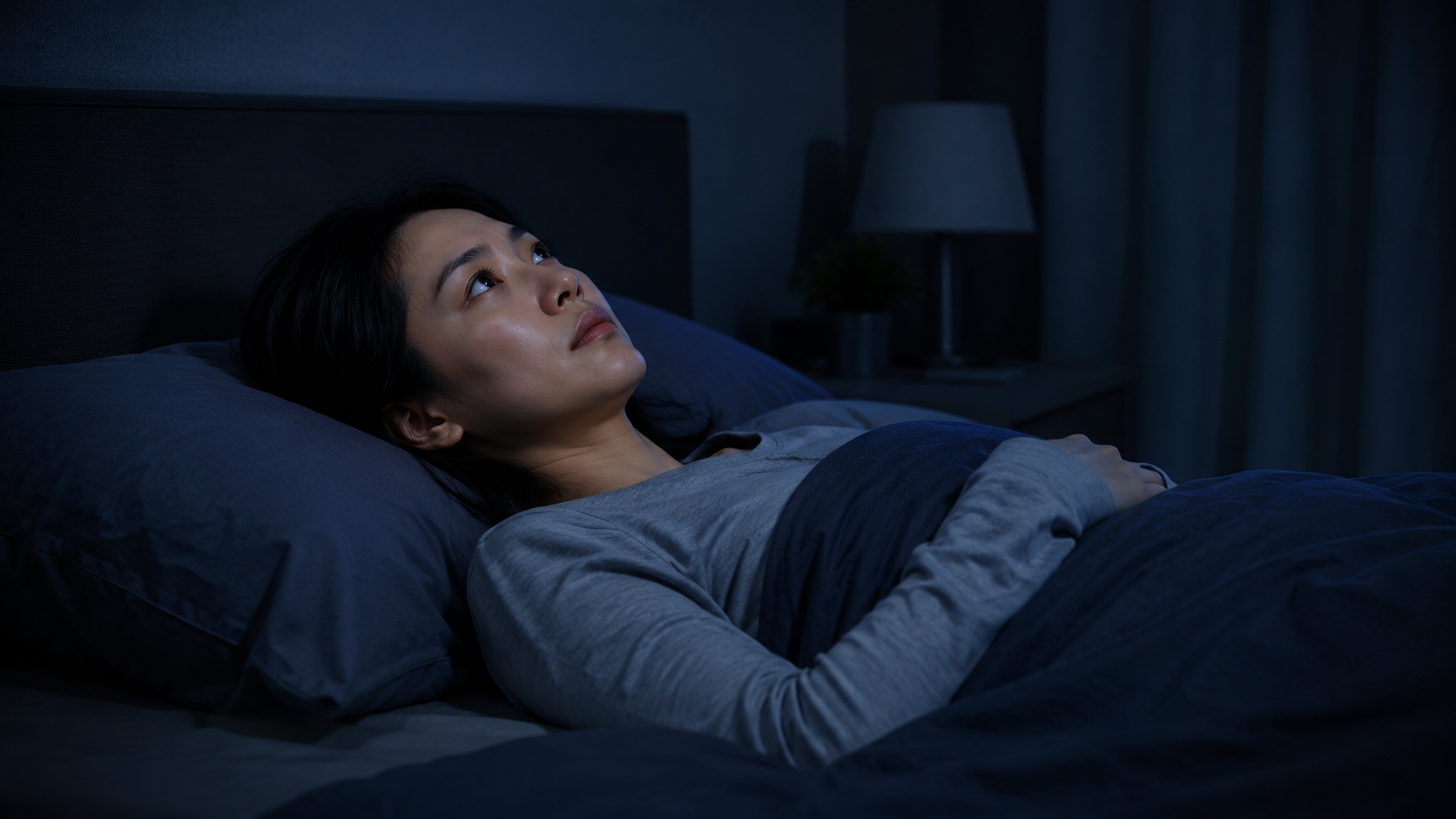
    insomnia symptoms related to brain hyperarousal and nighttime wakefulness

    Causes and Etiology of Insomnia Symptoms

    Insomnia symptoms may be explained by complex interactions among stress response systems, neurobiological vulnerability, emotional dysregulation, and environmental influences. The sleep regulation system involves coordinated activity among the hypothalamus, brainstem, thalamus, pineal gland, and cerebral cortex.

    Melatonin is considered to be an important hormone in circadian rhythm regulation and sleep initiation. Disrupted melatonin secretion is associated with delayed sleep onset, fragmented sleep, and impaired synchronization between the internal biological clock and external light-dark cues.

    The hypothalamic-pituitary-adrenal axis is associated with stress hormone regulation. Chronic stress may increase cortisol secretion and sympathetic nervous system activity, producing a state of physiological hyperarousal that interferes with sleep initiation and maintenance.

    Neurotransmitters such as GABA, serotonin, norepinephrine, and dopamine are associated with arousal regulation, emotional stability, and sleep architecture. Reduced inhibitory regulation and increased alerting signals may contribute to persistent insomnia symptoms.

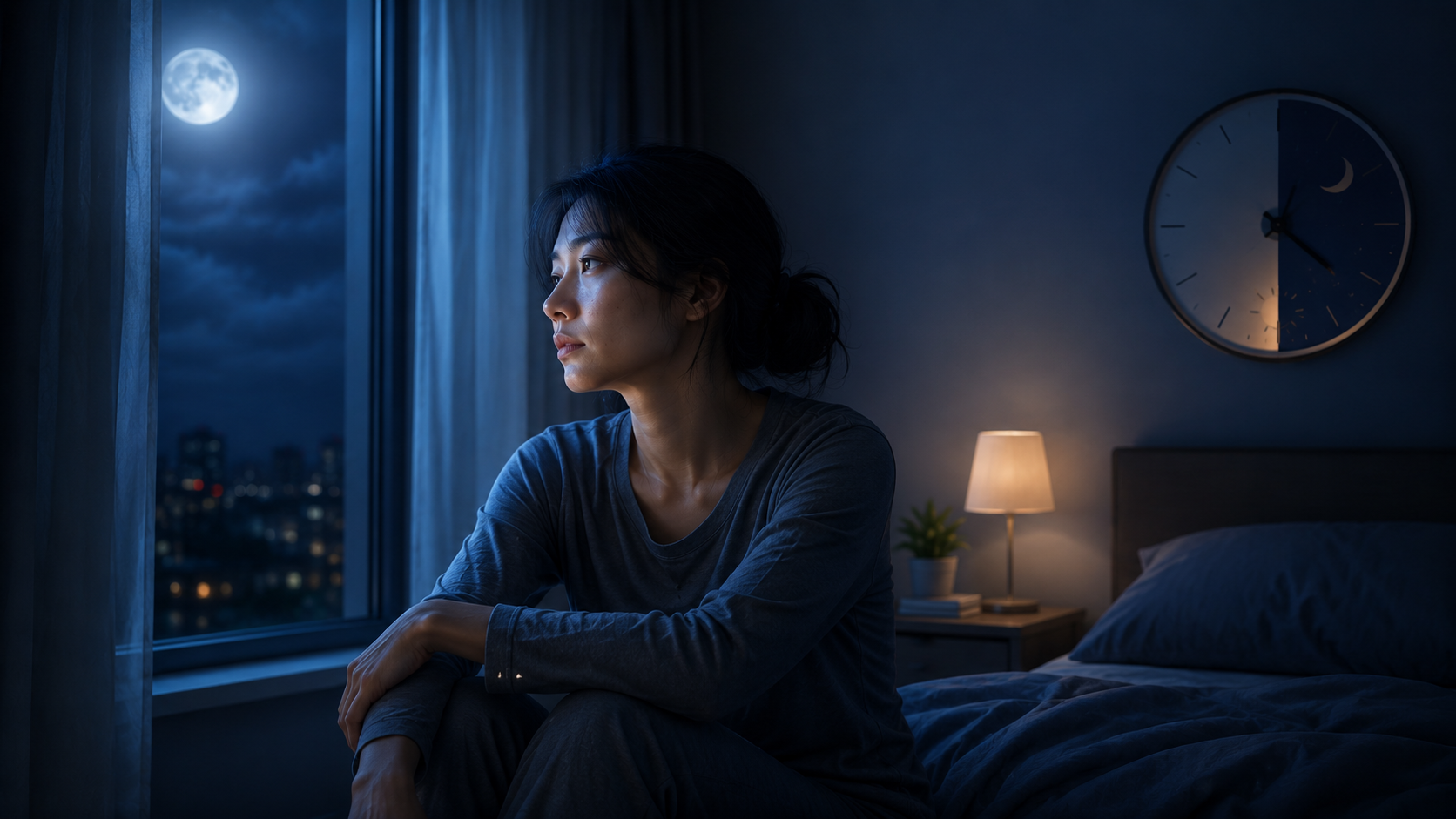
    insomnia symptoms associated with melatonin imbalance and circadian rhythm disruption

    Physiological Changes Related to Insomnia Symptoms

    Insomnia symptoms are associated with autonomic nervous system imbalance, stress hormone dysregulation, immune changes, and altered cardiovascular responses. During healthy sleep, the body generally shifts toward parasympathetic dominance. In insomnia, sympathetic activity may remain elevated during the night.

    This pattern may be expressed as increased heart rate, muscle tension, shallow breathing, heightened sensory sensitivity, and difficulty entering restorative sleep. Reduced parasympathetic recovery is considered to be one of the physiological features of chronic insomnia.

    In Korean medicine, these changes are understood as reflecting excessive internal activation and insufficient restorative yin function. Yin deficiency may be linked to nighttime restlessness and internal heat sensations, while qi stagnation may be linked to emotional tension and autonomic dysregulation.

    insomnia symptoms involving stress and autonomic nervous system activation

    Korean Medicine Pathophysiology of Insomnia Symptoms

    Liver Qi Stagnation

    Liver qi stagnation is associated with emotional stress, frustration, and impaired relaxation. It may contribute to difficulty falling asleep, irritability, chest tightness, and frequent awakening. This concept may be connected with modern findings on stress-induced autonomic activation and limbic system hyperreactivity.

    Yin Deficiency

    Yin deficiency is understood as insufficient cooling, calming, and restorative function. It is associated with nighttime restlessness, dry mouth, internal heat sensations, and fragmented sleep. From a neuroscience perspective, this pattern may be explained by impaired parasympathetic recovery and sustained hyperarousal.

    Blood Deficiency

    Blood deficiency is considered to be related to insufficient nourishment of mental stability. It may be associated with light sleep, excessive dreaming, palpitations, fatigue, and poor concentration. These symptoms overlap with the daytime impairment commonly observed in insomnia symptoms.

    Phlegm Accumulation

    Phlegm accumulation is understood as a pathological state that may interfere with mental clarity and smooth physiological regulation. It is associated with mental fogginess, chest discomfort, anxiety, and unstable sleep. This may correspond to dysregulated stress signaling and impaired autonomic coordination.

    insomnia symptoms causing daytime fatigue and poor concentration

    Treatment Perspective for Insomnia Symptoms

    From the perspective of Korean Medicine Neuropsychiatry, treatment is understood as a process of restoring autonomic balance, regulating emotional stability, and improving the physiological mechanisms that support restorative sleep.

    Modern approaches to insomnia symptoms often focus on sleep hygiene, cognitive behavioral regulation, circadian rhythm stabilization, stress management, and appropriate medical care when needed. These approaches aim to reduce hyperarousal and restore stable sleep-wake regulation.

    Korean medicine treatment perspectives focus on identifying the underlying pattern of imbalance. Liver qi stagnation may require regulation of emotional tension, yin deficiency may require restoration of calming and nourishing function, and blood deficiency may require support for mental and physical recovery.

    Integrated care emphasizes that insomnia symptoms are not only nighttime problems but also reflections of broader nervous system dysregulation. Recovery is understood as the restoration of sleep rhythm, emotional regulation, autonomic flexibility, and daytime functional capacity.

    For related information, see our article on panic disorder symptoms and stress-related autonomic nervous system imbalance.

    General sleep health information is also discussed by the Sleep Foundation.

    For broader public health information, visit the National Heart, Lung, and Blood Institute insomnia resource.

    insomnia symptoms improving through restorative sleep and nervous system recovery

    Summary of Insomnia Symptoms

    Insomnia is a neuropsychiatric condition characterized by persistent difficulty with sleep initiation, sleep maintenance, or restorative sleep quality. Insomnia symptoms are associated with sleep regulation system disruption, melatonin rhythm alteration, autonomic nervous system imbalance, and chronic stress-related hyperarousal.

    Modern medicine explains insomnia symptoms through interactions among circadian rhythm disruption, cortical hyperactivation, stress physiology, and neurotransmitter imbalance. In Korean medicine, insomnia is understood as a condition involving disharmony of qi, blood, yin, and emotional regulation systems.

    Korean Medicine Neuropsychiatry studies how neural mechanisms, emotional stress, and autonomic regulation interact with Korean medicine concepts such as liver qi stagnation, yin deficiency, blood deficiency, and phlegm accumulation. The Korean Society of Oriental Neuropsychiatry investigates and integrates these academic frameworks to explain insomnia symptoms from both neuroscience and Korean medicine perspectives.