Panic disorder is a psychiatric condition characterized by recurrent unexpected panic attacks, persistent concern about future episodes, and behavioral changes associated with fear of additional attacks. The concept of panic disorder korean medicine neuropsychiatry treatment describes an integrative approach that examines fear-related neural mechanisms, autonomic nervous system responses, and traditional Korean medicine interpretations of emotional and physiological imbalance.
Modern medicine explains panic disorder as a condition associated with altered fear circuit activity, heightened sensitivity to bodily sensations, and dysregulation of autonomic and stress-response systems.
In Korean medicine, the condition is understood as a disturbance of emotional and functional regulation that may involve heart-gallbladder deficiency, phlegm-fire disturbance, liver qi stagnation, and related traditional patterns.
Korean Medicine Neuropsychiatry investigates these different explanatory frameworks. The Korean Society of Oriental Neuropsychiatry studies psychiatric conditions through traditional theoretical analysis and contemporary clinical research, including the relationship between emotional symptoms, nervous system activity, and recovery.
Understanding Panic Disorder
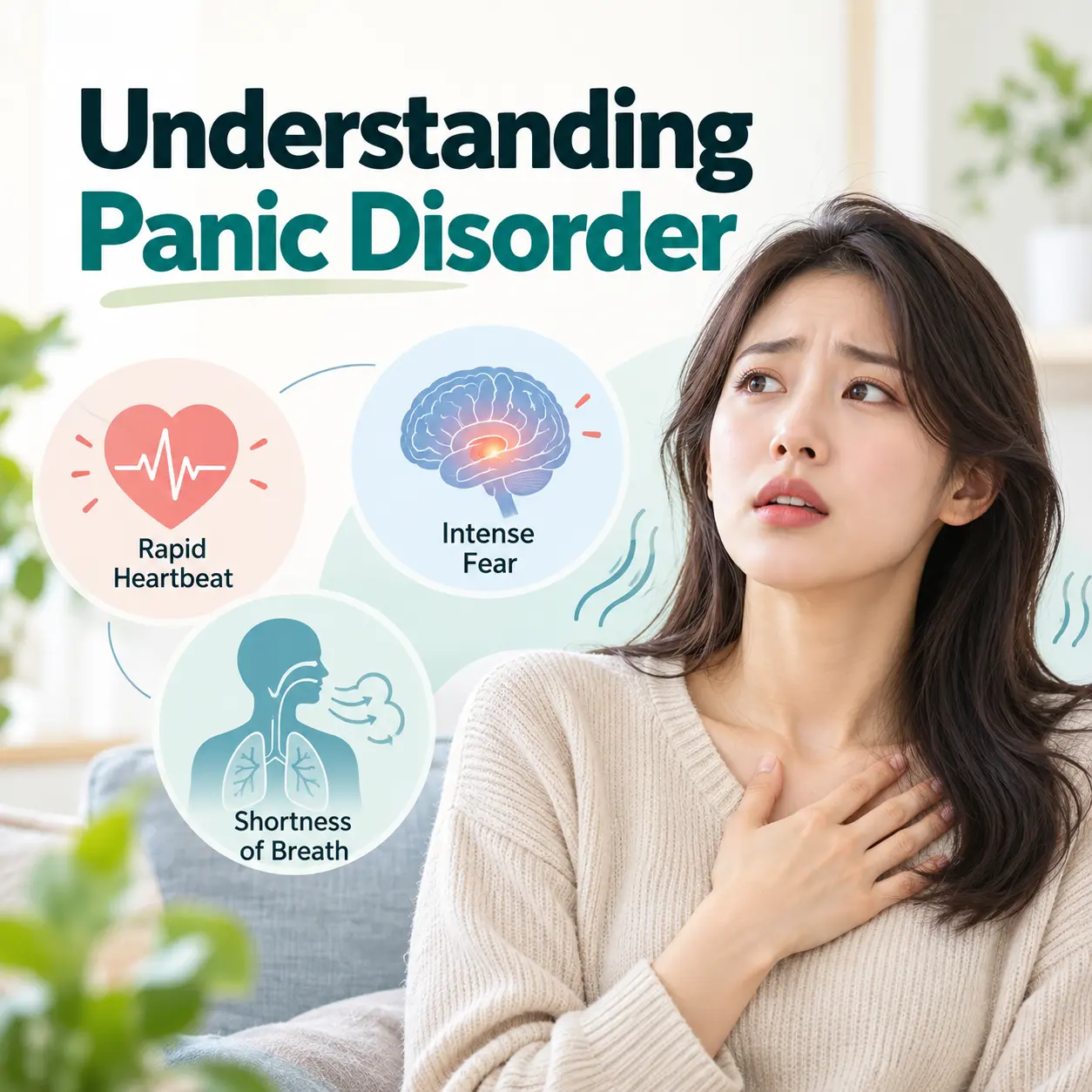
Panic attacks are described as sudden episodes of intense fear or discomfort that develop rapidly and commonly reach their highest intensity within minutes. Symptoms may include palpitations, trembling, sweating, chest discomfort, breathlessness, dizziness, tingling, and fear of losing control or dying.
Although these experiences can feel dangerous, many panic attacks involve the activation of normal physiological defense mechanisms in the absence of an immediate external threat. Nevertheless, unfamiliar or severe physical symptoms require appropriate medical assessment because panic-like symptoms can also occur in other health conditions.
A central feature of panic disorder is anticipatory anxiety. Individuals may become concerned about the possibility of another attack and begin monitoring their heartbeat, respiration, or other internal sensations.
This heightened attention can contribute to a feedback cycle in which ordinary bodily changes are interpreted as threatening, increasing fear and further physiological arousal.
Within the panic disorder korean medicine neuropsychiatry treatment framework, these experiences are examined through both contemporary models of fear learning and traditional patterns of emotional and functional disturbance. The frameworks are conceptually different and should not be treated as biologically interchangeable.
Clinical Symptoms and Behavioral Changes
Panic disorder is associated with both acute attacks and longer-term changes in emotional and behavioral functioning. Some individuals avoid crowded environments, public transportation, enclosed spaces, or situations where they believe assistance may be difficult to obtain.
Avoidance may gradually restrict occupational activities, social relationships, exercise, and everyday mobility. Persistent vigilance toward internal sensations can also interfere with concentration, sleep, and emotional stability.
Traditional Korean medicine describes certain overlapping manifestations through concepts such as jing ji, referring to fright-related palpitations, and zheng chong, referring to persistent or pronounced awareness of the heartbeat. These traditional categories are not identical to a modern diagnosis of panic disorder.
Neural Mechanisms and the Fear Circuit
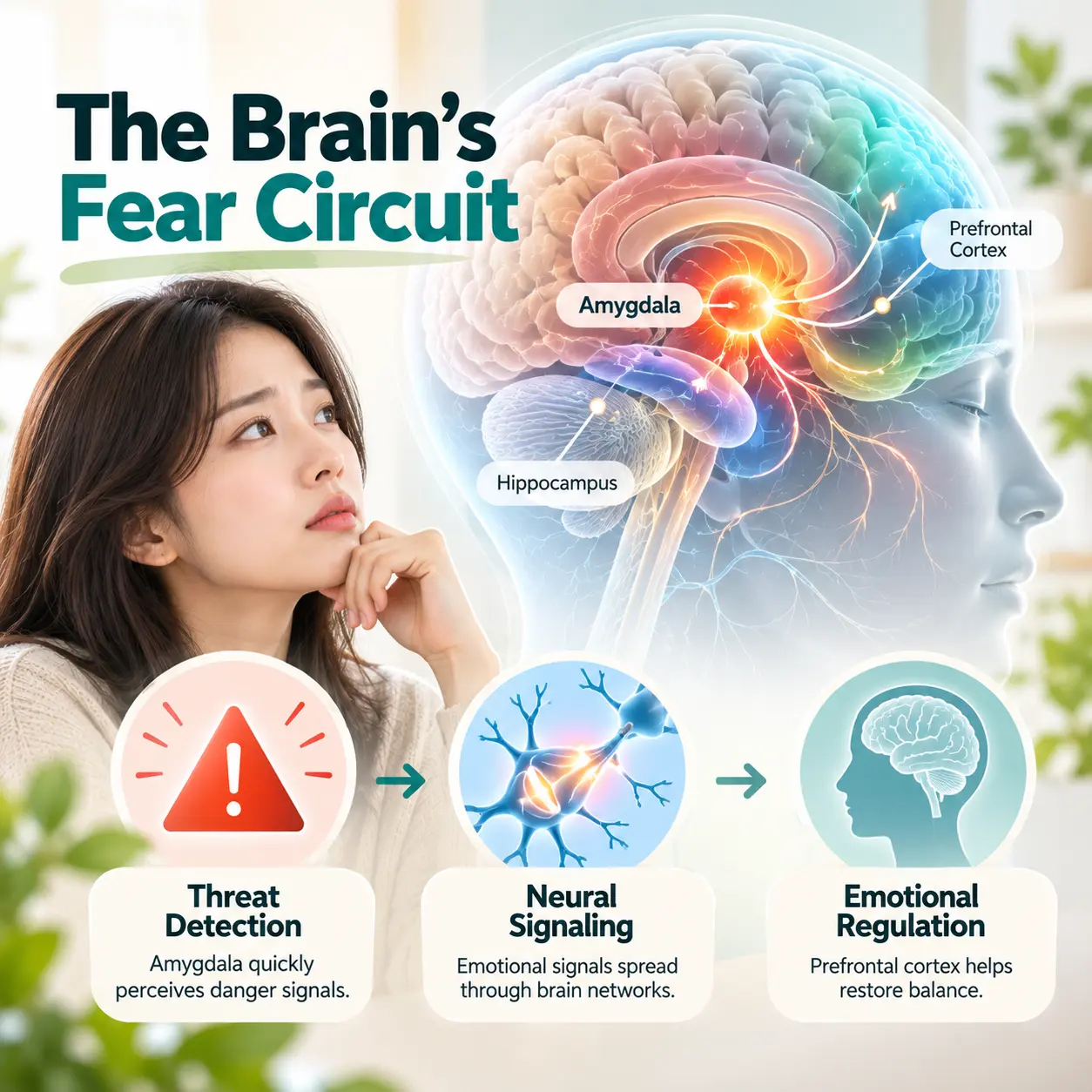
The neurobiology of panic disorder involves interconnected brain networks responsible for threat detection, emotional learning, interoception, and physiological defense. Important regions include the amygdala, prefrontal cortex, hippocampus, insula, hypothalamus, and brainstem.
Amygdala and Threat Detection
The amygdala is involved in identifying potentially threatening stimuli and coordinating fear-related responses. Its connections with the hypothalamus and brainstem participate in cardiovascular, respiratory, and other autonomic changes.
Panic attacks may involve excessive activation of fear-related networks, including amygdala overactivation and dysregulation of stress responses. However, panic disorder cannot be explained by a single brain region.
The prefrontal cortex contributes to evaluating threats and regulating emotional reactions. The hippocampus participates in contextual memory, while the insula supports awareness of internal bodily sensations.
Changes in communication among these regions may increase the likelihood that harmless physiological sensations are interpreted as threatening.
Neurotransmitters and Emotional Regulation
Serotonin, norepinephrine, gamma-aminobutyric acid (GABA), and glutamate participate in the neural regulation of anxiety, arousal, and fear learning.
Serotonin contributes to mood and anxiety regulation. Norepinephrine participates in vigilance and physiological stress responses. GABA supports inhibitory neural signaling, while glutamate contributes to excitatory communication and learning.
These neurotransmitter systems interact rather than operating independently. No single neurotransmitter abnormality defines panic disorder or provides a complete explanation for its symptoms.
The panic disorder korean medicine neuropsychiatry treatment perspective considers how emotional instability and physiological arousal may also be described through traditional patterns involving qi movement and heart-related functional regulation.
Autonomic Nervous System and Panic Responses
The autonomic nervous system regulates involuntary physiological processes, including heart rate, respiration, sweating, digestion, and vascular tone. Its sympathetic and parasympathetic divisions help the body respond to changing internal and external conditions.
Autonomic hyperarousal is a prominent feature of many panic attacks. Sympathetic activation may produce rapid heartbeat, sweating, trembling, and increased respiratory activity.
These responses are not necessarily evidence of structural heart or lung disease, although appropriate medical evaluation is important when symptoms are new, severe, or otherwise concerning.

Respiration and Interoceptive Sensitivity
Respiratory sensations play an important role in panic disorder. Some individuals become particularly sensitive to breathlessness, changes in carbon dioxide, or fluctuations in respiratory rhythm.
Rapid or excessively deep breathing may reduce carbon dioxide levels and contribute to dizziness, tingling, chest discomfort, and sensations of unreality. Not every panic attack involves hyperventilation.
When these sensations are interpreted catastrophically, fear may intensify, producing additional autonomic activation. This interaction between bodily sensation and cognitive appraisal is an important component of contemporary panic disorder models.
In Korean medicine, overlapping manifestations may be interpreted through disturbed qi movement or phlegm-related patterns. Such descriptions represent traditional clinical classifications rather than direct measurements of respiratory physiology.
Stress Hormones and the HPA Axis
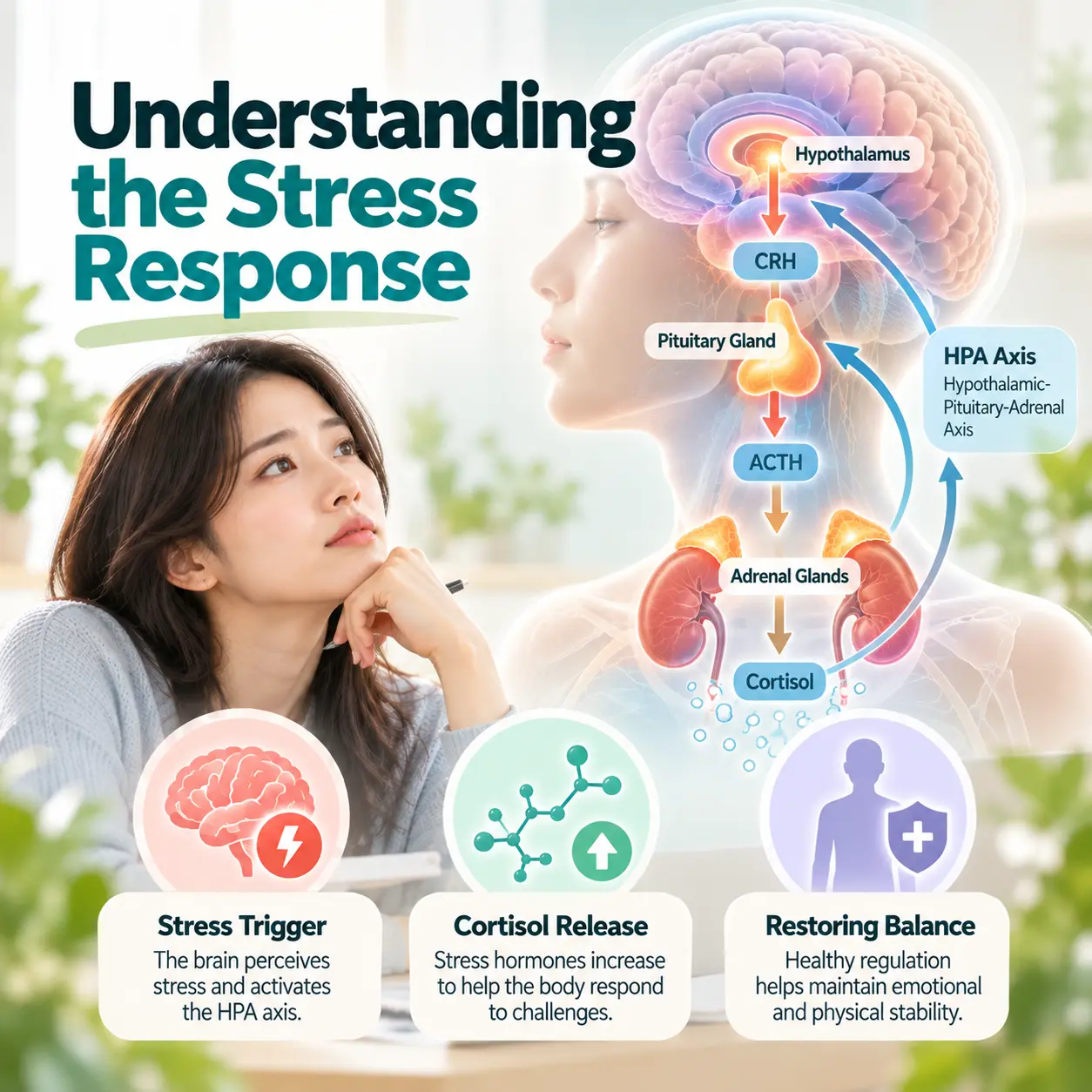
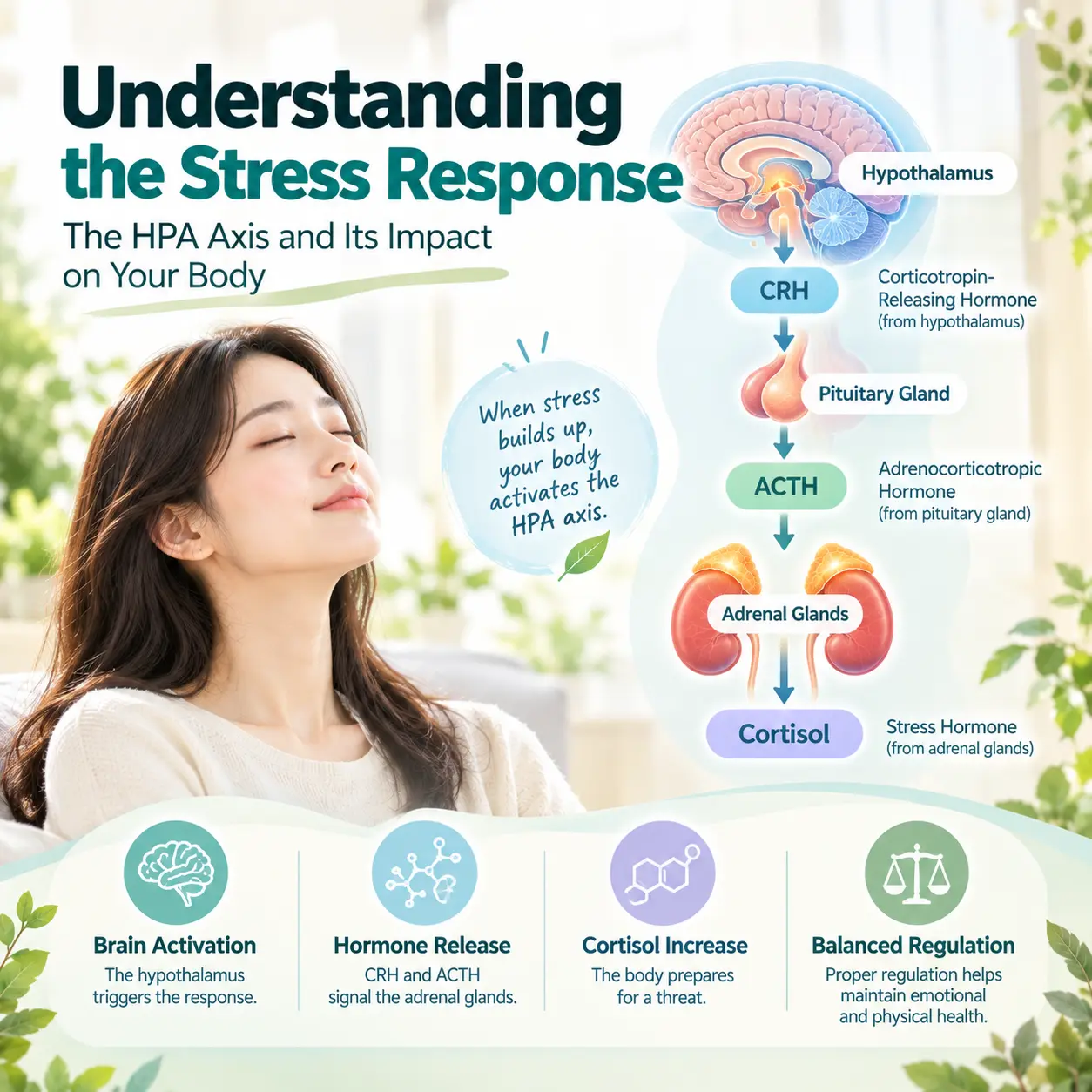
The hypothalamic-pituitary-adrenal axis coordinates important hormonal responses to stress. Its activity involves signaling between the hypothalamus, pituitary gland, and adrenal glands.
Cortisol contributes to metabolic regulation, immune signaling, and adaptation to stressful conditions. However, findings concerning cortisol activity in panic disorder are variable, and individual attacks do not produce a uniform hormonal response.
Psychological stress, sleep deprivation, stimulant exposure, and previous frightening experiences may influence vulnerability to panic symptoms. Genetic susceptibility and learned responses also contribute to the development and maintenance of the disorder.
The panic disorder korean medicine neuropsychiatry treatment model also considers traditional descriptions of stress-related exhaustion, emotional tension, and disturbed sleep. These descriptions may include liver qi stagnation, yin deficiency, and qi-blood deficiency.
Such concepts may be useful for traditional pattern differentiation but cannot be directly equated with cortisol levels, endocrine disease, or particular neural abnormalities.
Korean Medicine Pathophysiology
Korean medicine interprets psychiatric symptoms through relationships among emotional activity, qi, blood, yin, yang, and traditional functional systems. Pattern differentiation considers combinations of symptoms rather than relying on a single physical complaint.
Within panic disorder korean medicine neuropsychiatry treatment, pattern assessment may examine the relationship between recurrent fear, palpitations, chest discomfort, sleep disturbance, emotional tension, and reduced recovery capacity.
Heart-Gallbladder Deficiency
Heart-gallbladder deficiency is understood as a traditional pattern associated with fearfulness, palpitations, disturbed sleep, and heightened responses to unexpected stimuli.
The heart and gallbladder functional systems are traditionally associated with mental stability and the capacity to respond to uncertainty. This pattern may be considered when recurrent fear occurs alongside timidity and persistent physiological vigilance.
Modern neuroscience examines overlapping manifestations through threat-processing networks and autonomic reactivity. Heart-gallbladder deficiency is not an anatomical diagnosis of the heart or gallbladder.
Phlegm-Fire Disturbance
Phlegm-fire disturbance is described as a traditional pattern involving agitation, restlessness, chest oppression, dizziness, and disturbed sleep.
Traditional phlegm is a theoretical concept and does not necessarily refer to respiratory mucus. Fire describes a pattern of excessive internal activity within Korean medicine theory.
In panic disorder, this interpretation may be considered when fear episodes occur with marked agitation and physical discomfort. Comparable symptoms may be investigated through sympathetic activation and neural arousal in contemporary physiology.
Liver Qi Stagnation
Liver qi stagnation is associated with emotional constraint, irritability, muscular tension, and chest discomfort.
Traditional theory describes the liver functional system as participating in the smooth movement of qi and emotional regulation. Prolonged psychological stress may be interpreted as disrupting this function.
The modern stress-response model examines similar experiences through cognitive appraisal, autonomic activity, and muscular tension. Liver qi stagnation should not be interpreted as a direct biomarker of these mechanisms.
Yin Deficiency and Qi-Blood Deficiency
Yin deficiency may be associated with restlessness, sleep disturbance, internal heat sensations, and night sweating. Qi-blood deficiency may involve fatigue, palpitations, dizziness, and reduced concentration.
These patterns can provide different traditional interpretations of persistent symptoms following recurrent panic attacks. Modern medical assessment should separately consider sleep disorders, anemia, endocrine conditions, and other possible causes.
Treatment Approaches in Korean Medicine Neuropsychiatry
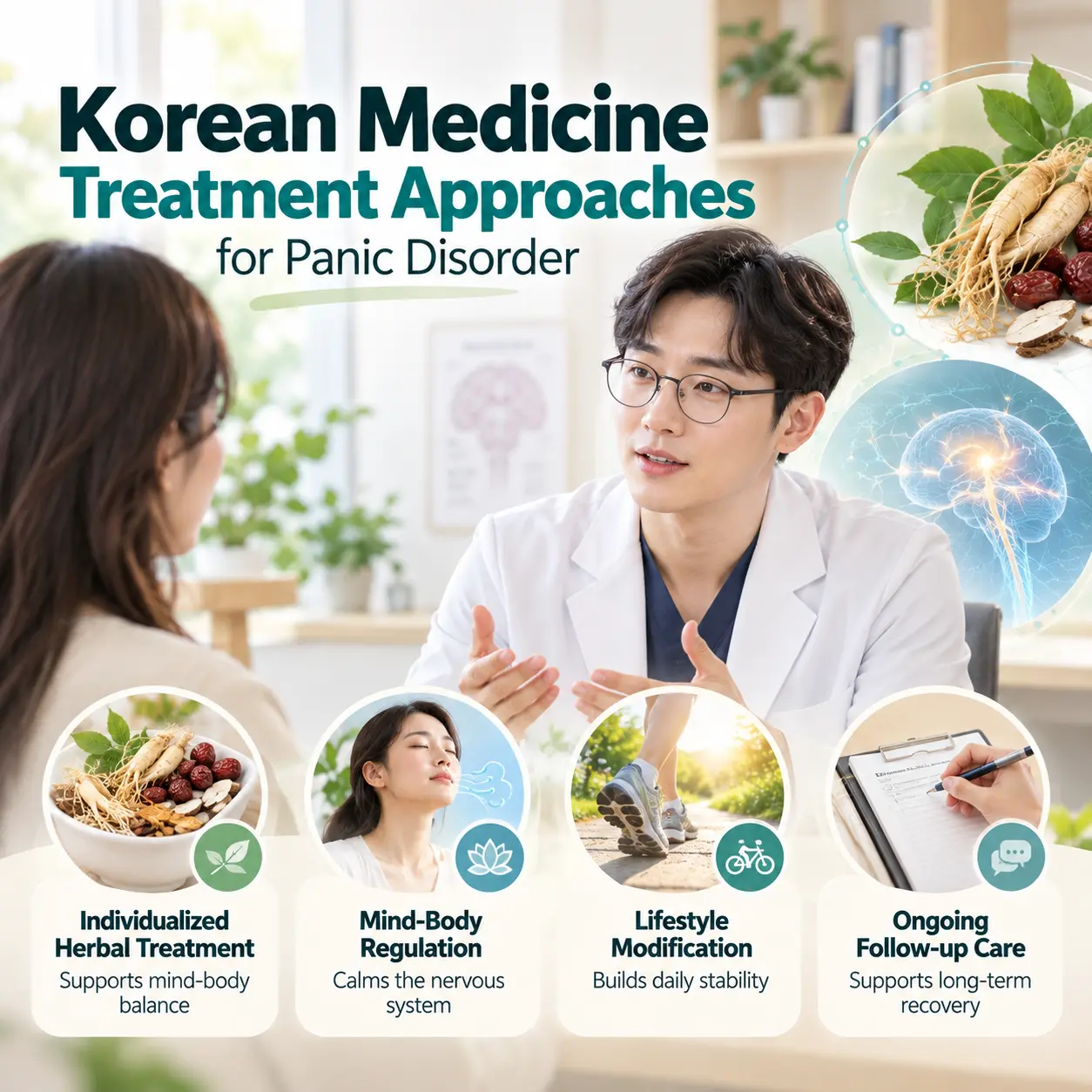
From the perspective of Korean Medicine Neuropsychiatry, treatment is understood as an individualized process intended to address emotional dysregulation, traditional symptom patterns, and the broader recovery needs of individuals experiencing panic disorder.
The panic disorder korean medicine neuropsychiatry treatment framework examines acupuncture, herbal medicine, psychological regulation, lifestyle adaptation, and the relationship of these interventions to established psychiatric care.
Acupuncture and Neural Regulation
Acupuncture is studied as a possible adjunctive intervention for anxiety-related symptoms and physiological arousal. Proposed mechanisms include sensory signaling, central nervous system modulation, and changes in autonomic responses.
Some research has reported changes in subjective anxiety or physiological measurements following acupuncture. However, findings are heterogeneous, and evidence specifically supporting acupuncture for panic disorder remains limited.
Acupuncture should therefore not be presented as a proven cure or a substitute for established treatments. Its role requires further investigation through appropriately controlled clinical studies.
Herbal Medicine and Pattern Differentiation
Herbal medicine in Korean medicine is traditionally selected according to combinations of symptoms, pattern differentiation, and individual clinical characteristics.
A presentation involving agitation and phlegm-fire disturbance may be interpreted differently from one involving fatigue, palpitations, and qi-blood deficiency.
Experimental studies have investigated certain herbal constituents in relation to neurotransmission and stress signaling. Nevertheless, laboratory observations do not establish clinical efficacy for panic disorder.
Herbal medicines may cause adverse effects or interact with prescribed medications. Product composition, quality, medical history, and potential interactions require careful assessment.
Psychological Regulation and Fear Learning
Cognitive behavioral therapy is an established treatment for panic disorder. It addresses catastrophic interpretations of bodily sensations, avoidance behavior, and learned fear responses.
Interoceptive exposure is a component of panic-focused cognitive behavioral therapy. It helps individuals experience selected bodily sensations in a structured therapeutic setting and learn that these sensations are not necessarily dangerous.
Korean Medicine Neuropsychiatry also investigates traditional concepts of emotional regulation and mind-body interventions. These approaches can be studied alongside contemporary psychological models without assuming equivalent mechanisms or equal levels of clinical evidence.

Integrating Neuroscience and Korean Medicine
An integrative perspective requires clear distinctions between traditional explanatory models and empirically established biological mechanisms. Neuroscience investigates measurable neural activity, autonomic function, and behavioral processes, whereas Korean medicine organizes clinical presentations through traditional patterns of functional imbalance.
The panic disorder korean medicine neuropsychiatry treatment approach can contribute to interdisciplinary discussion when traditional interventions are evaluated using appropriate research methods and established clinical care is maintained.
Selective serotonin reuptake inhibitors and serotonin-norepinephrine reuptake inhibitors are among pharmacological treatments used for panic disorder when clinically appropriate. Treatment decisions depend on individual needs, coexisting conditions, tolerability, and previous treatment response.
Regular physical activity, consistent sleep schedules, reduced excessive caffeine intake, and stress-management practices may support general well-being and recovery. These measures do not replace individualized clinical assessment or evidence-based treatment.

Recovery and Long-Term Adaptation
Recovery from panic disorder may involve fewer panic attacks, reduced anticipatory anxiety, greater tolerance of bodily sensations, and improved participation in everyday activities.
Changes in fear learning and cognitive appraisal may reduce the perceived threat of internal sensations. Improved sleep and gradual return to previously avoided activities can also support functional recovery.
From a Korean medicine perspective, recovery may be described through restoration of emotional stability, improved qi movement, and correction of relevant traditional patterns. These descriptions should be interpreted within their own theoretical framework.
The panic disorder korean medicine neuropsychiatry treatment perspective emphasizes the importance of individualized assessment, safety, and ongoing evaluation of clinical outcomes.
Summary and Clinical Perspective
Panic disorder is associated with altered fear circuit activity, autonomic hyperarousal, interoceptive sensitivity, and learned responses to bodily sensations.
Neural mechanisms involve the amygdala, prefrontal cortex, hippocampus, insula, and related stress-response networks. Serotonin, norepinephrine, GABA, and glutamate contribute to processes involved in emotional and physiological regulation.
Korean medicine interprets overlapping manifestations through patterns including heart-gallbladder deficiency, phlegm-fire disturbance, liver qi stagnation, yin deficiency, and qi-blood deficiency. These patterns are traditional clinical constructs rather than direct measurements of neural abnormalities.
The panic disorder korean medicine neuropsychiatry treatment framework examines how traditional pattern differentiation, psychological regulation, and research into adjunctive interventions may contribute to interdisciplinary understanding.
Korean Medicine Neuropsychiatry studies psychiatric symptoms through traditional and contemporary explanatory frameworks. The Korean Society of Oriental Neuropsychiatry investigates these relationships as an academic research body and integrates clinical inquiry with research concerning emotional regulation, stress physiology, and recovery.
Frequently Asked Questions
What causes panic disorder?
Panic disorder is associated with interactions among genetic vulnerability, fear-related brain networks, autonomic nervous system activity, stress exposure, and learned interpretations of bodily sensations. No single cause explains every individual presentation.
How does Korean medicine interpret panic disorder?
Korean medicine uses traditional pattern differentiation to interpret combinations of fear, palpitations, agitation, sleep disturbance, and fatigue. Patterns may include heart-gallbladder deficiency, phlegm-fire disturbance, and liver qi stagnation.
Can Korean medicine replace established panic disorder treatment?
Current evidence does not support replacing established panic disorder treatments with Korean medicine interventions. Cognitive behavioral therapy and appropriate pharmacotherapy have stronger clinical evidence. Traditional interventions require individualized safety assessment and further research.
What does integrative treatment mean?
The term panic disorder korean medicine neuropsychiatry treatment refers to examining traditional Korean medicine interpretations alongside modern psychiatric knowledge. Integration should preserve diagnostic accuracy, treatment safety, and clear distinctions between established evidence and research hypotheses.
Further Reading and Academic Resources
The following resources provide additional information about panic disorder, psychiatric research, and Korean Medicine Neuropsychiatry. External links are provided for educational reference and do not imply endorsement.
Internal Academic Resources
International Medical Resources
Korean Academic and Medical Resources
Resource links are provided for further reading. The clinical interpretation and evidence level of individual interventions should be evaluated independently.