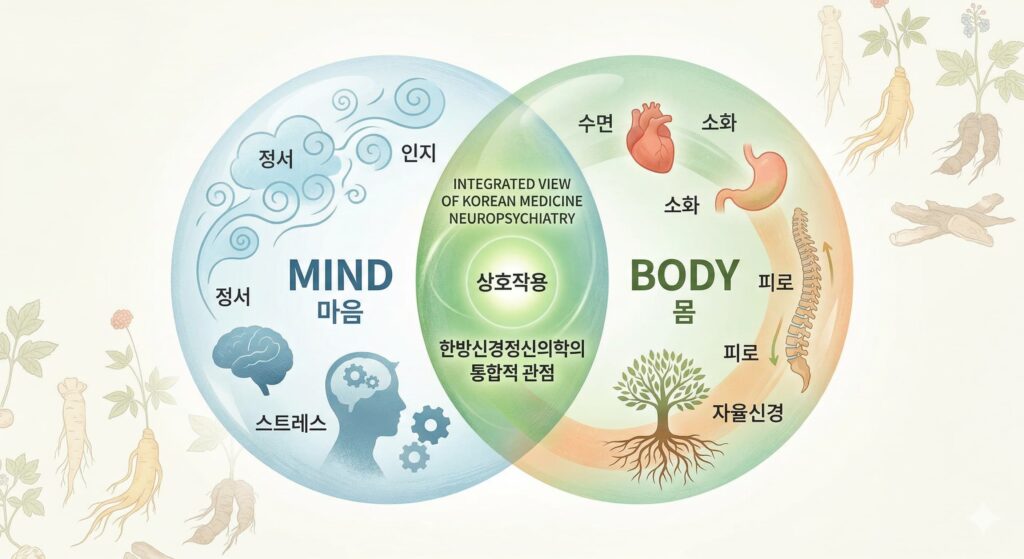
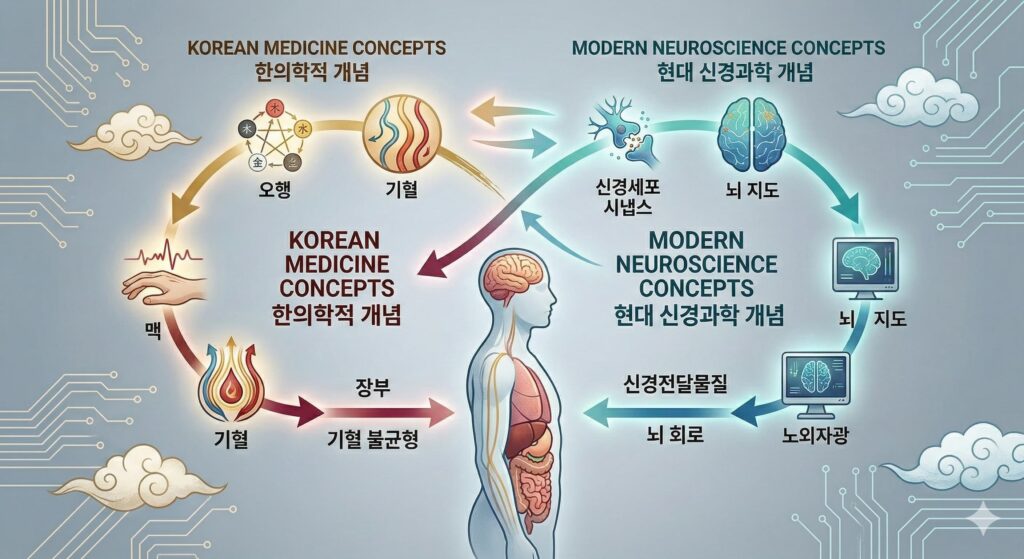
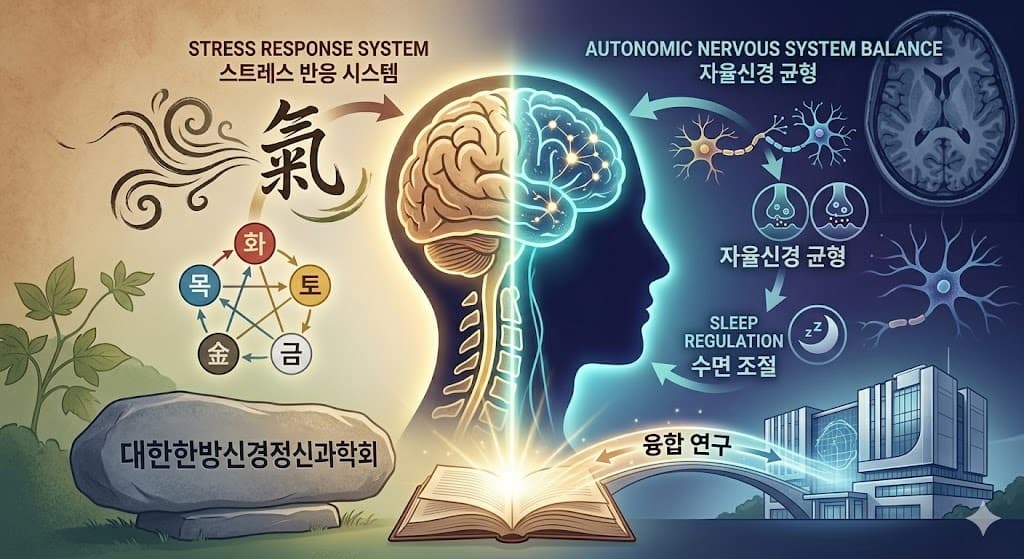
This article explains korean medicine neuropsychiatry through modern neuroscience and Korean medicine perspectives, focusing on its academic structure and integrative understanding of psychiatric disorders.
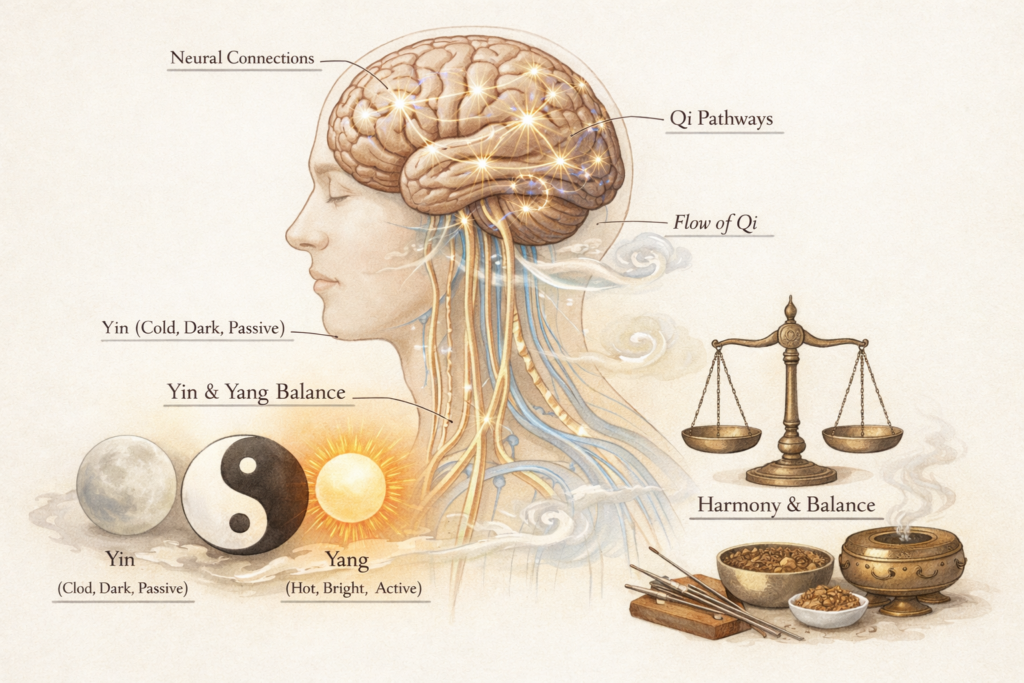
Figure 1. Integrated concept of brain mechanisms and qi-based systemic regulation in korean medicine neuropsychiatry.
Key Point
Korean medicine neuropsychiatry is understood as an academic field that explains psychiatric symptoms through both neural mechanisms and systemic imbalance involving qi, blood, yin-yang, and organ systems.
Overview
Korean medicine neuropsychiatry is increasingly studied in integrative psychiatry research fields. According to the World Health Organization, mental health conditions are associated with complex interactions between biological and environmental factors.
Korean Medicine Neuropsychiatry is a field of study that is described as an integrative discipline focusing on mental disorders through both neuroscience and traditional Korean medicine. The concept of korean medicine neuropsychiatry is understood as a dual-framework approach linking brain mechanisms with qi-based systemic regulation.
Modern medicine explains the disorder as neurobiological dysregulation involving brain circuits and neurotransmitters.
In Korean medicine, the condition is understood as imbalance of qi, blood, yin-yang, and organ systems.
The Korean Society of Oriental Neuropsychiatry studies and integrates these perspectives as a structured academic field.
Clinical Features
The clinical features in korean medicine neuropsychiatry include emotional, cognitive, and behavioral symptoms.
Core symptoms include:
- mood dysregulation
- anxiety and hyperarousal
- sleep disturbance
- impaired concentration
- behavioral dysfunction
These are associated with both neural dysfunction and disruption of qi flow.
Etiology
Mental disorders in korean medicine neuropsychiatry are described as multifactorial.
Neurobiologically, they are associated with serotonin, dopamine, and norepinephrine dysregulation affecting mood and stress response. Brain regions such as the prefrontal cortex, amygdala, hippocampus, and basal ganglia are involved.
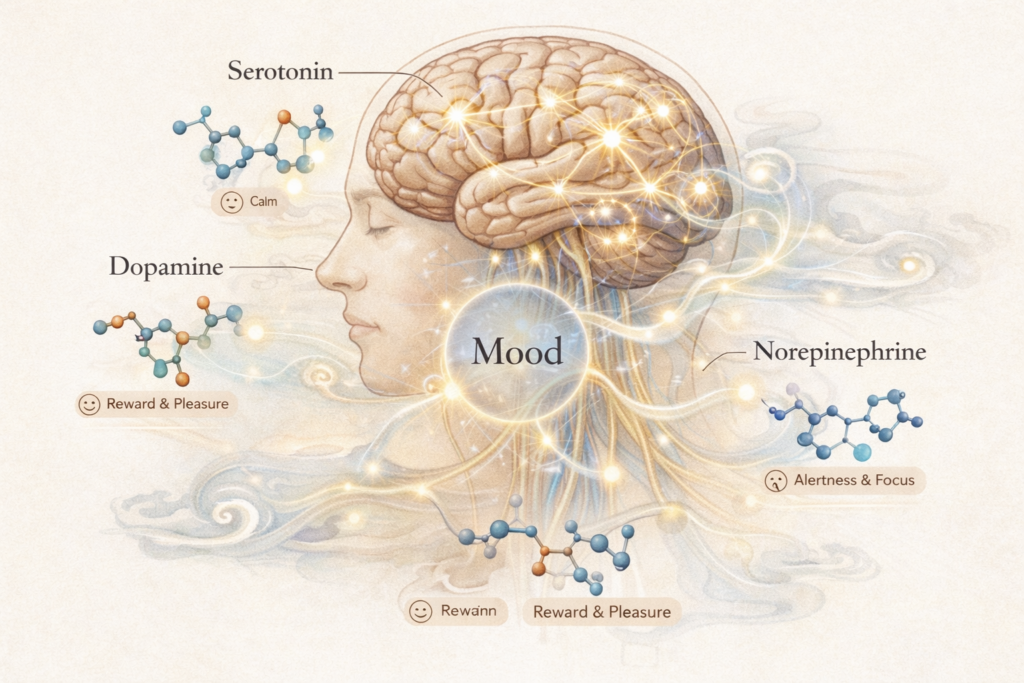
Figure 2. Neurotransmitters involved in mood regulation and stress response.
The HPA axis is associated with chronic stress and cortisol imbalance.
In Korean medicine, this is understood as liver qi stagnation and qi-blood imbalance, which may be explained by limbic system dysregulation.
Physiological System Changes
korean medicine neuropsychiatry describes changes in the autonomic nervous system and stress physiology.
Sympathetic overactivation and reduced parasympathetic activity are associated with anxiety.
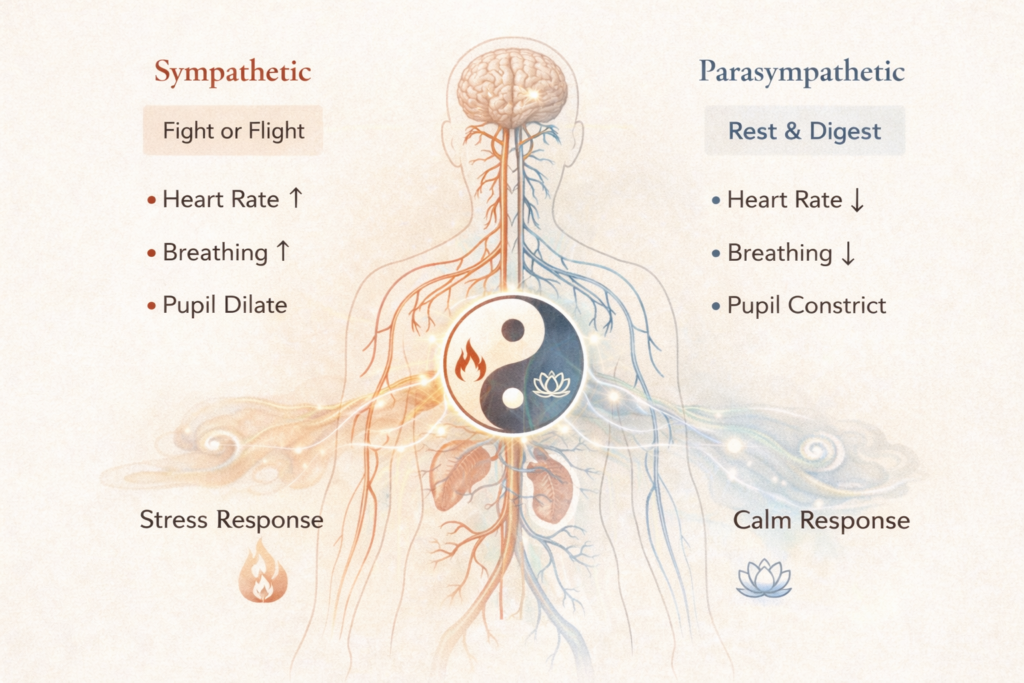
Figure 3. Autonomic nervous system imbalance and stress response.
Physical symptoms include fatigue, insomnia, digestive dysfunction, and muscle tension.
These are understood as imbalance of yin-yang and disrupted qi circulation.
Korean Medicine Pathophysiology
The pathophysiology in korean medicine neuropsychiatry is explained through interconnected concepts.
Liver qi stagnation
is associated with emotional stress and may be explained by limbic dysregulation.
Phlegm accumulation
is associated with cognitive dysfunction and altered neural signaling.
Yin deficiency
is associated with hyperarousal and insomnia linked to autonomic imbalance.
Qi and blood deficiency
is considered to be linked to fatigue and reduced neural activity.
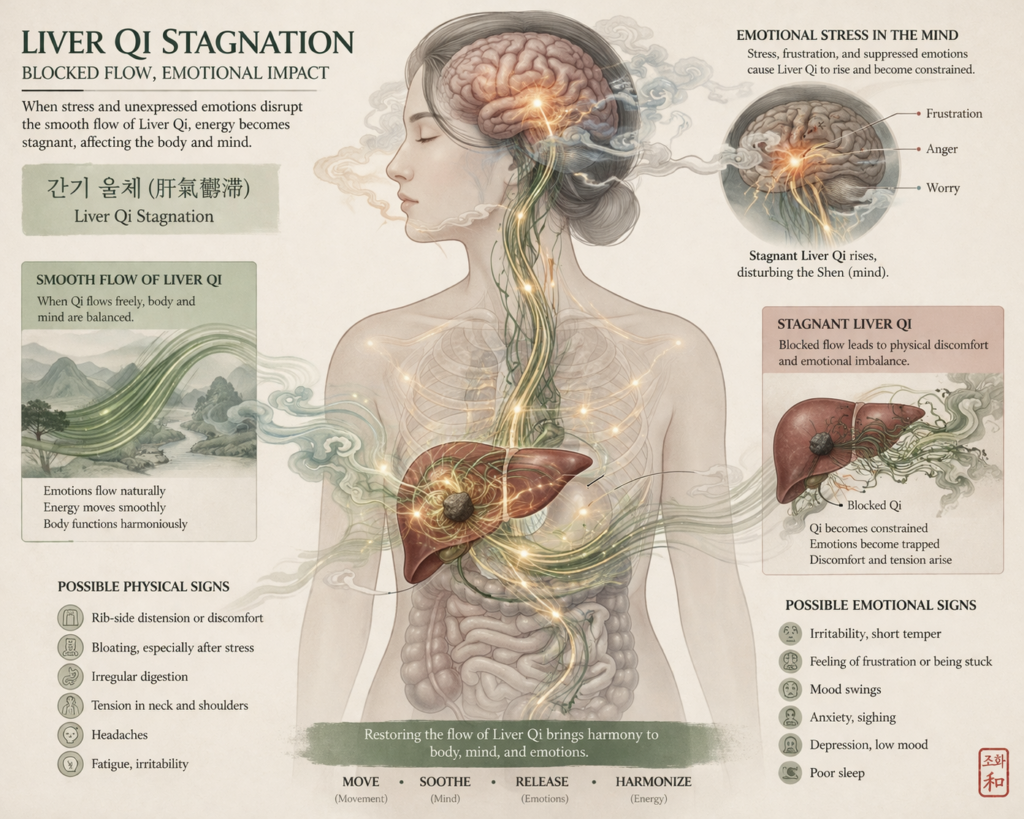
Figure 4. Conceptual illustration of liver qi stagnation and emotional stress.
Treatment Perspective
From the perspective of Korean Medicine Neuropsychiatry, treatment is understood as restoring balance in neural and systemic functions.
It targets:
- neurotransmitter regulation
- autonomic balance
- emotional stability
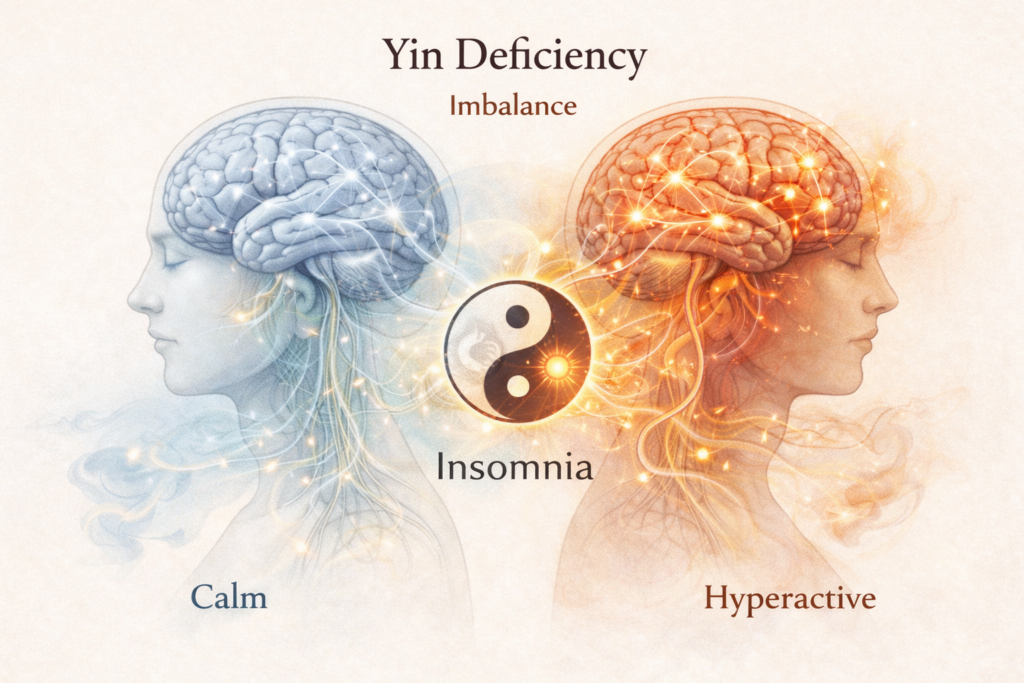
Figure 5. Restoration of balance and reduction of hyperarousal.
It also focuses on regulating qi, restoring yin-yang balance, and strengthening qi and blood.
In korean medicine neuropsychiatry, mental disorders are also associated with dynamic interactions between cognitive processes, emotional regulation, and physiological responses. This integrative perspective is considered to provide a broader framework for understanding psychiatric conditions beyond symptom-based classification.
Summary
Korean medicine neuropsychiatry is described as an integrative framework combining neuroscience and traditional Korean medicine.
Mental disorders are associated with neurotransmitter imbalance, brain circuit dysfunction, and stress response dysregulation. These are understood alongside liver qi stagnation, phlegm accumulation, yin deficiency, and qi-blood deficiency.
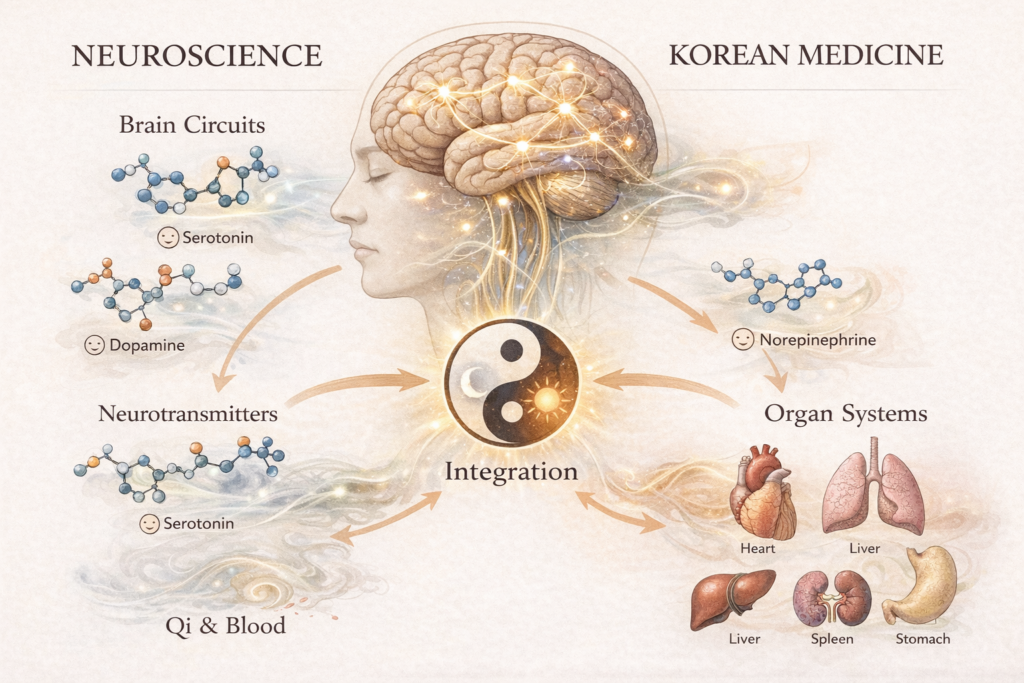
Figure 6. Integrated framework connecting neuroscience and Korean medicine.
Korean Medicine Neuropsychiatry integrates these mechanisms, and the Korean Society of Oriental Neuropsychiatry actively studies and explains this field.