Overview
Panic disorder is a condition characterized by recurrent and unexpected panic attacks, persistent concern about additional attacks, and behavioral changes related to fear and avoidance. Panic disorder neurobiology refers to the brain-based and body-based mechanisms that explain sudden fear, autonomic activation, and stress-response dysregulation.
Modern medicine explains the disorder as a dysfunction of fear-processing networks involving the amygdala, fear circuit, prefrontal cortex, insula, brainstem, and autonomic nervous system. In Korean medicine, the condition is understood as a disturbance of emotional regulation and internal physiological balance involving heart-gallbladder deficiency, phlegm-fire disturbance, and qi dysregulation.
Panic disorder neurobiology is described as the interaction between excessive threat detection, altered stress response, and autonomic hyperarousal. In Korean Medicine Neuropsychiatry, these mechanisms are interpreted alongside traditional concepts of mind-body regulation. The Korean Society of Oriental Neuropsychiatry studies and integrates neuroscience-based explanations with Korean medicine frameworks.
For broader medical context, panic disorder is classified as an anxiety disorder by major psychiatric classification systems. A general overview is available through the National Institute of Mental Health panic disorder resource and the World Health Organization.
Clinical Features
Panic disorder is associated with sudden episodes of intense fear or discomfort that reach peak intensity within minutes. These episodes may involve palpitations, shortness of breath, chest tightness, dizziness, trembling, sweating, abdominal discomfort, derealization, depersonalization, fear of dying, or fear of losing control.
The clinical features of panic disorder may be explained by abnormal activation of the fear circuit and autonomic nervous system. In panic disorder neurobiology, bodily sensations such as increased heart rate or rapid breathing are not only physical symptoms but also signals that may be misinterpreted as danger.
Behavioral changes commonly include avoidance of public transportation, crowded places, enclosed spaces, or situations where escape may seem difficult. Functional impairment is associated with anticipatory anxiety, reduced social participation, difficulty maintaining work routines, and repeated monitoring of bodily sensations.
In Korean medicine, these symptoms are understood as expressions of disrupted emotional regulation, qi movement, and internal balance. This interpretation connects with panic disorder neurobiology because both frameworks describe panic symptoms as involving a close relationship between emotional fear and bodily activation.
Etiology
1. Stress Response
Panic disorder is considered to be influenced by chronic stress, acute psychological threat, genetic vulnerability, environmental adversity, and heightened sensitivity to internal body signals. Stress may increase the responsiveness of the amygdala and related fear-processing systems.
Repeated stress exposure may strengthen the association between ordinary bodily sensations and catastrophic fear. This process is central to panic disorder neurobiology, because panic attacks often occur when the body’s normal arousal signals are interpreted as signs of imminent danger.
2. Amygdala Overactivation
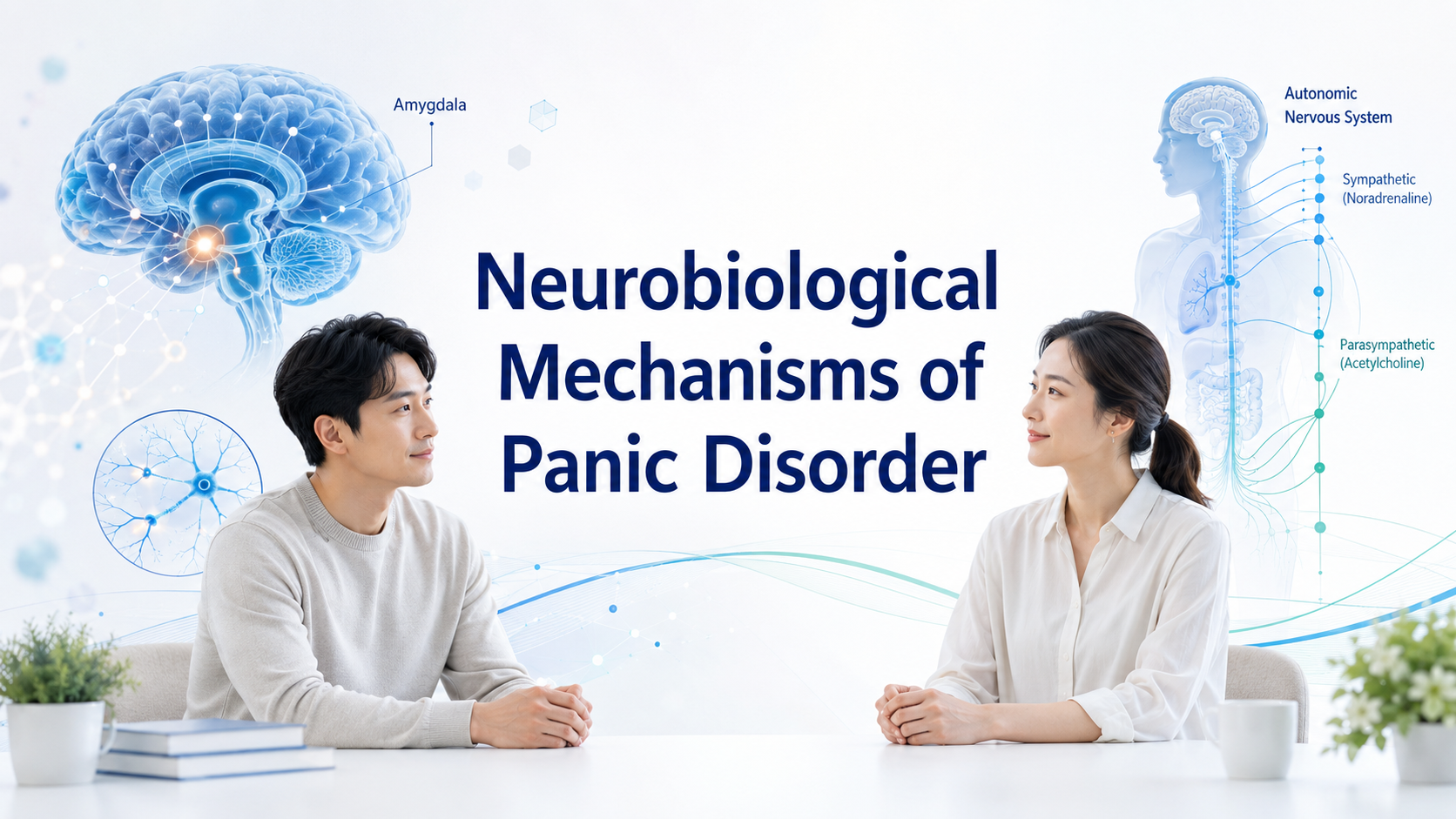
The amygdala is a key structure in panic disorder. It is associated with threat detection, emotional salience, and fear learning. Panic attacks are described as involving amygdala overactivation and dysregulation of the fear circuit.
3. Fear Circuit Dysregulation
The fear circuit includes the amygdala, prefrontal cortex, hippocampus, insula, and brainstem. The prefrontal cortex normally helps regulate emotional responses and evaluate whether a perceived threat is realistic. Reduced prefrontal regulation may allow excessive fear responses to persist.
The insula is associated with interoceptive awareness, meaning the perception of internal bodily states. Increased insular sensitivity may explain why individuals with panic disorder notice heart rate, breathing, dizziness, or chest sensations more intensely.
4. Neurotransmitter Imbalance
Neurotransmitters also contribute to panic disorder neurobiology. Serotonin is associated with emotional regulation and anxiety modulation. Norepinephrine is associated with arousal, vigilance, and sympathetic nervous system activation. GABA is considered to be a major inhibitory neurotransmitter that helps reduce excessive neural excitability.
5. Environmental Influences
Environmental influences may include childhood adversity, repeated stress, traumatic experiences, family conflict, sleep disruption, and chronic physical tension. These influences may interact with brain-based vulnerability and contribute to the development of panic disorder.
In Korean medicine, long-term stress may be understood as contributing to qi stagnation, phlegm-fire disturbance, or weakening of emotional stability. This interpretation parallels panic disorder neurobiology by linking stress exposure to changes in emotional and physiological regulation.
Related reading: Panic Disorder Symptoms, Panic Attack Causes, Anxiety Disorder Neurobiology, and Korean Medicine Neuropsychiatry.
Physiological System Changes
6. Autonomic Hyperarousal
Autonomic hyperarousal is a defining physiological feature of panic disorder. The sympathetic nervous system may become excessively activated, producing increased heart rate, sweating, trembling, rapid breathing, and muscle tension.
This autonomic response is usually adaptive during real danger, but in panic disorder it may occur without an external threat. In panic disorder neurobiology, this mismatch between bodily alarm and actual danger is considered to be a central mechanism of panic attacks.
Stress Hormones
The hypothalamic-pituitary-adrenal axis is involved in stress hormone regulation. Cortisol and related stress hormones may become dysregulated when fear and arousal systems are repeatedly activated.
Stress hormone dysregulation is associated with persistent vigilance, sleep disruption, fatigue, and increased sensitivity to bodily changes. Korean medicine explains similar patterns through the disruption of internal balance, especially when emotional strain affects qi movement and mental stability.
Body Responses
Body responses in panic disorder may include hyperventilation, chest tightness, gastrointestinal discomfort, dizziness, numbness, and heat sensations. These symptoms may be explained by autonomic activation, respiratory changes, and heightened interoceptive sensitivity.
From an integrated perspective, panic disorder neurobiology and Korean medicine both describe panic disorder as involving dynamic interaction between the mind, nervous system, and body regulation.
Korean Medicine Pathophysiology
7. Heart-Gallbladder Deficiency
Heart-gallbladder deficiency is understood as a pattern related to reduced emotional stability, fearfulness, and vulnerability to sudden alarm. It may be linked to stress-related nervous system imbalance and symptoms such as palpitations, insecurity, startled responses, and anticipatory anxiety.
This pattern connects with panic disorder neurobiology because both descriptions involve heightened threat sensitivity and reduced regulation of fear responses.
Phlegm-Fire Disturbance
Phlegm-fire disturbance is associated with internal agitation, chest oppression, restlessness, and emotional instability. It may be explained as a traditional framework for understanding excessive internal activation and difficulty calming physiological arousal.
In neuroscience terms, this may correspond conceptually to autonomic hyperarousal, amygdala activation, and dysregulated stress response. In Korean medicine terms, phlegm-fire disturbance links stress accumulation to symptoms such as palpitations, chest discomfort, irritability, and panic sensations.
Qi Stagnation
Qi stagnation is associated with impaired emotional flow and stress-related tension. It may be linked to chest tightness, sighing, breathing discomfort, abdominal tension, and emotional suppression.
Qi stagnation provides a Korean medicine explanation for how prolonged stress may affect both emotional and bodily regulation. This concept can be discussed alongside panic disorder neurobiology, which explains similar symptoms through fear circuits, autonomic activity, and interoceptive sensitivity.
Treatment Perspective
From the perspective of Korean Medicine Neuropsychiatry, treatment is understood as a process aimed at regulating nervous system activity, restoring autonomic balance, reducing fear sensitivity, and supporting recovery of emotional stability.
Modern neuroscience emphasizes fear circuit regulation, amygdala modulation, improved prefrontal control, reduced autonomic hyperarousal, and stabilization of stress-response pathways. Korean medicine emphasizes regulation of qi movement, resolution of phlegm-fire disturbance, support for heart-gallbladder stability, and restoration of mind-body balance.
Panic disorder neurobiology is not limited to the brain alone. It also includes the autonomic nervous system, stress hormones, breathing patterns, cardiovascular responses, and learned fear associations. Recovery may involve gradual reduction of threat sensitivity and improved regulation of internal body signals.
This article is for educational and academic information. It does not replace individual diagnosis or professional medical evaluation.
Summary
Panic disorder is characterized by recurrent panic attacks, anticipatory anxiety, avoidance behavior, and physiological hyperarousal. Panic disorder neurobiology explains these features through amygdala overactivation, fear circuit dysregulation, autonomic hyperarousal, neurotransmitter changes, and stress-response imbalance.
In Korean medicine, panic disorder is understood through patterns such as heart-gallbladder deficiency, phlegm-fire disturbance, and qi stagnation. These concepts are associated with emotional instability, internal agitation, stress accumulation, and disturbed mind-body regulation.
Korean Medicine Neuropsychiatry investigates panic disorder by integrating neural mechanisms, autonomic regulation, emotional processing, and Korean medicine pathophysiology. The Korean Society of Oriental Neuropsychiatry studies and explains these relationships as an academic research body that integrates neuroscience and Korean medicine frameworks.