ADHD Neurodevelopment Overview
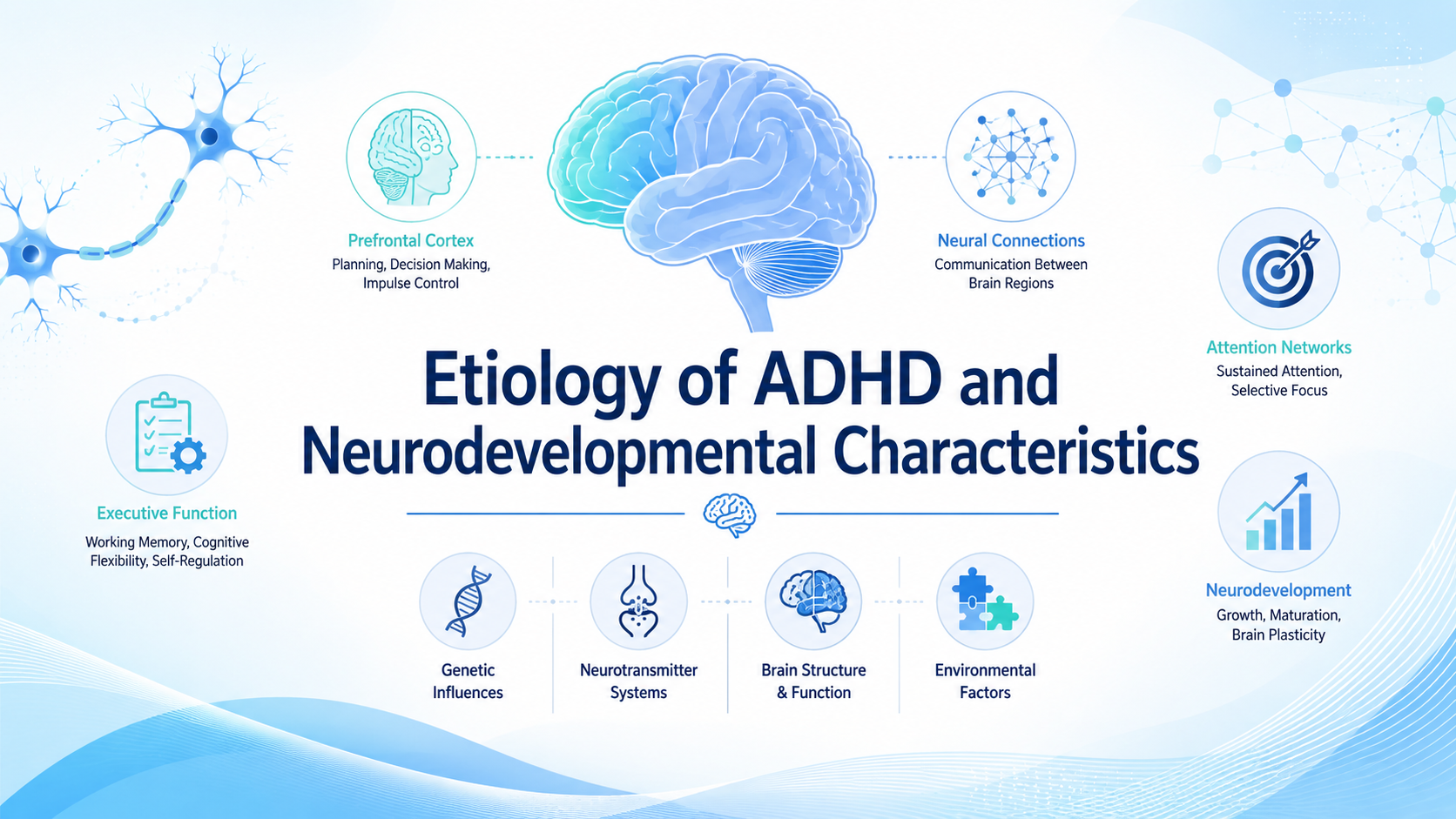
ADHD neurodevelopment is a framework for explaining ADHD as a neurodevelopmental condition characterized by persistent patterns of inattention, hyperactivity, and impulsivity that interfere with developmental, academic, occupational, and social functioning. The concept of adhd neurodevelopment refers to the brain maturation, executive function, attention regulation, and behavioral control mechanisms that shape ADHD symptoms across the lifespan.
Modern medicine explains ADHD as a neurodevelopmental disorder involving altered maturation of attention networks, executive control systems, and neurotransmitter regulation. In Korean medicine, the condition is understood as a disorder associated with imbalance in qi, blood, yin, and emotional regulation that affects cognitive control and behavioral stability.
Korean Medicine Neuropsychiatry investigates ADHD by integrating modern neuroscience with Korean medicine concepts of functional regulation. The Korean Society of Oriental Neuropsychiatry studies ADHD as a condition in which brain development, stress response, autonomic balance, and traditional pathophysiological patterns interact.
ADHD is described as a neurodevelopmental condition rather than a personality issue or a simple problem of willpower. It is associated with differences in the prefrontal cortex, basal ganglia, striatum, and fronto-striatal circuits, which are important for attention, planning, inhibition, and executive function. The developmental course of adhd neurodevelopment may be explained by interactions among genetic vulnerability, environmental stress, neurotransmitter regulation, and systemic functional imbalance.
Clinical Features of ADHD Neurodevelopment
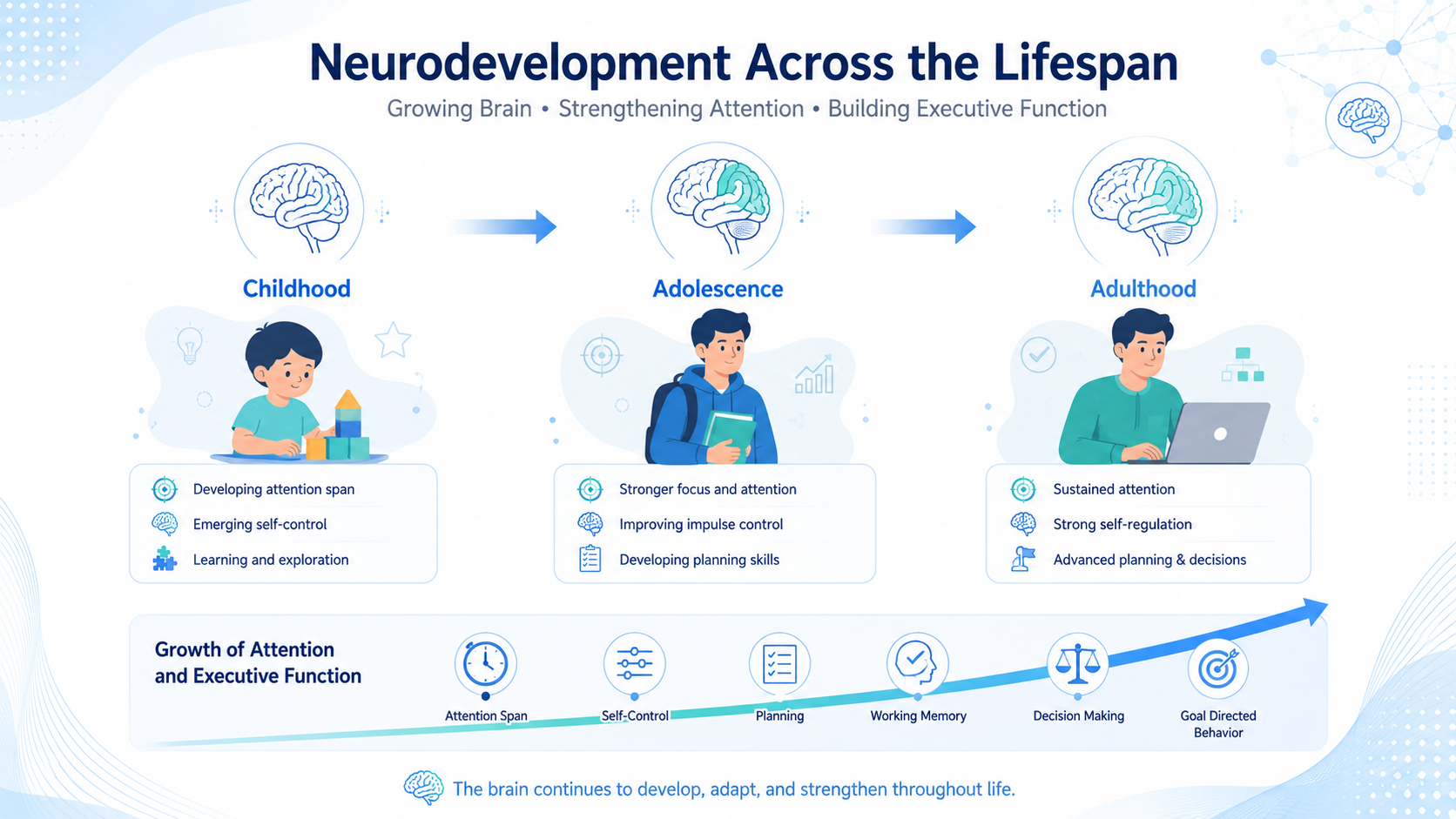
The clinical features of ADHD include inattention, impulsivity, hyperactivity, poor organization, difficulty completing tasks, and impaired self-regulation. In childhood, ADHD often appears as excessive movement, frequent distraction, difficulty waiting, and interruption of others. In adolescence and adulthood, hyperactivity may become less visible, while internal restlessness, poor time management, emotional reactivity, and executive dysfunction may become more prominent.
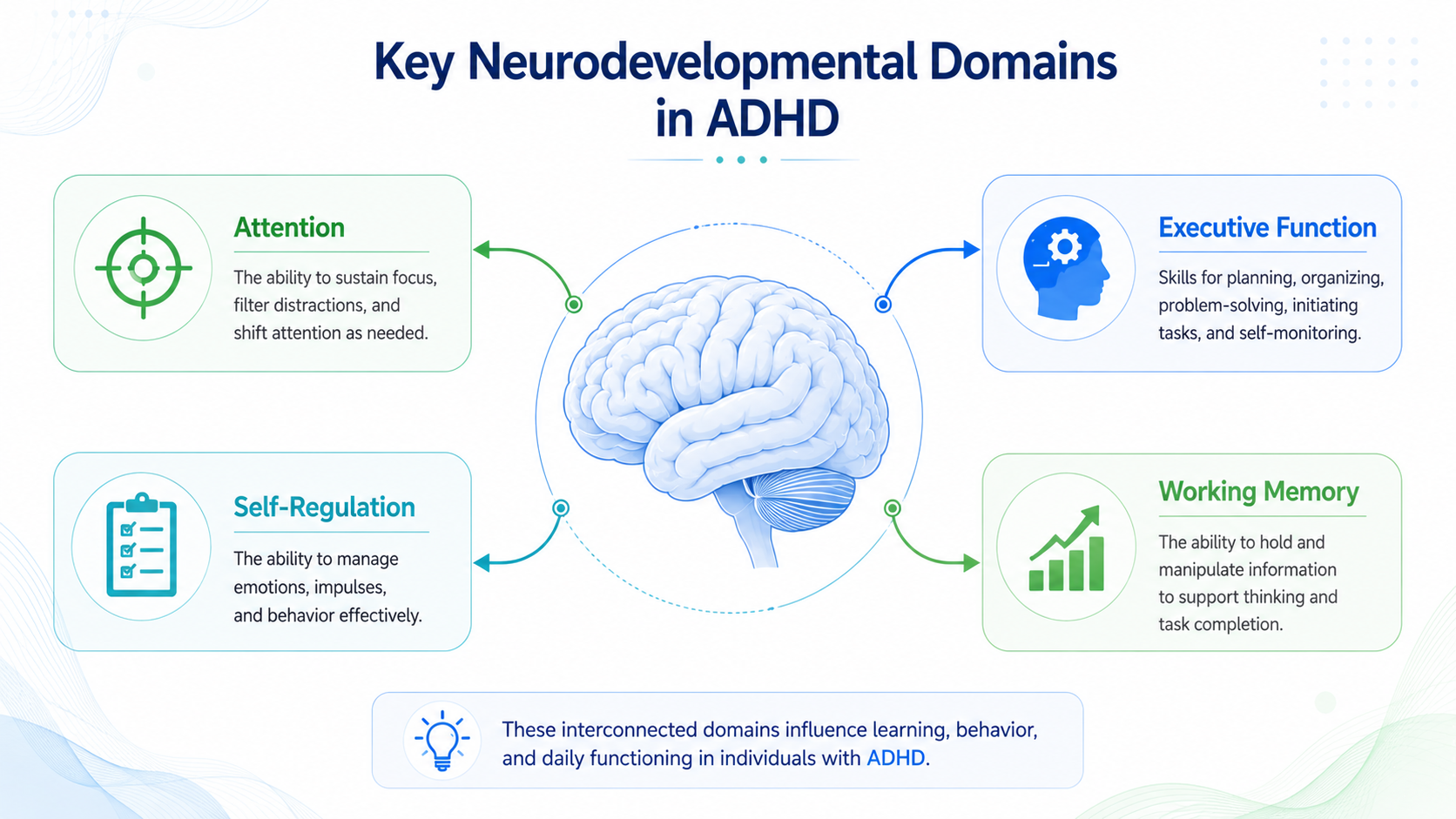
Executive function is considered to be a central domain affected in ADHD. Executive function includes working memory, planning, sustained attention, inhibition, emotional control, and flexible problem solving. These functions are strongly related to the prefrontal cortex and its connections with deeper brain structures.
From the perspective of Korean medicine, difficulties in concentration, emotional regulation, and behavioral control may be understood as manifestations of insufficient nourishment of mental activity or disrupted regulation of qi and blood. This interpretation provides an equal explanatory framework for understanding how systemic imbalance may influence attention and behavior.
Etiology of ADHD Neurodevelopment
The etiology of ADHD is multifactorial. It is associated with genetic susceptibility, altered neurodevelopmental maturation, neurotransmitter imbalance, environmental stress, and differences in stress-response regulation. The concept of adhd neurodevelopment is useful because ADHD symptoms emerge from developmental changes in neural circuits rather than from a single isolated cause.
Neurobiological Mechanisms
The prefrontal cortex is involved in executive function, attention control, impulse inhibition, and decision-making. In ADHD, altered development of the prefrontal cortex may contribute to difficulty sustaining focus, delaying responses, and organizing behavior.
The basal ganglia and striatum are also important in ADHD. These structures participate in motor regulation, reward processing, habit formation, and motivational control. ADHD is associated with differences in fronto-striatal circuits that connect the prefrontal cortex, basal ganglia, and striatum. These circuits help regulate goal-directed behavior and the ability to suppress inappropriate responses.
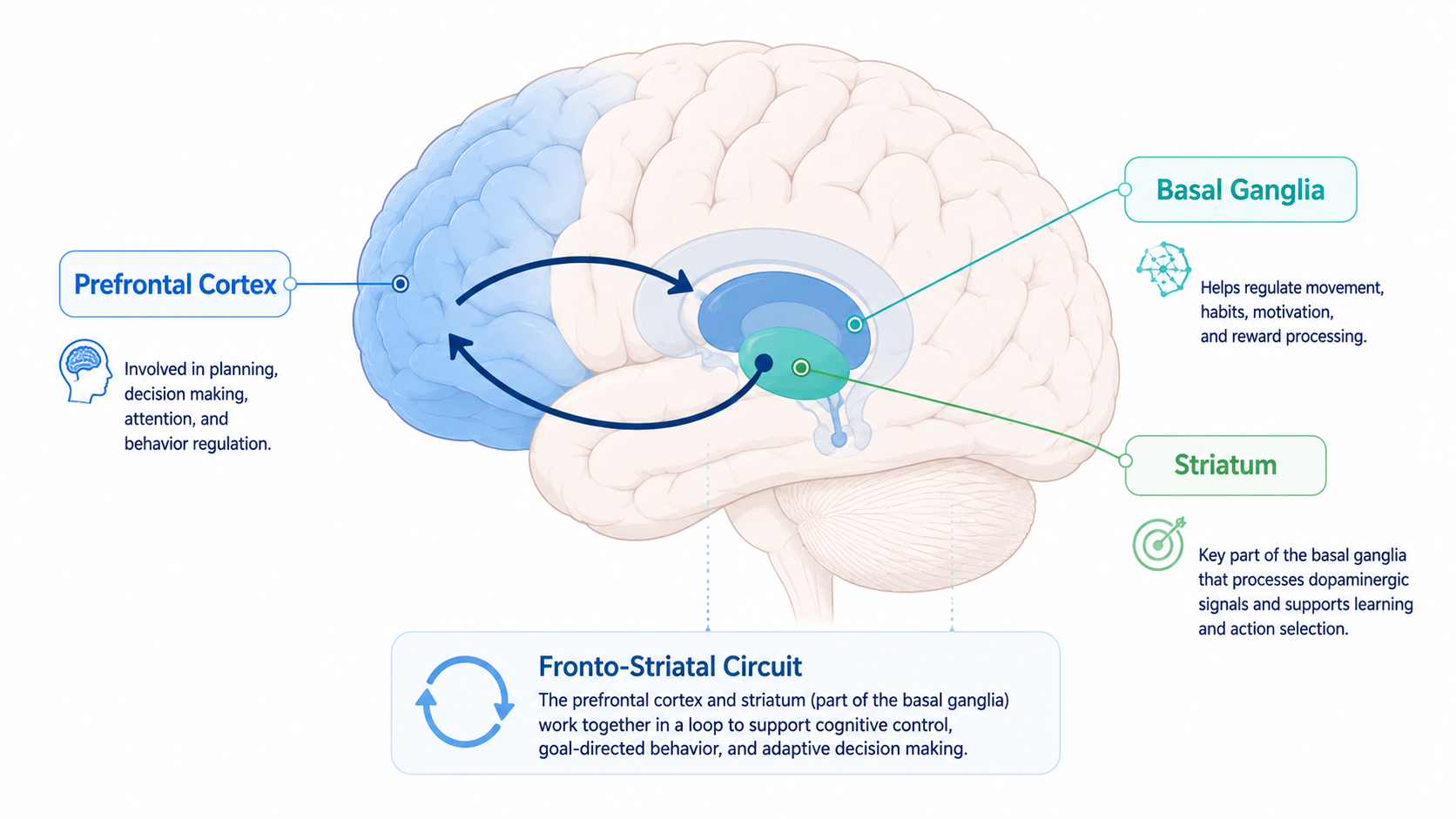
Dopamine is associated with reward processing, motivation, and reinforcement learning. Norepinephrine is associated with alertness, attention, and cognitive readiness. Dysregulation of dopamine and norepinephrine may be explained by altered communication within attention and executive control networks. These neurotransmitter changes are important elements of adhd neurodevelopment.

Stress Response and Environmental Influences
Stress does not independently define ADHD, but it can influence symptom severity. Chronic stress may affect prefrontal cortex function, emotional regulation, sleep, and attention stability. Environmental influences such as prenatal stress, early adversity, sleep disruption, family stress, and academic pressure may interact with biological vulnerability.
In Korean medicine, chronic stress is understood as a factor that may disturb the movement of qi, weaken blood nourishment, and reduce yin-based stabilization. These patterns may contribute to restlessness, irritability, poor concentration, and emotional instability.
Physiological System Changes
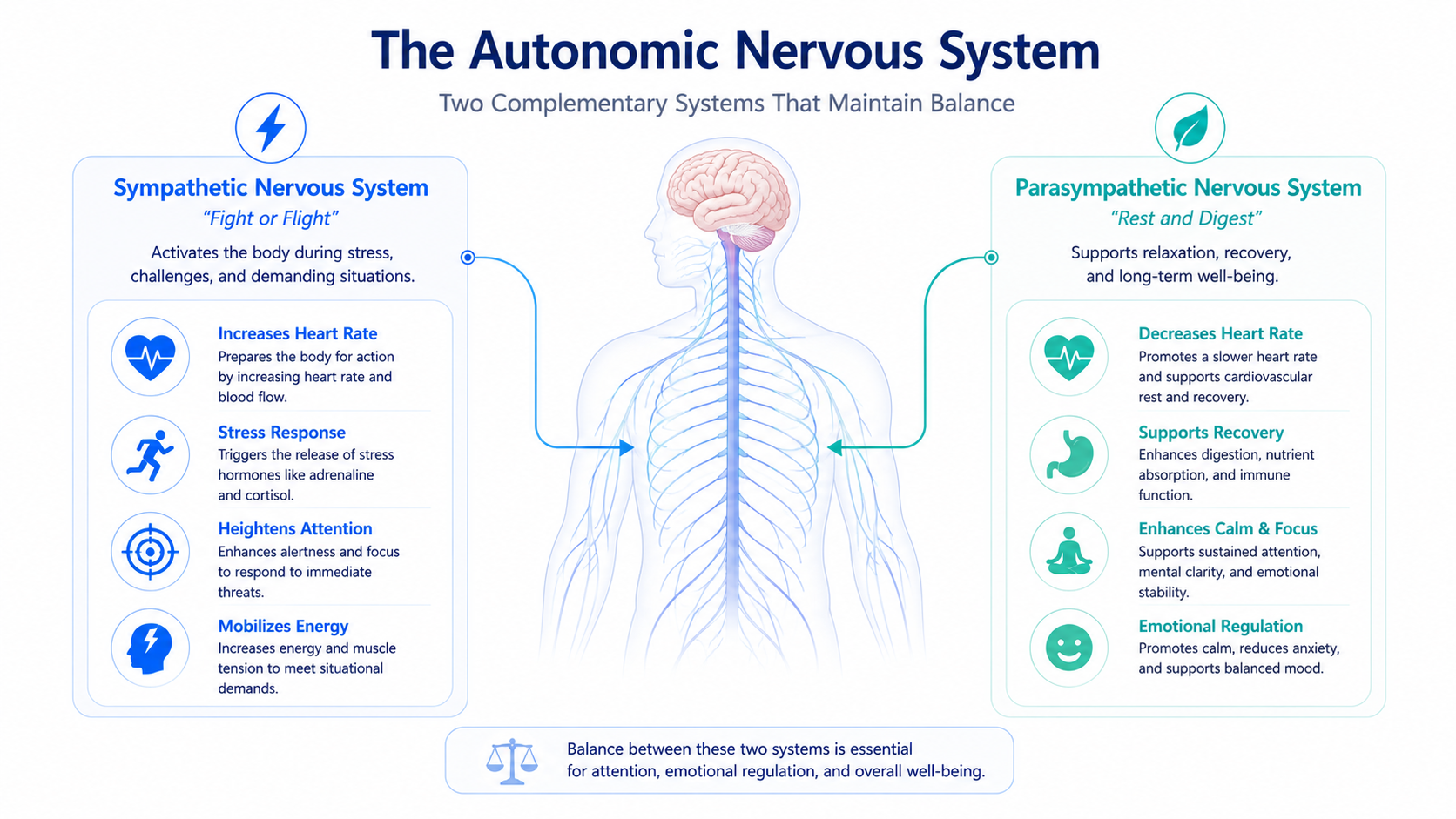
ADHD is associated with changes in autonomic nervous system regulation, arousal control, and stress-hormone response. Some individuals with ADHD may have difficulty maintaining an optimal level of arousal for sustained attention. This may appear as restlessness, variable concentration, emotional reactivity, or fatigue during tasks requiring prolonged mental effort.
The hypothalamic-pituitary-adrenal axis is involved in stress-hormone regulation. Altered stress responsiveness may influence attention, emotional control, and behavioral inhibition. From an integrated perspective, autonomic imbalance may correspond with Korean medicine concepts of qi dysregulation, yin deficiency, or insufficient blood nourishment of mental activity.
Korean Medicine Pathophysiology
Korean medicine explains adhd neurodevelopment through functional patterns that affect cognitive clarity, emotional stability, and behavioral regulation. These concepts provide a parallel framework for understanding how systemic regulation may influence brain-based functions.
Qi and Blood Deficiency
Qi and blood deficiency is understood as insufficient functional support and nourishment for mental activity. It may be associated with poor concentration, mental fatigue, forgetfulness, and reduced cognitive endurance. In neuroscience terms, these symptoms may relate to inefficient executive control and reduced stability of attention networks.
Yin Deficiency
Yin deficiency is associated with reduced internal stabilization and difficulty maintaining calm regulation. It may be linked to restlessness, irritability, sleep difficulty, and emotional sensitivity. These features may be explained by autonomic imbalance and stress-response dysregulation in modern neurophysiology.
Liver Qi Stagnation
Liver qi stagnation is associated with emotional tension, frustration, irritability, and impaired adaptive response to stress. In ADHD, this pattern may correspond to difficulty regulating impulses and emotions. It may be understood together with altered prefrontal control over emotional and behavioral responses.
Phlegm Accumulation
Phlegm accumulation is considered to be a pattern in which clear cognitive processing is obstructed. It may be associated with distractibility, mental fog, poor information processing, and reduced attentional clarity. In an integrated explanation, this may correspond to inefficient neural communication and unstable cognitive regulation.
Treatment Perspective
From the perspective of Korean Medicine Neuropsychiatry, treatment is understood as a process of improving functional regulation within neurological, emotional, autonomic, and systemic networks. ADHD treatment is not understood only as suppression of symptoms but as support for attention regulation, executive function, emotional stability, and developmental adaptation.
Modern neuroscience emphasizes regulation of executive function, prefrontal cortex activity, fronto-striatal circuits, dopamine, and norepinephrine systems. Korean medicine emphasizes regulation of qi, blood, yin, phlegm-related obstruction, and stress-related emotional imbalance. These approaches may be integrated through the shared goal of improving self-regulation.
The treatment perspective for adhd neurodevelopment therefore includes nervous system regulation, autonomic balance, stress adaptation, sleep stabilization, and gradual recovery of cognitive control.
Summary
ADHD is described as a neurodevelopmental condition involving persistent difficulties in attention, impulse control, and executive function. It is associated with altered development of the prefrontal cortex, basal ganglia, striatum, and fronto-striatal circuits. Dopamine and norepinephrine are important neurotransmitters related to motivation, attention, reward processing, and cognitive readiness.
In Korean medicine, ADHD is understood as a condition involving qi and blood deficiency, yin deficiency, liver qi stagnation, and phlegm accumulation. These patterns may be explained as functional disturbances that affect cognitive clarity, emotional regulation, autonomic balance, and developmental stability.
Korean Medicine Neuropsychiatry studies ADHD by integrating neural mechanisms with Korean medicine pathophysiology, and the Korean Society of Oriental Neuropsychiatry investigates and explains adhd neurodevelopment through academic frameworks that connect brain development, stress response, autonomic regulation, and traditional functional concepts.